

Weighing the Benefits and Drawbacks of 100 Percent Cotton Hoodies
Table of Contents
Display

You might wonder if a cotton hoodie made from 100% cotton is the right fit for you. Many people love these hoodies for their soft feel and breathability, which keep you comfortable all day. The natural fibers feel gentle against your skin and work well for those with sensitive skin or eczema. You can toss them in the wash with little fuss. However, you may notice that cotton can shrink or wrinkle more easily than blends, so you will need to decide if comfort outweighs the extra care.
Key Takeaways
100% cotton hoodies offer exceptional softness and breathability, making them ideal for comfort throughout the day.
These hoodies are hypoallergenic, making them suitable for individuals with sensitive skin or conditions like eczema.
Cotton hoodies require careful washing and drying to prevent shrinkage and wrinkling, so always check care labels.
While cotton provides moderate warmth, it may not be the best choice for extreme cold or intense physical activities.
Customization options like printing and embroidery are easy on cotton, allowing for personal expression.
Consider blends or synthetic materials if you need a hoodie that dries quickly and resists wrinkles.
Cotton is a natural fiber that is more eco-friendly than synthetics, especially when choosing organic options.
To extend the life of your cotton hoodie, wash it gently, air dry, and store it properly to maintain its shape.
Are 100% Cotton Hoodies Right for You?
Pros and Cons at a Glance
You want to know if a cotton hoodie fits your lifestyle. The best way to decide is to look at the main benefits and drawbacks side by side. This table gives you a quick overview:
Pros | Cons |
|---|---|
Soft and breathable, ensuring comfort | Prone to shrinking if not pre-treated |
Hypoallergenic, suitable for sensitive skin | Absorbs moisture, leading to discomfort during physical activities |
Versatile, ideal for various hoodie styles | Requires more maintenance compared to synthetic fabrics |
Can wrinkle more easily than synthetic alternatives | |
Breathable | May lose shape over time |
Works for different climates and seasons | Not as warm as some other materials |
You get a hoodie that feels soft and gentle on your skin. You also enjoy breathability, which keeps you comfortable in many situations. However, you may need to pay extra attention to washing and drying. Cotton can shrink or wrinkle if you do not care for it properly. It may also lose its shape after many wears.
Ideal Users for Cotton Hoodies
You might find all cotton sweatshirts especially appealing if you value comfort and a classic look. Many teens and college students choose these hoodies because they want both style and softness. Adults in their 20s and 30s often pick them for their easy-care qualities and versatility. If you have sensitive skin, you benefit from the hypoallergenic nature of 100% cotton. You also enjoy the ability to personalize your hoodie with prints or embroidery.
Here is a quick look at who often prefers these hoodies:
Demographic Group | Key Characteristics | Preferences |
|---|---|---|
Teens and College Students | Prioritize comfort and style | Favor stylish performance items like hoodies |
Adults in 20s and 30s | Seek quality, easy-care, and versatility | Choose garments that fit busy lifestyles |
You will also appreciate 100% cotton if you want a hoodie for casual wear or light activity. The fabric absorbs sweat well and feels comfortable for daily use.
When to Choose Other Materials
You may want to consider other materials if you need a hoodie for intense physical activity or unpredictable weather. Polyester blends wick sweat and dry faster, which keeps you comfortable during workouts or outdoor adventures. Blended fabrics also resist shrinking and stains, making them easier to maintain. If you live in a place with mixed climates, blends offer warmth and breathability that adapt to changing temperatures.
Choose polyester or blends for:
Active days when you need moisture-wicking and quick drying
Busy schedules that require easy-care clothing
Environments where you want your hoodie to keep its shape and resist wrinkles
Tip: If you want a hoodie that stays looking new with less effort, a blend or synthetic option may suit you better.
You should weigh your needs before picking a cotton hoodie. If comfort, softness, and easy customization matter most, 100% cotton is a strong choice. If you want durability, low maintenance, or performance features, consider blends or synthetics.
Benefits of 100% Cotton Hoodies

Softness and Comfort
Gentle on Skin
You will notice the softness of a 100% cotton hoodie as soon as you put it on. Cotton fibers feel smooth and gentle, making them a top choice for people who want comfort. Many people with sensitive skin prefer cotton because it does not cause irritation like some synthetic fabrics. The natural fibers create a soft texture that feels pleasant against your skin.
Natural fibers like cotton are generally softer than synthetic fibers such as polyester.
Cotton is known for its comfort, breathability, and hypoallergenic properties, making it suitable for sensitive skin.
The softness of cotton can be enhanced through specific processing methods like ring-spinning or combing.
You can trust that a cotton hoodie will keep you comfortable throughout the day, whether you wear it at home or outside.
Everyday Wear
You want a hoodie that feels good every time you wear it. 100% cotton hoodies offer consistent comfort, even after many washes. The fabric remains soft and flexible, so you can move easily. Many people choose these hoodies for daily activities, from running errands to relaxing at home. You will appreciate how the fabric adapts to your body and keeps you feeling cozy.
Breathability and Moisture Control
Staying Cool
You will stay cool in a 100% cotton hoodie because the fabric allows air to flow freely. Cotton fibers help your skin breathe, which prevents overheating. Laboratory tests show that cotton hoodies have superior breathability compared to polyester or blended hoodies. You can wear them during light activities or in moderate temperatures and feel comfortable.
Managing Sweat
You may sweat during daily activities, but cotton helps manage moisture. The fabric absorbs sweat and keeps it away from your skin, reducing discomfort.
100% cotton can absorb moisture up to 27 times its weight and is much more breathable than synthetic alternatives. In contrast, synthetic materials like polyester excel in moisture management and durability, offering quick-drying properties and superior color retention.
You will find that cotton hoodies work well for casual wear, but they may not dry as quickly as synthetic options after heavy sweating.
Hypoallergenic Qualities
Sensitive Skin Friendly
If you have sensitive skin, you will benefit from the hypoallergenic qualities of 100% cotton. Research shows that cotton rarely causes irritation, even for people with allergies or eczema.
A Human Repeat Insult Patch Test (HRIPT) was conducted on over 200 participants, including those with sensitive skin.
Both natural and purified cotton showed no irritation during the tests, confirming their hypoallergenic nature.
The results were reviewed and approved by a dermatologist, establishing cotton as safe for sensitive skin.
Cotton’s natural breathability helps prevent overheating.
It has superior moisture absorption, reducing clammy feelings.
Its hypoallergenic properties lower the risk of skin reactions.
Organic cotton is free from synthetic pesticides and fertilizers, reducing irritation for sensitive skin.
It is recommended to look for ‘100% cotton’ labels to avoid blends that may include irritants.
You can wear a cotton hoodie with confidence, knowing it supports your skin’s health and comfort. These benefits make 100% cotton hoodies a smart choice for anyone who values softness, breathability, and skin-friendly materials.
Insulation and Versatility
Suitable for Different Weather
You want a hoodie that adapts to changing seasons. 100% cotton offers moderate warmth, making it a practical choice for spring, fall, and mild winter days. Cotton traps some air within its fibers, providing insulation without overheating you. You can layer a cotton hoodie over a t-shirt or under a jacket for extra comfort.
Fleece hoodies use a double-sided pile to trap air and retain heat, which makes them warmer than cotton. Cotton hoodies work best in mild climates or when you need a breathable layer. You may need to wear additional layers in colder weather to stay comfortable.
Feature | Fleece Hoodie | Cotton Hoodie |
|---|---|---|
Warmth | Moderate warmth |
Fleece is designed to be warm and retains heat effectively.
Cotton provides moderate warmth and is more suitable for mild climates.
Fleece is a better insulator compared to cotton.
You can rely on a cotton hoodie for versatility. It transitions easily from indoor to outdoor settings and suits a range of activities. You get a balance of comfort and breathability, which makes it a popular choice for everyday wear.
Easy to Personalize
Printing and Embroidery
You may want to express your style or promote a team or brand. 100% cotton hoodies are easy to personalize with printing and embroidery. Cotton’s smooth surface allows for crisp designs and vibrant colors. You can choose from several methods to customize your hoodie, each with different durability levels.
Printing Method | |
|---|---|
Screen Printing | 4/5 |
Direct-to-Garment (DTG) | 3/5 (Variable) |
Sublimation Printing | 5/5 (Permanent) |
Vinyl Heat Transfer | 3/5 |
Direct-to-Film (DTF) | 4/5 |
Embroidery | 5/5 (Permanent) |
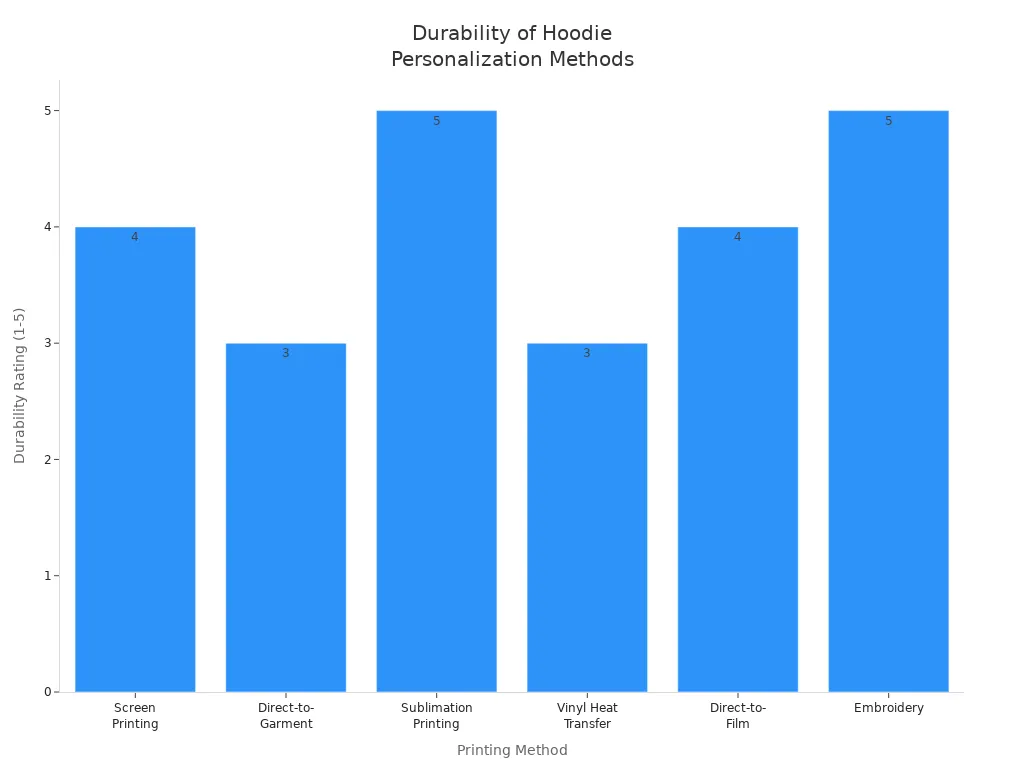
Screen printing and embroidery stand out for their durability. Embroidery creates a permanent design that resists fading and wear. Sublimation printing also offers long-lasting results, though it works best on lighter-colored cotton. You can select the method that fits your needs, whether you want a bold graphic or a subtle logo.
Tip: Choose embroidery for a classic look and maximum durability. Pick screen printing for vibrant colors and cost-effective customization.
Eco-Friendly Aspects
Natural Fiber Benefits
You may care about the environmental impact of your clothing. 100% cotton is a natural fiber, which means it breaks down more easily than synthetic materials. Cotton hoodies feel soft and comfortable, but their production has both positive and negative effects on the environment.
Cotton requires 72% more energy than synthetic fabrics during the use phase, which accounts for most of the energy used over the garment’s life.
Water use for cotton garments is 99.9% higher compared to synthetics, with irrigation practices causing significant environmental consequences.
Conventional cotton production uses 24% of the world’s insecticides and 11% of pesticides, which can harm ecosystems.
Polyester production uses more energy during the material phase but less overall energy during the garment’s life.
You can reduce your impact by choosing organic cotton hoodies, which use fewer chemicals and less water. You support sustainability when you select natural fibers, but you should also consider the resources needed to produce and care for your hoodie.
Note: Washing and drying cotton garments uses more energy and water than caring for synthetics. Air drying and cold water washing help lower your environmental footprint.
You get the benefits of a natural fiber when you choose a cotton hoodie, but you should weigh the environmental costs and look for eco-friendly options.
Drawbacks of All Cotton Sweatshirts
Shrinkage Risks
Washing and Drying Effects
You may notice that all cotton sweatshirts often shrink after washing and drying. Textile experts point out several reasons for this change in size:
Heat and moisture play a major role in causing shrinkage.
Direct heat exposure makes cotton fibers contract, which reduces the size of your hoodie.
Moisture softens the fibers, so when you apply heat, the fibers shrink even more.
If you use hot water or a high-heat dryer, you increase the risk of shrinkage. You might see your hoodie fit tighter after the first wash. Many people find this frustrating, especially if they expect their hoodie to keep its original shape. You can reduce shrinkage by washing with cold water and air drying your hoodie.
Tip: Always check the care label before washing. Lower temperatures help preserve the size and fit of your cotton hoodie.
Durability Concerns
Wear and Tear
You want your hoodie to last, but 100% cotton does not match the durability of polyester blends. Cotton fibers break down faster with repeated washing and wearing. You may see fading, thinning, or small holes after several months of use. The cuffs and hem often show wear first.
Here is a comparison of durability factors between cotton and blended hoodies:
Durability Factor | 100% Cotton | 70/30 Cotton Poly Blend |
|---|---|---|
Wash Cycles Before Visible Wear | 50 | 75 |
Shape Retention | 6/10 | 9/10 |
Color Fastness | 7/10 | 9/10 |
Pilling Resistance | 5/10 | 8/10 |
High (3-5%) | Low (1-2%) |
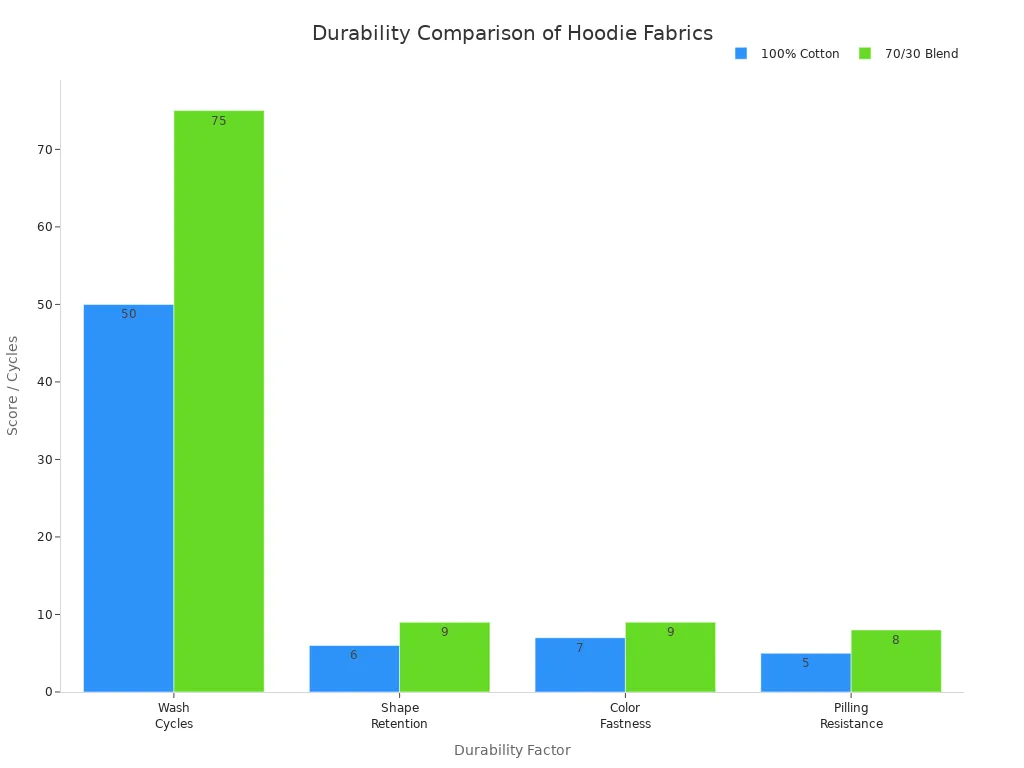
You may notice these changes over time:
First wash: Your hoodie may shrink, especially if you use hot water.
Month 3: The fabric softens, and you might see slight changes in shape.
Month 6: Wear appears around the cuffs and hem.
Month 12: Fading and small holes can develop.
Polyester blends keep their shape and color longer. If you want a hoodie that stays looking new, you may prefer a blend. The drawbacks of cotton include a shorter lifespan and more visible wear.
Wrinkling Issues
Maintenance Needs
You may find that cotton hoodies wrinkle easily. The natural fibers do not resist creasing as well as synthetic materials. After washing, you might see lines and folds that make your hoodie look less polished. You need to spend extra time ironing or steaming to keep your hoodie looking neat.
If you want a low-maintenance garment, cotton may not meet your needs. Polyester blends resist wrinkles and hold their shape better. You save time and effort with these alternatives. The drawbacks of cotton include more frequent ironing and careful folding.
Note: Fold your cotton hoodie right after drying to reduce wrinkles. Store it flat or hang it to keep it looking fresh.
Slow Drying
Moisture Retention
You may notice that your 100% cotton hoodie takes much longer to dry than a polyester or blended hoodie. Cotton fibers absorb water deeply, which means they hold onto moisture even after a spin in the washing machine. When you hang your hoodie to dry, you might wait several hours before it feels ready to wear. Polyester, on the other hand, repels water and dries quickly. This difference becomes clear when you compare drying times side by side.
Cotton hoodies take longer to dry because the fabric soaks up and retains moisture.
Polyester hoodies dry much faster since the fibers do not absorb water.
Blended hoodies fall somewhere in between, offering a balance of drying speed and comfort.
You may find this slow drying inconvenient, especially if you need your hoodie for daily use or travel. If you live in a humid climate, the drying process can take even longer. You might also notice a damp feeling if you wear your cotton hoodie during rainy weather or after a workout. This moisture retention can lead to discomfort and even a musty smell if the hoodie does not dry completely.
Tip: To speed up drying, lay your cotton hoodie flat in a well-ventilated area or use a fan. Avoid direct sunlight, which can fade colors.
Shape Deformation
Stretching Over Time
You want your hoodie to keep its shape, but 100% cotton sweatshirts can stretch and deform after repeated washing and wearing. Several factors contribute to this problem. Washing your hoodie in hot water relaxes the cotton fibers, making them more likely to contract or stretch during drying. Tumble drying on high heat squeezes the fibers, which can cause shrinkage or uneven stretching. If you wash your hoodie with rough fabrics or items with zippers, friction can damage the cotton and lead to stiffness or misshaping.
Hot water relaxes cotton fibers, leading to contraction or stretching.
High-heat tumble drying squeezes fibers, causing shrinkage or shape loss.
Washing with rough items or zippers creates friction, damaging the fabric.
Overloading the washer or dryer leads to uneven cleaning and drying, which can distort the hoodie’s shape.
Skipping the gentle cycle puts extra stress on the fabric, increasing the risk of deformation.
You may see your hoodie lose its original fit, with sleeves or the waistband stretching out. Over time, the fabric may sag or become baggy, especially if you hang your hoodie by the shoulders. These drawbacks can make your cotton hoodie look worn out faster than a polyester or blended option.
Note: To help your hoodie keep its shape, always use cold water and a gentle cycle. Lay it flat to dry and avoid hanging it by the shoulders.
Caring for Your Cotton Hoodie
Washing Tips
You want your cotton hoodie to stay soft and last longer. Washing it the right way helps you avoid common problems like shrinkage and fading. Always check the care label before you start. Use cold or lukewarm water for most washes. This keeps the fibers strong and prevents shrinking. Choose a gentle cycle on your washing machine. You protect prints and embroidery by turning your hoodie inside out before washing.
Preventing Shrinkage
Shrinkage is a common issue with cotton hoodies. You can minimize this by following expert advice. The temperature of the water and the drying method matter most. Here is a quick comparison of washing techniques:
Method | Pros | Cons |
|---|---|---|
Hot Water Washing | Fast results, ideal for untreated cotton | Risk of over-shrinking, may damage prints |
High Heat Drying | Quick shrinkage, adjustable with timed checks | Can weaken fibers, high energy consumption |
Boiling Water | Aggressive shrinkage, targets thick cotton | Fades colors, weakens fabric |
Air Drying | Safest for delicate fabrics, preserves softness | Slow drying, limited shrinkage |
You get the best results by using cold water and air drying. This method keeps your hoodie soft and helps it keep its shape. If you want to shrink your hoodie on purpose, use hot water or high heat, but remember that this can damage the fabric and prints.
Drying and Storage
Proper drying and storage help your hoodie last longer. You should avoid hanging your hoodie when it is wet. Hanging stretches the fabric and can cause the shoulders to sag. Instead, lay your hoodie flat to dry. This protects the fibers and keeps the shape intact. Folding your hoodie after it dries prevents wrinkles and makes storage easier.
Air vs. Machine Drying
Air drying offers several benefits. You save energy and preserve the softness of your hoodie. Machine drying works faster, but it can cause shrinkage and wear out the fibers. If you use a dryer, choose a low heat setting and remove the hoodie while it is still slightly damp. Finish drying it flat to avoid stretching.
Fold them carefully after drying.
Store in a clean, dry place to protect against pests like silverfish and moths.
Stain Removal
Stains can ruin the look of your hoodie if you do not treat them quickly. Cleaning professionals recommend a simple process for removing stains:
Address the stain as soon as possible. Quick action prevents the stain from setting.
Apply a stain remover and let it soak into the fabric. You can use a gentle detergent or a specialized stain remover.
Wash your hoodie according to the care instructions. Use cold water for regular stains. For tougher stains, you may use warmer water, but check the label first.
Do not use the dryer until the stain is completely gone. Heat can set the stain and make it permanent.
You keep your hoodie looking fresh by following these steps. Regular care helps you enjoy the benefits of cotton and keeps your hoodie ready for everyday wear.
Extending Hoodie Life
You want your cotton hoodie to last as long as possible. With the right care, you can keep it looking fresh and feeling comfortable for years. Many people overlook simple habits that make a big difference in the lifespan of their favorite sweatshirt.
Start by washing your hoodie inside out. This small step helps preserve the color and any printed designs. When you turn the hoodie inside out, you protect the outer surface from friction and fading during the wash cycle. You also reduce the risk of pilling, which can make the fabric look worn.
Avoid using a dryer whenever you can. High heat causes cotton fibers to shrink and fade. Instead, hang your hoodie to dry in a well-ventilated area. Air drying keeps the fabric soft and helps maintain its original size and shape. If you need to iron your hoodie, set the iron to the lowest temperature. Place a thin cloth between the iron and the fabric. This barrier prevents direct heat from damaging the cotton or causing shiny spots.
Tip: Never dry clean your cotton hoodie. The harsh chemicals used in dry cleaning can weaken the fibers and cause colors to fade.
Proper storage also plays a key role in extending the life of your hoodie. Store your hoodie in a cool, dry place. Keep it away from direct sunlight or heat sources. Sunlight can fade the colors, and heat can make the fabric brittle over time. Fold your hoodie neatly instead of hanging it, especially if it is still damp. Hanging can stretch the shoulders and distort the shape.
Here is a quick checklist to help you remember the best practices:
Wash inside out to protect color and design.
Hang to air dry instead of using a dryer.
Iron on low with a cloth barrier.
Avoid dry cleaning.
Store in a cool, dry place away from sunlight and heat.
You can also rotate your hoodies if you own more than one. Wearing the same hoodie every day increases wear and tear. By rotating, you give each hoodie time to recover between uses.
A little extra care goes a long way. When you follow these steps, you keep your cotton hoodie soft, vibrant, and comfortable. You also save money by reducing the need to replace your favorite sweatshirt as often.
Cotton Hoodie vs. Other Materials

Cotton vs. Polyester
When you compare cotton hoodies to polyester hoodies, you notice clear differences in comfort, durability, and cost. Cotton hoodies feel soft and breathable. You enjoy wearing them for casual activities or lounging. Polyester hoodies, on the other hand, trap less moisture and resist wrinkles. They work well if you want a hoodie that dries quickly and holds its shape.
Attribute | 100% Cotton Hoodies | Polyester Hoodies |
|---|---|---|
Comfort | Soft, breathable, ideal for casual wear | Less breathable, can trap odors |
Durability | Generally durable, but less than polyester | Highly durable, water and wrinkle-resistant |
Cost | Generally pricier due to agricultural factors | More affordable, tied to oil prices |
You may prefer cotton for its natural feel and comfort. Polyester stands out if you want a hoodie that lasts longer and needs less care. Polyester also costs less, making it a budget-friendly choice. However, you might notice that polyester can trap odors and feel less comfortable against your skin.
Tip: Choose cotton for comfort and breathability. Pick polyester if you need durability and easy maintenance.
Cotton vs. Blends
Blended hoodies combine cotton with synthetic fibers like polyester. You get a balance of comfort and performance. Cotton hoodies offer softness and breathability, making them great for relaxing or light activities. Blended hoodies add durability and moisture-wicking abilities, which help during workouts or busy days.
Feature | 100% Cotton Hoodies | Blended Hoodies (e.g., 80% Cotton, 20% Polyester) |
|---|---|---|
Breathability | High, natural breathability | Moderate, improved by polyester |
Moisture Management | Absorbs moisture, may shrink | Excellent moisture-wicking properties |
Durability | Less durable, prone to wear and tear | More durable, resists shrinking and stretching |
Comfort | Soft and cozy feel | Balances comfort with added structure |
Suitability | Better for casual wear | Ideal for daily use and various activities |
You might notice that 100% cotton hoodies can shrink or absorb sweat during exercise. Blended hoodies resist shrinking and dry faster. They also keep their shape longer. If you want a hoodie for sports or frequent washing, blends work better.
100% cotton hoodies feel soft and let your skin breathe.
Blended hoodies last longer and handle sweat well, making them good for active lifestyles.
Note: Blends give you the best of both worlds—comfort from cotton and strength from synthetics.
Cotton vs. Other Naturals
You may see hoodies made from other natural fibers like bamboo or hemp. These materials offer unique benefits. Bamboo hoodies, for example, use less water and fewer pesticides than cotton. They grow faster and have a smaller environmental impact. Bamboo also feels softer and breathes better than cotton. Hemp shares many of these qualities.
Feature | Bamboo Hoodies | Cotton Hoodies |
|---|---|---|
Sustainability | Requires less water and pesticides | Requires more water and pesticides |
Growth Rate | Grows faster per acre | Slower growth rate |
Durability | More durable, does not shrink | Can shrink over time |
Comfort | Softer and more breathable | Less breathable than bamboo |
Moisture Wicking | Wicks away moisture, keeps cool/warm | Less effective moisture management |
You may choose bamboo or hemp if you want a sustainable option that feels soft and dries quickly. Cotton remains a classic choice for its familiar comfort and easy care. Each natural fiber offers something different, so you can pick what matters most to you.
If you care about sustainability and want a hoodie that stays soft and fresh, bamboo or hemp might be your best pick.
Choosing the Best Material
You want a hoodie that matches your lifestyle and needs. The best material depends on how and where you plan to wear it. Each fabric offers unique benefits, so you should weigh your options carefully.
Start by thinking about what matters most to you. Do you value softness, warmth, or easy care? Maybe you want a hoodie that stands up to tough workouts or one that keeps you cozy on cold days. Here are the main factors you should consider when picking the right material:
Softness & Comfort: Cotton and tri-blends feel soft against your skin. If comfort is your top priority, these materials work well for everyday wear.
Warmth (Insulation): Wool and thick fleece trap heat, making them perfect for winter. Lighter fabrics like French terry suit warmer weather.
Breathability: Cotton and French terry let air flow, which helps you stay cool during workouts or in hot climates.
Moisture-Wicking: Polyester and nylon shed sweat quickly. If you exercise often or live in a rainy area, these materials keep you dry.
Durability: Polyester and nylon last longer and resist wear. Cotton may feel softer but can wear out faster with frequent use.
Weight & Thickness: Lightweight fabrics work best for summer. Heavier materials add warmth for colder months.
Care Requirements: Blends and synthetics need less care. Wool and 100% cotton may require gentle washing and air drying.
Printability/Customization: Hoodies with high cotton content show printed designs and embroidery more vividly.
Sustainability: Organic cotton or recycled fabrics help reduce your environmental impact.
You can use this table to compare your top choices:
Feature | Cotton | Polyester | Blends | Wool/Fleece | Bamboo/Hemp |
|---|---|---|---|---|---|
Softness | High | Medium | High | Medium | High |
Warmth | Medium | Medium | Medium | High | Medium |
Breathability | High | Low | Medium | Low | High |
Moisture-Wicking | Low | High | High | Medium | High |
Durability | Medium | High | High | Medium | High |
Easy Care | Medium | High | High | Low | Medium |
Customization | High | Low | High | Low | Medium |
Sustainability | Medium | Low | Medium | Low | High |
Tip: If you want a hoodie for sports or outdoor activities, choose polyester or blends for moisture control and durability. For comfort and style, cotton or bamboo feels best. If you care about the planet, look for organic or recycled options.
You should match your hoodie material to your daily routine, climate, and personal values. When you know what you need, you can pick a hoodie that keeps you comfortable and fits your lifestyle.
Making the Best Choice
Lifestyle and Climate
Your daily routine and local weather play a big role in choosing the right hoodie. Cotton hoodies work well for many people because they offer comfort and breathability. You feel the soft texture against your skin, which makes cotton a favorite for all-day wear. The fibers in cotton allow air to circulate, so you stay cool and dry during most activities.
Cotton feels gentle and soft, which helps you stay comfortable.
The fabric lets air move, so you sweat less and feel fresh.
Cotton also helps regulate your body temperature. You can wear a cotton hoodie in both warm and cool conditions. In hot weather, the breathability keeps you from overheating. In mild or cool weather, cotton provides enough warmth for comfort. However, cotton does not insulate as well as fleece or wool. If you live in a place with harsh winters, you may need to layer your cotton hoodie or choose a warmer material.
Tip: For hot or humid climates, pick a lightweight cotton hoodie. For cold weather, layer your cotton hoodie with a jacket or coat.
Personal Preferences
Your personal needs and style matter when picking a hoodie. Many people choose cotton because they like the natural feel and comfort. If you have sensitive skin, cotton is a smart choice. The hypoallergenic properties help prevent irritation, so you can wear your hoodie all day without worry.
Comfort and a natural feel often lead people to pick cotton.
If you want warmth and durability, fleece might suit you better.
Cotton works well for those with sensitive skin.
The fabric absorbs sweat, which keeps you dry during light activity.
Cotton is not the best option for wet or very cold conditions.
You may also think about how you plan to use your hoodie. If you want something for casual wear, lounging, or light exercise, cotton fits your needs. If you need a hoodie for outdoor sports or rainy days, you might prefer a blend or synthetic material. Your style matters too. Cotton hoodies are easy to personalize with prints or embroidery, so you can show off your favorite designs.
Remember: Your comfort and lifestyle should guide your choice. Think about when and where you will wear your hoodie most often.
A simple table can help you match your needs to the right material:
Preference | Best Material |
|---|---|
Softness, comfort | 100% Cotton |
Warmth, durability | Fleece/Blends |
Sensitive skin | 100% Cotton |
Moisture-wicking | Polyester/Blends |
Easy customization | 100% Cotton |
You make the best choice when you match your hoodie to your lifestyle, climate, and personal preferences. Take time to consider what matters most to you, and you will find a hoodie that keeps you comfortable every day.
When you consider the benefits of all cotton sweatshirts, focus on comfort, breathability, and sustainability. You get a cotton hoodie that feels soft and gentle, but you must weigh drawbacks like shrinkage and slower drying. Use this table to compare features:
Feature | 100% Cotton Hoodies | Blended Hoodies |
|---|---|---|
Softness & Comfort | Cozy and gentle | Durable and balanced |
Breathability | Keeps you cool | Moderate |
Durability | Prone to wear | Withstands more use |
Think about your lifestyle and care preferences before choosing hoodies.
FAQ
How do you prevent your cotton hoodie from shrinking?
You should wash your hoodie in cold water. Air dry it flat instead of using a hot dryer. Always check the care label for specific instructions.
Is a 100% cotton hoodie good for sensitive skin?
You benefit from cotton’s hypoallergenic properties. The natural fibers rarely cause irritation. Many people with eczema or allergies choose cotton for comfort.
Can you customize a cotton hoodie easily?
You can personalize your cotton hoodie with screen printing or embroidery. Cotton’s smooth surface holds designs well. Choose embroidery for long-lasting results.
Does a cotton hoodie keep you warm in winter?
You get moderate warmth from cotton. Layer your hoodie with a jacket for cold weather. Cotton works best in mild climates or during spring and fall.
How long does a 100% cotton hoodie last?
You extend your hoodie’s life by washing gently and air drying. Cotton hoodies may show wear after many washes. Blended hoodies usually last longer.
Are cotton hoodies eco-friendly?
You support sustainability by choosing organic cotton. Cotton is a natural fiber and breaks down faster than synthetics. Organic options use fewer chemicals and less water.
What should you do if your cotton hoodie wrinkles?
You can fold your hoodie right after drying. Use a low-heat iron with a cloth barrier. Hanging your hoodie helps reduce wrinkles.
Do cotton hoodies absorb sweat?
You notice cotton absorbs moisture well. The fabric keeps sweat away from your skin. However, cotton dries slowly compared to polyester or blends.