

Supermarket Uniform Export to Middle East: Heat-Resistant Fabric Solutions
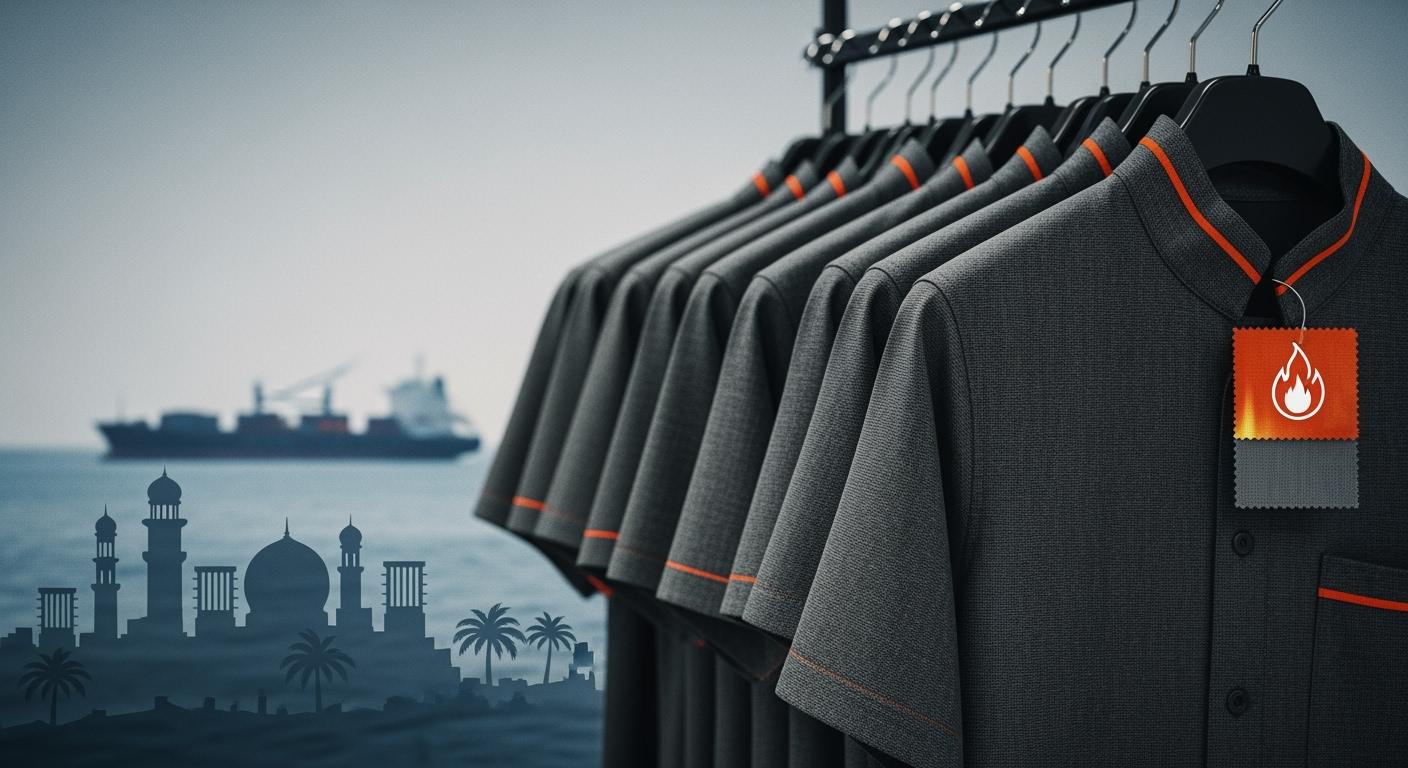
You can achieve success in Middle East retail uniform export by choosing heat-resistant suits that combine advanced workwear technology and strict hygiene standards. When you select uniforms for export markets in the Middle East, prioritize protective clothing that withstands high temperatures and supports hygiene. Customization and compliance help you meet unique trade expectations. Growing demand for workwear with enhanced hygiene and durability drives global exports in this sector.
Focus on heat-resistant fabrics to maintain hygiene and comfort in demanding environments.
Adapt workwear design to local requirements for protective clothing.
Key Takeaways
Choose heat-resistant fabrics to ensure comfort and hygiene for workers in extreme temperatures.
Adapt uniform designs to meet local cultural standards, including modesty and color preferences.
Prioritize breathable materials that allow airflow and wick moisture to prevent heat stress.
Select durable fabrics that resist fading and wear, ensuring uniforms maintain their appearance and protective qualities.
Ensure compliance with local regulations and certification standards to avoid shipment delays and rejections.
Build strong relationships with local distributors to navigate market dynamics and regulatory requirements.
Invest in climate-proof packaging to protect uniforms during transit and maintain hygiene standards.
Offer after-sales support and maintenance guidelines to enhance customer satisfaction and product longevity.
Challenges in Middle East Retail Uniform Export
When you enter the Middle East retail uniform export market, you face a unique set of challenges. These challenges affect your ability to deliver uniforms that meet both local expectations and international standards for hygiene and protection. You must address climate, cultural, and regulatory factors to succeed in these export markets.
Extreme Heat
Worker Comfort
You must prioritize worker comfort in regions where temperatures often exceed 104°F. High heat increases the risk of heat stress, especially for staff wearing workwear or personal protective equipment. Lightweight, breathable fabrics help maintain hygiene and reduce the risk of high contamination risk. You should select materials that allow airflow and wick moisture away from the skin. This approach supports both hygiene and productivity.
Fabric Degradation
Extreme temperatures can degrade protective clothing and food processing workwear. Sun exposure and frequent washing accelerate wear and tear. You need certified workwear that resists fading, tearing, and loss of protective qualities. Durable fabrics extend the life of uniforms and reduce the risk of contamination. This durability also supports compliance with hygiene standards.
Cultural Needs
Modesty Standards
Cultural expectations in the Middle East require you to adapt workwear designs. Many countries expect uniforms to cover arms and legs fully. You must balance modesty with the need for ventilation and hygiene. Customizing uniforms to meet these standards ensures compliance and prevents trade barriers.
Color Preferences
Color plays a significant role in uniform acceptance. Some colors may symbolize cleanliness, while others may not align with local preferences. You should consult with domestic manufacturers or local partners to select colors that reflect hygiene and cultural values. This step helps prevent contamination concerns linked to color perception.
Regulatory Barriers
Import Rules
You must navigate strict import rules when exporting to the Middle East. Each country sets its own requirements for personal protective equipment and certified workwear. You need to understand documentation, labeling, and packaging standards. Failure to comply can delay shipments or result in rejected goods.
Certification
Certification remains a critical factor in Middle East retail uniform export. You must provide proof that your uniforms meet local and international hygiene and protection standards. Certified products reassure buyers about quality and safety. You should work closely with local authorities and certification bodies to ensure compliance. This process helps you avoid issues related to contamination and trade restrictions.
Tip: Always verify the latest certification and compliance requirements before shipping to new export markets.
By addressing these challenges, you position your export business for long-term success in the Middle East. You ensure that your uniforms deliver hygiene, protection, and cultural fit, while meeting all regulatory demands.
Key Qualities of Heat-Resistant Uniform Fabrics

Breathability
Airflow Features
You need to prioritize breathability when selecting heat-resistant suits for supermarket staff in the Middle East. Breathable fabrics facilitate airflow, which plays a crucial role in regulating body temperature during long shifts in high-heat conditions. Airflow features allow heated air to escape and cooler air to enter, preventing overheating and discomfort. This temperature regulation supports worker comfort and productivity, especially for employees engaged in physically demanding tasks. When you choose technical textiles with advanced ventilation, you reduce the risk of unsafe behavior caused by discomfort. Breathable uniforms also help maintain hygiene by minimizing sweat buildup, which is essential in food retail environments.
Moisture Management
Quick-Dry Tech
Moisture management stands as another vital quality for uniforms in hot and humid climates. You should look for fabrics that offer quick-dry technology and efficient sweat absorption. Consider the following options for optimal moisture control:
Rayon provides high moisture regain, making it highly effective in hot and humid conditions.
This fabric absorbs and distributes sweat quickly, enhancing comfort for supermarket workers.
Rayon delivers a cooling effect on the body, which is crucial in extreme heat.
The lightweight and soft feel of rayon reduces cling, supporting freedom of movement.
You can also explore thermo-adaptive fabrics that use phase-change materials for better thermoregulation. These technical textiles improve sweat evaporation efficiency, which is essential in humid environments. They help stabilize the microclimate between skin and fabric, reducing heat stress and supporting overall comfort.
Tip: Choose uniforms with moisture-wicking and quick-dry features to keep staff feeling fresh and focused throughout their shifts.
UV Protection
Sun Safety
UV protection is a critical feature for supermarket uniforms in the Middle East. Workers often face prolonged exposure to sunlight, especially in outdoor or semi-outdoor retail settings. Uniforms with climate-adapted UV protection ensure safety and comfort for your staff. You should consider the following benefits:
UV-protective fabrics shield workers from harmful rays, reducing the risk of skin damage.
Performance modest wear with UV protection is essential for employees exposed to high temperatures.
These features support compliance with local safety standards and enhance the reputation of your brand.
By integrating UV protection into your uniform selection, you demonstrate a commitment to worker safety and well-being. This approach also aligns with the growing demand for climate-adapted workwear in the region.
Durability
Durability stands as a cornerstone when you select supermarket uniforms for export to the Middle East. The region’s harsh climate and demanding work environments put uniforms to the test every day. You need uniforms that maintain their integrity, appearance, and protective qualities over time. Durable uniforms not only protect your staff but also help you control costs by reducing the frequency of replacements.
Fade Resistance
Fade resistance plays a vital role in maintaining a professional appearance. In the Middle East, sunlight exposure can be intense, especially for workers who spend time outdoors or near large windows. Uniforms that fade quickly lose their visual appeal and may reflect poorly on your brand. You should choose fabrics engineered to resist color loss, even after repeated washing and exposure to UV rays.
Modern textile technology offers solutions such as solution-dyed fibers and UV-resistant coatings. These innovations help uniforms retain their original color and vibrancy. When you invest in fade-resistant uniforms, you ensure that your staff always looks sharp and presentable. This attention to detail supports your brand image and builds trust with customers.
Tip: Always check if your fabric supplier uses colorfast dyes and UV-protective treatments. These features extend the life of your uniforms and keep colors looking fresh.
Longevity
Longevity goes beyond simple wear and tear. You want uniforms that withstand frequent laundering, exposure to cleaning chemicals, and the rigors of daily use. High-quality fabrics, reinforced stitching, and robust construction all contribute to a longer uniform lifespan. When you select uniforms built for longevity, you reduce operational costs and minimize disruptions caused by frequent replacements.
Consider the following durability standards for supermarket uniforms in Middle Eastern working conditions:
Aspect | Description |
|---|---|
Fabric Quality | Uniforms must be made from strong fabric that can endure frequent washing without deteriorating. |
Proper Fit | Uniforms should fit well to prevent contamination and reduce the risk of accidents. |
Chemical Resistance | Materials used should be chemically resistant to protect against hazardous substances. |
You should also look for uniforms that resist pilling, tearing, and seam failure. These qualities ensure that your investment delivers value over time. When you prioritize durability, you support hygiene, safety, and a consistent brand image.
Note: Durable uniforms not only save money but also help you meet local hygiene and safety regulations. Reliable workwear keeps your team protected and your business compliant.
Fabric Solutions for Middle East Retail Uniform Export

Cotton-Polyester Blends
Breathability & Strength
You need to select fabrics that balance comfort, durability, and hygiene for supermarket staff in the Middle East. Cotton-polyester blends offer a practical solution for workwear in this region. These blends combine the natural breathability of cotton with the strength and wrinkle resistance of polyester. This combination helps you maintain hygiene standards and ensures that uniforms withstand frequent washing and exposure to harsh conditions.
The following table outlines the main advantages and disadvantages of cotton-polyester blends for heat-resistant supermarket uniforms:
Advantages | Disadvantages |
|---|---|
Comfort and Breathability | Potential Shrinkage |
Impact on the Environment | |
Wrinkle Resistance | |
Easy Care | |
Color Retention | |
Affordability | |
Apparel Versatility |
Cotton-polyester blends provide excellent color retention and easy care, which supports a professional appearance and reduces maintenance time. You also benefit from affordability and versatility, making these blends suitable for a wide range of workwear applications. However, you should remain aware of potential shrinkage and environmental impact. Always choose certified suppliers who follow sustainable practices to address these concerns.
Tip: For food processing workwear, select blends with higher polyester content to improve durability and hygiene while maintaining comfort.
Performance Synthetics
Moisture-Wicking
Performance synthetics, such as polyester and nylon, have become the preferred choice for many workwear applications in the Middle East. These fabrics excel in moisture management and heat resistance, which are critical for maintaining hygiene and comfort in extreme climates. You will find that synthetics dominate the activewear market due to their lightness, durability, and ability to retain performance after multiple washes.
Polyester and nylon are highly effective for sweat control.
Polyester’s structure pulls sweat away from the skin, ensuring quick evaporation.
Quick-drying features mean uniforms are ready for use with minimal downtime.
These fabrics resist UV degradation, supporting long-term use in sunny environments.
The table below compares performance synthetics with natural fibers for uniforms:
Feature | Performance Synthetics | Natural Fibers |
|---|---|---|
Moisture Management | Excellent moisture-wicking and quick-drying properties | Breathable but less effective in moisture management |
Heat Resistance | Generally better for activewear | Comfortable but may retain heat |
Durability | More durable, less prone to shrinking and wrinkling | Less durable, more prone to wear and tear |
Environmental Impact | Issues with microplastic pollution | More eco-friendly and biodegradable |
You should consider performance synthetics for personal protective equipment and ppe where moisture-wicking and quick-drying features are essential. These fabrics help you maintain hygiene by reducing sweat buildup and supporting a clean, professional environment. For certified workwear, always verify that the materials meet local and international certification standards.
Note: Innovations such as nanotechnology and smart fabrics with temperature sensing capabilities continue to improve the performance of synthetic workwear. These advancements enhance comfort, safety, and hygiene for your team.
Flame-Resistant Options
Safety Standards
In the Middle East, you must address not only heat but also workplace safety. Flame-resistant uniforms play a vital role in protecting staff from fire hazards, especially in environments where food processing workwear or ppe is required. Certified flame-resistant options meet strict safety standards and help you comply with local regulations.
You should look for the following features in flame-resistant workwear:
Certified flame resistance that meets or exceeds local and international safety standards.
Durable construction that maintains protective qualities after repeated washing.
Comfortable fit that allows freedom of movement without compromising safety.
Easy care and maintenance to support hygiene and reduce downtime.
Flame-resistant uniforms support your commitment to employee safety and hygiene. By choosing certified suppliers and ensuring proper certification, you reduce risks and build trust with your clients. These uniforms also help you meet trade requirements and avoid regulatory issues in the Middle East retail uniform export market.
Callout: Always request documentation of certification for flame-resistant uniforms before you export to new markets. This step protects your business and ensures compliance with all relevant safety and hygiene standards.
Cooling Technologies
Phase-Change Materials
You face intense heat when you export supermarket uniforms to the Middle East. Cooling technologies, especially phase-change materials (PCMs), offer advanced solutions for worker comfort and safety. PCMs absorb, store, and release heat as temperatures fluctuate. This process helps regulate body temperature and keeps staff comfortable during long shifts.
Phase-change materials work by changing from solid to liquid and back again as the temperature rises and falls. When the environment heats up, PCMs absorb excess heat. As temperatures drop, they release stored energy. This cycle maintains a stable microclimate for the wearer. You can use PCMs in uniform linings, pockets, or panels to target areas most affected by heat.
Supermarket employees benefit from PCMs in several ways. You reduce the risk of heat stress, which can lead to fatigue, dehydration, and decreased productivity. PCMs also support hygiene by minimizing excessive sweating and odor buildup. You create a safer and more comfortable workplace, which helps retain staff and improve morale.
The following table highlights the main benefits of phase-change materials in supermarket uniforms for hot climates:
Benefit | Description |
|---|---|
Absorbs, stores, and releases heat to maintain a consistent body temperature. | |
Heat Stress Prevention | Reduces the risk of heat stress in hot environments, crucial for supermarket employees. |
Versatile Applications | Used in medical, industrial, and military sectors, showcasing their effectiveness in various fields. |
You can see that PCMs offer proven results across multiple industries. Their versatility makes them ideal for supermarket uniforms in the Middle East, where heat exposure is a daily challenge.
Tip: Choose uniforms with integrated phase-change materials for staff working in outdoor areas, loading docks, or near heat-generating equipment. These features help maintain comfort and productivity throughout the workday.
You should also consider customization when selecting cooling technologies. Tailor PCM placement and intensity to match specific job roles and work environments. This approach ensures that every employee receives the right level of cooling support.
Cooling technologies like phase-change materials set your uniforms apart in the competitive Middle East market. You deliver superior comfort, safety, and hygiene, meeting the demands of both staff and regulatory authorities.
Export Steps for Heat-Resistant Uniforms
Sourcing Fabrics
Supplier Evaluation
You need to start your export journey by selecting reliable fabric suppliers who specialize in heat-resistant materials. The right supplier ensures that your uniforms meet the demands of Middle Eastern climates and local regulations. Evaluate suppliers based on their expertise, product range, and ability to deliver consistent quality. Look for partners who offer technical fabrics, flame-resistant options, and innovative blends that combine comfort with durability.
Here is a comparison of leading suppliers for heat-resistant uniform fabrics:
Supplier | Specialization | Material | Features |
|---|---|---|---|
Portwest | Workwear, Safety Wear, PPE | Technical fabrics, flame-resistant | High safety standards, durable, ergonomic |
ARABIA Company | Fire-resistant clothing | Fire-resistant fibers (aramids, polyimides) | Compliance with standards, quality tests |
Turkey Sourcing Agency | Military & Workwear Fabrics | Flame-retardant, water-repellent fabrics | Durable, compliant, innovative materials |
When you assess suppliers, focus on these key features:
Flame-resistant materials such as aramids (for example, Nomex)
Water-repellency and abrasion resistance
Proven compliance with domestic and international safety standards
A thorough supplier evaluation reduces risk and ensures your uniforms perform well in harsh conditions.
Compliance
Local Standards
You must prioritize compliance at every stage of the export process. Middle Eastern countries enforce strict regulations for workwear, especially in food retail and processing. Uniforms must meet hygiene, safety, and religious requirements. You should verify that your products align with both international and local standards.
The following table outlines essential standards you need to consider:
Standard | Region / Body | What It Covers |
|---|---|---|
HACCP | International | Hazard Analysis & Critical Control Points (hygiene) |
FDA/USDA | USA | Food-contact safety, materials compliance |
EN 13795 | Europe | Surgical/medical garments, extended to food hygiene |
You should also ensure that your uniforms have Halal certification when required. This certification confirms that your products meet religious and safety standards, which is crucial for acceptance in many Middle Eastern markets.
To achieve compliance, follow these steps:
Obtain HACCP certification for hygiene and food safety.
Ensure your materials comply with FDA/USDA or EN standards if you target high-value markets.
Secure Halal certification to meet religious requirements.
Tip: Always stay updated on local regulations and certification changes. Regularly review your compliance documentation to avoid shipment delays or rejections.
Logistics
Climate-Proof Packaging
You need to protect your uniforms during transit to the Middle East. The region’s high temperatures and humidity can damage fabrics if you do not use proper packaging. Choose climate-proof packaging solutions that shield uniforms from moisture, dust, and extreme heat.
Consider these best practices for packaging:
Use moisture-barrier bags or vacuum-sealed packs to prevent dampness.
Select UV-resistant outer cartons to protect against sunlight during storage and transport.
Add desiccant packets inside boxes to absorb excess humidity.
Efficient packaging not only preserves product quality but also supports compliance with hygiene standards. By investing in climate-proof packaging, you reduce the risk of product degradation and ensure your uniforms arrive in optimal condition.
Note: Transportation costs and packaging choices can impact your overall export expenses. Monitor fuel prices, shipping demand, and environmental regulations to manage costs effectively.
Local Partnerships
Distributor Relations
You need strong local partnerships to succeed in the Middle East uniform market. Building relationships with established distributors gives you a strategic advantage. Distributors understand the local retail landscape and help you navigate complex business environments.
Local distributors bring several key benefits to your export strategy. They know the market, consumer preferences, and cultural expectations. Their established networks with retailers make it easier for you to introduce your uniforms and expand your reach. Distributors also help you manage compliance by guiding you through local regulations and certification processes. This support reduces the risk of delays or rejected shipments.
Here is a summary of how local distributors add value:
Benefit of Local Distributors | Description |
|---|---|
Local Expertise | Distributors possess knowledge of local market dynamics and consumer behavior. |
Established Networks | They have existing relationships with retailers, facilitating market entry. |
Regulatory Navigation | Distributors can help navigate local regulations and competition. |
The retail sector in the Middle East is evolving. Modern formats are replacing traditional models, and distributors must adapt to new demands. You may notice that distributors have less bargaining power than before, but they remain essential in the value chain. Their ability to ensure compliance and smooth market entry is still unmatched.
The retail market is shifting toward modern formats, which require distributors to develop new capabilities.
Distributors continue to play a crucial role, even as brand owners increase their local presence.
Your local partners help you maintain compliance with changing regulations and industry standards.
You should invest time in selecting the right distributor. Look for partners with a proven track record in your sector. Evaluate their experience with compliance, logistics, and customer service. Strong distributor relations help you build trust with retailers and end-users. This trust supports long-term growth and brand reputation.
Tip: Regular communication with your distributor ensures you stay updated on regulatory changes and compliance requirements. This proactive approach helps you avoid costly mistakes and strengthens your position in the market.
By leveraging local partnerships, you improve your export success and ensure your uniforms meet all compliance standards in the Middle East.
Success Tips for Middle East Uniform Market
Customization
Design Adaptation
You must adapt workwear designs to meet the unique needs of Middle Eastern markets. Design adaptation goes beyond simple style changes. You should consider climate, hygiene, and cultural expectations. For example, you can select workwear that covers arms and legs to respect modesty standards. You can choose lightweight fabrics that support airflow and reduce contamination risks. You should also integrate certified features such as flame resistance or UV protection to enhance safety and hygiene. Customization helps you avoid misunderstandings caused by cultural differences and ensures your uniforms fit local preferences.
Tip: Collaborate with local partners to gather feedback on design choices. This approach helps you create workwear that aligns with market expectations and reduces the risk of export failure.
Branding
Market Positioning
Branding plays a critical role in the Middle East retail uniform export market. You need to position your workwear as reliable, certified, and performance-driven. Strong branding differentiates your products from competitors and builds trust with buyers. You can highlight certified hygiene standards and contamination control in your marketing materials. You should also emphasize the durability and performance of your workwear and ppe. Effective branding helps you navigate intense competition and macroeconomic instability. You can use clear messaging and visual identity to reinforce your commitment to safety and hygiene.
Branding Strategy | Benefit |
|---|---|
Certified Hygiene | Builds trust and credibility |
Performance Messaging | Attracts buyers seeking reliable workwear |
Local Adaptation | Improves acceptance and reduces barriers |
You should invest in market research to understand buyer preferences and tailor your branding accordingly. This strategy supports long-term trade success and helps you overcome challenges such as geopolitical tensions and infrastructure deficits.
After-Sales Support
Maintenance & Feedback
After-sales support strengthens your position in the Middle East uniform market. You should offer clear maintenance guidelines to help buyers preserve hygiene and certified features. You can provide instructions for laundering workwear to prevent contamination and extend product life. Responsive customer service encourages buyers to share feedback, which you can use to improve future product performance. You should address issues quickly to maintain trust and reduce the risk of trade disruptions.
Note: Regular feedback collection helps you identify potential problems with contamination or certified standards. You can use this information to refine your workwear and ppe offerings.
You can avoid common export failures by focusing on these areas:
Comply with complex regulations and certification requirements.
Build strong relationships to overcome cultural differences.
Position your workwear as certified and performance-oriented.
Provide reliable after-sales support to maintain hygiene and prevent contamination.
By following these tips, you increase your chances of success in the Middle East retail uniform export market. You deliver uniforms that meet local needs, support hygiene, and stand out for certified performance.
You drive success in Middle East retail uniform export by choosing heat-resistant, flame-resistant, and customized fabrics. Focus on sourcing quality materials, ensuring compliance, and adapting designs for local needs. Build strong partnerships and invest in climate-proof logistics. Stay innovative and prioritize comfort and safety. Take action now to elevate your export strategy and deliver uniforms that exceed expectations in the Middle East market.
FAQ
What makes a fabric heat-resistant for Middle East climates?
Heat-resistant fabrics use advanced fibers and special finishes. These materials allow airflow, wick moisture, and resist UV rays. You keep staff cool and comfortable, even in extreme temperatures.
How do you ensure uniforms meet Middle East hygiene standards?
You select fabrics certified for hygiene and safety. Always check for HACCP or Halal certification. Work with suppliers who follow strict quality controls. This approach helps you meet local regulations.
Can you customize uniforms for cultural preferences?
Yes. You can adapt designs for modesty, color, and fit. Choose long sleeves or full-length pants. Consult local partners to match cultural expectations and improve acceptance.
What certifications do you need for export?
You need certifications like HACCP, EN 13795, or Halal, depending on the market. Always verify local requirements before shipping. Certification builds trust and ensures smooth customs clearance.
How do you protect uniforms during shipping?
Use climate-proof packaging. Choose moisture-barrier bags and UV-resistant cartons. Add desiccant packets to control humidity. This method keeps uniforms fresh and ready for use.
Are flame-resistant uniforms necessary for supermarkets?
Flame-resistant uniforms are essential in areas with fire risks, such as kitchens or storage rooms. You improve staff safety and meet workplace regulations by choosing certified flame-resistant options.
How do you maintain heat-resistant uniforms?
Follow care instructions from your supplier. Use mild detergents and avoid high-heat drying. Regular maintenance preserves fabric performance and extends uniform life.
What are the benefits of phase-change materials in uniforms?
Phase-change materials absorb and release heat. You help staff maintain a stable body temperature. This technology reduces heat stress and boosts comfort during long shifts.