
Laser Tag Staff Uniform OEM China | Arena Crew & Front Desk Workwear
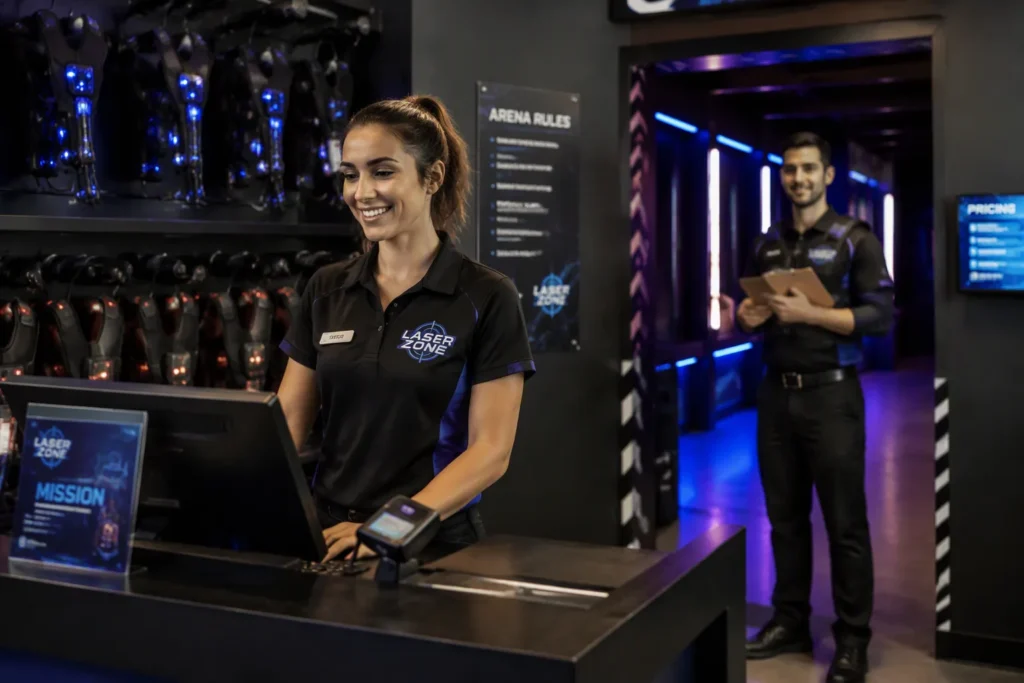
You run a laser tag arena. Your crew members sweat, crouch, and sprint all shift. Your front desk team greets guests and handles payments. Both groups need branded uniforms that survive heavy use. One uniform style rarely fits both roles well.
Sourcing a laser tag staff uniform OEM China order can cut your costs. The process still demands care. You define your needs, find a supplier, customize the design, check quality, and manage your budget. Each step protects your investment.
Key Takeaways
Figure out the uniform needs for each role: arena crew needs tough, breathable fabrics so they can move, while front desk staff need neat, professional clothing.
Find a trusted OEM supplier by using B2B websites and trade shows, and check their quality with samples and audits.
Make uniforms to order with a clear design plan, a tech pack, and approved samples. This keeps them consistent and shows your brand identity.
Do quality checks while making the products, and plan shipping with the right Incoterms and customs clearance.
Plan your budget for things like MOQ, materials, and tooling. Also, plan your timeline to start at least eight weeks before opening day.
Identifying Uniform Needs for Arena Roles
Your arena runs on two very different teams. Each team has its own physical needs and how they should look to the public. You need to know these differences before you talk to any supplier.
Requirements for Crew vs. Front Desk Attire
Arena crew members run, crouch, and crawl through dark mazes for hours. Their uniforms must let them move freely. Look for stretch panels at the shoulders and knees. Pick fabrics that pull sweat away from the skin. A loose fit around the arms and chest stops them from feeling tight during a quick turn.
Front desk staff stay mostly in one spot. They greet guests, take payments, and answer phones. Their clothes must look clean and professional. A polo or button-down shirt in your brand colors works well here. The fit should be neat but not tight. These uniforms get less physical wear, so you can focus on looks over extreme toughness.
Selecting Durable and Breathable Fabrics
Fabric choice decides comfort and how long it lasts. Polyester blends resist tearing and keep their shape after many washes. Moisture-wicking polyester keeps crew members dry during tough games. Cotton lets skin breathe for front desk jobs, but it wrinkles and wears out faster under heavy use.
Try a fabric weight between 150 and 200 grams per square meter for crew shirts. This range balances airflow with tear resistance. For front desk polos, a lighter knit around 180 grams per square meter feels good indoors. Always ask for fabric samples before you decide. Test each sample for stretch, color stay, and moisture soak-up. A laser tag staff uniform OEM China supplier can send samples that match your exact performance needs.
Finding a Laser Tag Staff Uniform OEM China Supplier
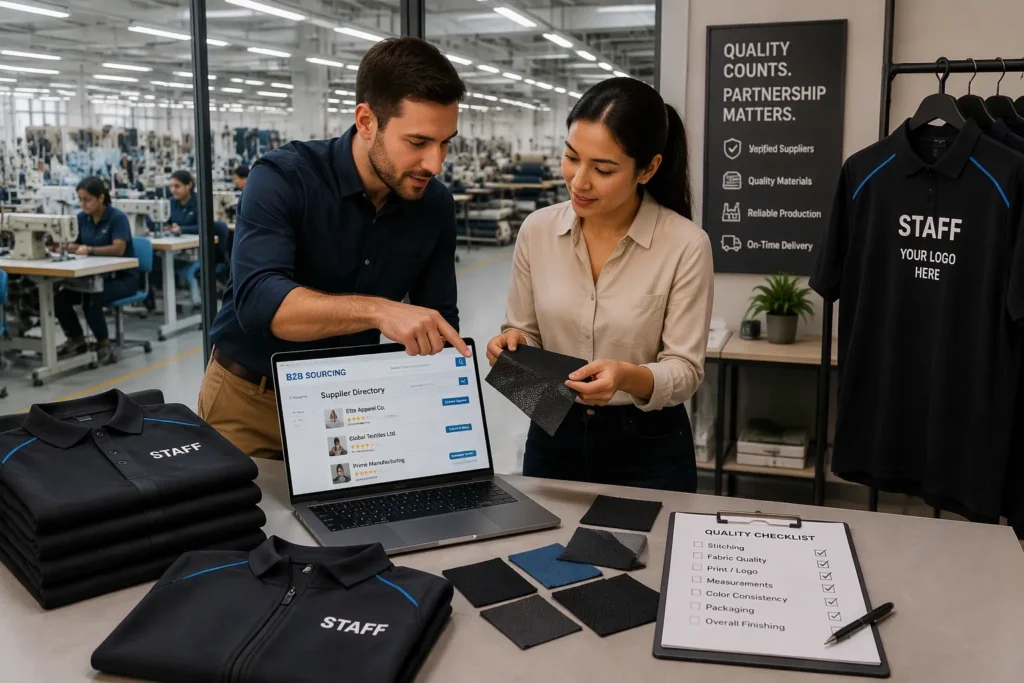
You already know what fabric and fit you need. Now you need a factory that can make them in large amounts. The right partner makes your laser tag staff uniform OEM China project go smoothly. The wrong one wastes your time, money, and effort.
Using B2B Platforms and Trade Shows
Begin your search on well-known B2B platforms. DHgate offers factory tours, so you can see production lines before you commit. Alibaba and Global Sources list thousands of clothing makers. Filter for suppliers who focus on sportswear or workwear instead of general clothing.
Trade shows let you meet people face to face. The Canton Fair and Intertextile Shanghai connect you straight with factory owners. You can feel fabric swatches and talk about customization right there.
Several factories have built strong names in this niche. Renrui Textile quotes about $2.20 per piece, with a minimum order of 100 units per color and a 7-10 day sample turnaround. OH Uniform and LANO WEAR also work with the entertainment and hospitality industries. Look for cut-and-sew production, not blank-and-print. Cut-and-sew means the factory builds the garment from fabric rolls to your exact specs. Blank-and-print limits you to stock sizes and basic logo placement.
Check Wetopgames for adaptation ideas. This supplier focuses on laser tag equipment, and their product pages show how other arenas brand their gear. You can borrow design ideas and use them on your uniform spec sheet.
Verifying Suppliers Through Audits and Samples
A low price means nothing without proof of quality. Ask for product samples and check them yourself before you place a bulk order.
Test fabric durability with at least a 1.5m drop test on any attached equipment pouches or accessories.
Check color consistency across several sample pieces under both indoor and outdoor lighting.
Confirm the stitching holds up after repeated stretching and washing.
Verify that any infrared sensor pockets or cable routing channels match your arena’s equipment dimensions.
Ask how the factory manages product quality. A good supplier has clear, written quality control steps. They should explain their testing methods for laser tag gear and show you inspection records from past orders. Confirm they put safety and performance first, because a slip in quality control leads to problems on your arena floor.
Responsiveness matters too. A factory that answers your questions quickly and openly during sampling will likely communicate well during production. Request a third-party audit if you plan a large order. Services like SGS or Bureau Veritas inspect factory conditions and verify that the facility meets your standards.
The best laser tag staff uniform OEM China suppliers welcome your questions. They treat sample evaluation as a partnership step, not a hurdle. When you find a factory that passes your sample tests and communicates clearly, you have a partner worth keeping.
Navigating the OEM Customization Process
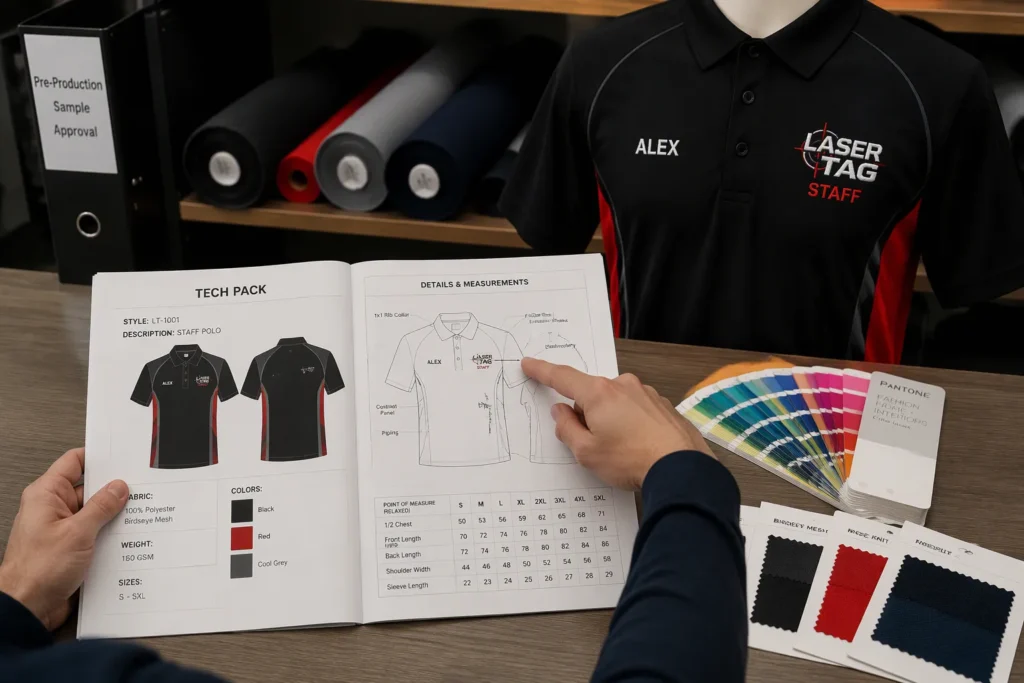
Customization turns a generic garment into a uniform your team owns. Logos, team colors, staff names, and existing design templates all fall under this step. You can hand a factory your current jersey and ask them to match it. You can also start fresh with a new concept. Either path ends at the same place: an approved sample that locks every detail before bulk production begins.
From Design Submissions to Approved Samples
Your first job is a clear design brief. Share your brand identity, your target audience, and any design inspirations you have collected. This brief translates your vision into actionable product specifications the factory can follow.
Next, select fabrics and materials. Choose from performance fabrics sourced from certified mills. Weigh safety and sustainability alongside cost and feel.
The factory then builds a tech pack. This document includes sketches, measurements, hardware specs, and branding placement guidelines. A complete tech pack removes guesswork from the factory floor.
Sampling comes next. You receive prototype samples within 7-14 days. Evaluate the fit, the fabric hand, and the branding quality. You get up to three rounds of revisions until you approve the final sample. Treat this approval as a hard gate. A laser tag staff uniform OEM China order that skips sample sign-off risks hundreds of unusable pieces.
Pre-Production Samples and Bulk Production
The pre-production sample must use actual bulk fabric and trims. Sign and approve it as the final standard against which all bulk production is measured. Lock your brand colors with Pantone codes and archive approved fabric swatches and thread charts. Insist on pre-production color proofs for every reorder. Consistent references minimize dye lot drift and keep new pieces matching existing ones.
Quality checkpoints protect consistency across large orders. In-line quality checkers roam production lines and pull garments at various assembly stages. This catches errors early and prevents large batches of faulty garments. End-line QC inspects every fully assembled garment for cosmetic defects, measurement accuracy against the spec sheet, and construction integrity before finishing and packing.
Two production details affect fit and cost. Knitted fabrics should be unrolled and relaxed for at least 24 hours before cutting to prevent shrinkage and measurement drift. Graded pattern pieces should be arranged to maximize fabric utilization at 85-90% or higher, which impacts both cost and consistency.
Plan your timeline backward from opening day. Four weeks out, lock the final roster, numbers, and captain patches. Three weeks out, approve pre-production samples. Two weeks out, confirm production is in progress and finalize the transit plan with contingency shipping. One week out, receive and inspect by size and player, and stage spares for last-minute needs.
During delivery inspection, spot-check stitching consistency, verify numbering and spelling against roster sheets, and test a garment through a wash cycle for color bleeding or peeling graphics. Document any deviations with photos and timestamps. Alert the vendor immediately to remediate within warranty windows.
Ensuring Quality Control and Logistics
You have approved your samples and locked your specifications. Now you must protect that standard during mass production and manage the journey from factory floor to your arena.
Production Inspection Protocols
You cannot check every piece of clothing yourself from far away. Hire a third-party inspection company instead. Firms like SGS or Bureau Veritas send trained inspectors to the factory. They check sizes, stitching, color accuracy, and logo placement against your approved sample. Set up this inspection before the factory packs your order. An inspector who finds problems early saves you from getting hundreds of bad pieces.
Ask your supplier for their internal quality control records. A good factory keeps track of in-line checks and end-line inspections. Ask for photos of the production run at important steps. This openness keeps your order on track and gives you proof if issues come up.
Shipping Incoterms and Customs Clearance
Incoterms spell out who pays for shipping, insurance, and risk at each step. Two terms are most common for clothing imports from China. FOB (Free On Board) means the supplier brings goods to the port and loads them onto your chosen ship. You pay freight and insurance from that point on. CIF (Cost, Insurance, and Freight) means the supplier covers those costs to your destination port. FOB gives you more control over logistics. CIF makes your work easier but costs more upfront.
Customs clearance needs correct paperwork. Your supplier must give you a commercial invoice, packing list, and bill of lading. Make sure the declared value matches what you actually paid. Under-declaration can lead to fines and delays. Confirm the right Harmonized System (HS) code for clothing imports in your country. Work with a customs broker who knows textile imports. A good broker clears your shipment fast and helps you avoid storage fees at the port.
Budgeting Costs and Managing Lead Times
Good budgeting begins with understanding what makes up your final price. Then you can plan your cash flow and your opening day without worry.
Pricing Components: MOQ, Materials, and Tooling
Your unit price depends on how many you order, the fabric you pick, and the decoration method. Most factories set a minimum order quantity of 100 pieces per color. This keeps their cutting and sewing lines running well. You pay less per piece when you order more units.
Cost Factor | Typical Range or Detail |
|---|---|
Unit price | Starts at $2.20 per piece |
MOQ | 100 pieces per color |
Sample lead time | 7-10 days |
Tooling fee | May apply for custom embroidery |
Custom embroidery often needs a one-time digitizing fee. This tooling charge covers the setup that turns your logo into a stitch file. Ask your supplier if they waive this fee on reorders. Fabric upgrades also make your cost go up. A performance moisture-wicking knit costs more than a basic cotton blend. Balance what you need for performance against your budget for each role.
Typical Order-to-Delivery Timelines
You get samples in 7-10 days after the factory confirms your design. Review them quickly. Every revision round adds days to your schedule. Once you approve the final sample, bulk production starts.
Production for a 100-piece order usually takes two to four weeks. Bigger orders need more time. Shipping from China adds one to four weeks by sea or a few days by air. A laser tag staff uniform OEM China order placed eight weeks before opening day gives you a safe buffer. Add extra time for customs clearance. Start early, approve samples fast, and track each milestone against your launch date.
You now have a clear plan for your laser tag staff uniform OEM China project. Figure out what each job needs. Pick a supplier who shows quality with samples and checks. Customize using a full tech pack and an okayed pre-production sample. Check the large order before it ships. Make your budget and schedule starting from opening day.
Begin with a written spec sheet. Write down fabrics, sizes, colors, and where logos go. Ask for prices from at least two checked factories. Look at their prices, how fast they send samples, and how they talk to you.
Get our uniform spec checklist to keep your needs in order. Reach out to Renrui Textile, OH Uniform, or LANO WEAR for a price quote today.
FAQ
What is the typical minimum order quantity?
Most factories set a minimum order quantity of 100 pieces per color. This keeps their cutting and sewing lines efficient. You pay less per piece when you order larger quantities.
How long does sample production take?
Sample lead time is typically 7-10 days after the factory confirms your design. Review samples immediately. Each revision round adds more days to your schedule.
What fabric works best for arena crew uniforms?
Polyester blends resist tearing and hold their shape after many washes. Moisture-wicking polyester keeps crew members dry. Try a fabric weight between 150 and 200 grams per square meter.
How do I plan the total timeline from order to delivery?
Bulk production for 100 pieces takes two to four weeks after sample approval. Sea shipping adds one to four weeks. Place your order eight weeks before opening day for a safe buffer.
About Top Fortune: Laser Tag Staff Uniform OEM Manufacturer in China
Shanghai Top Fortune Industry Co., Ltd. (Top Fortune) is an export-only OEM/ODM uniform and workwear manufacturer founded around 2002, operating a 1,506 m² factory in Songjiang, Shanghai. We produce private-label arena polos, softshells, referee vests, and front-desk apparel for overseas laser-tag arenas, battle-game venues, and family entertainment centers — plus distributors serving multi-location attraction brands across North America, Europe, the Middle East, Australia and other markets.
Typical programs start around 1,000 pcs per style (colors and sizes split within the style). Contact rill@topfortunemail.com or WhatsApp +86 13524210501.
Fabric, Visibility, and Role Kits for Laser Tag Arena Teams
- Front desk & membership: branded polos or button-downs that photograph well under lobby LEDs and survive daily wash cycles.
- Arena marshals / referees: high-contrast polos or softshells with reflective or neon accents for dark arenas; optional utility vests for gear packs.
- Branding: chest embroidery, heat-transfer logos, woven labels, and venue-color piping locked across multi-site rollouts.
- Comfort & durability: breathable performance knits or poly-cotton for active shifts; adult size curves only (not school or kids apparel).
OEM Process and RFQ Checklist for Laser Tag Staff Uniforms
- Share arena brand guide, roles (desk, marshal, manager), garment list, and target launch date.
- Approve fabric/color (lab dips) and a sealed pre-production sample (PPS).
- Confirm size run, packing by venue/city, and Incoterm from Shanghai.
- Bulk production with in-line checks, then final inspection before shipment.
| RFQ field | What to send |
|---|---|
| Roles & garments | Desk, marshal, manager — polos, vests, softshells |
| Quantity | Pcs per style/color/size (MOQ ~1000 pcs/style) |
| Branding | Logo files, placement, pantone / brand colors |
| Arena lighting | Need neon/reflective accents? dark-arena visibility notes |
| Wash routine | Home wash vs commercial laundry |
| Destination | Incoterm, port/city, needed-by date |
OEM vs Off-the-Shelf Laser Tag Arena Apparel
| Factor | OEM program (Top Fortune) | Catalog stock |
|---|---|---|
| Brand match | Your colors, logo, labels across arenas | Mixed catalog shades |
| Role kits | Desk + marshal sets designed together | Piecemeal SKUs |
| Visibility | Neon/reflective accents planned in PPS | Generic bright tees only |
| Reorder | Locked PPS for new arenas / seasons | Style may disappear |
| MOQ / lead time | ~1000 pcs/style; plan before peak seasons | Low MOQ if in stock |
Related OEM Uniform Programs for Leisure & Attraction Teams
- Escape room staff uniform OEM China
- Bowling alley uniform OEM China
- Amusement arcade uniform OEM China
- Theme park uniform OEM China
Email: rill@topfortunemail.com
WhatsApp: +86 13524210501
Address: Shanghai Top Fortune Industry Co., Ltd., Floor 3 Building 20 Haier Zhigu, No. 66 Guangfulin East Road, Songjiang, Shanghai 201600, China