

Convenience store uniform order process
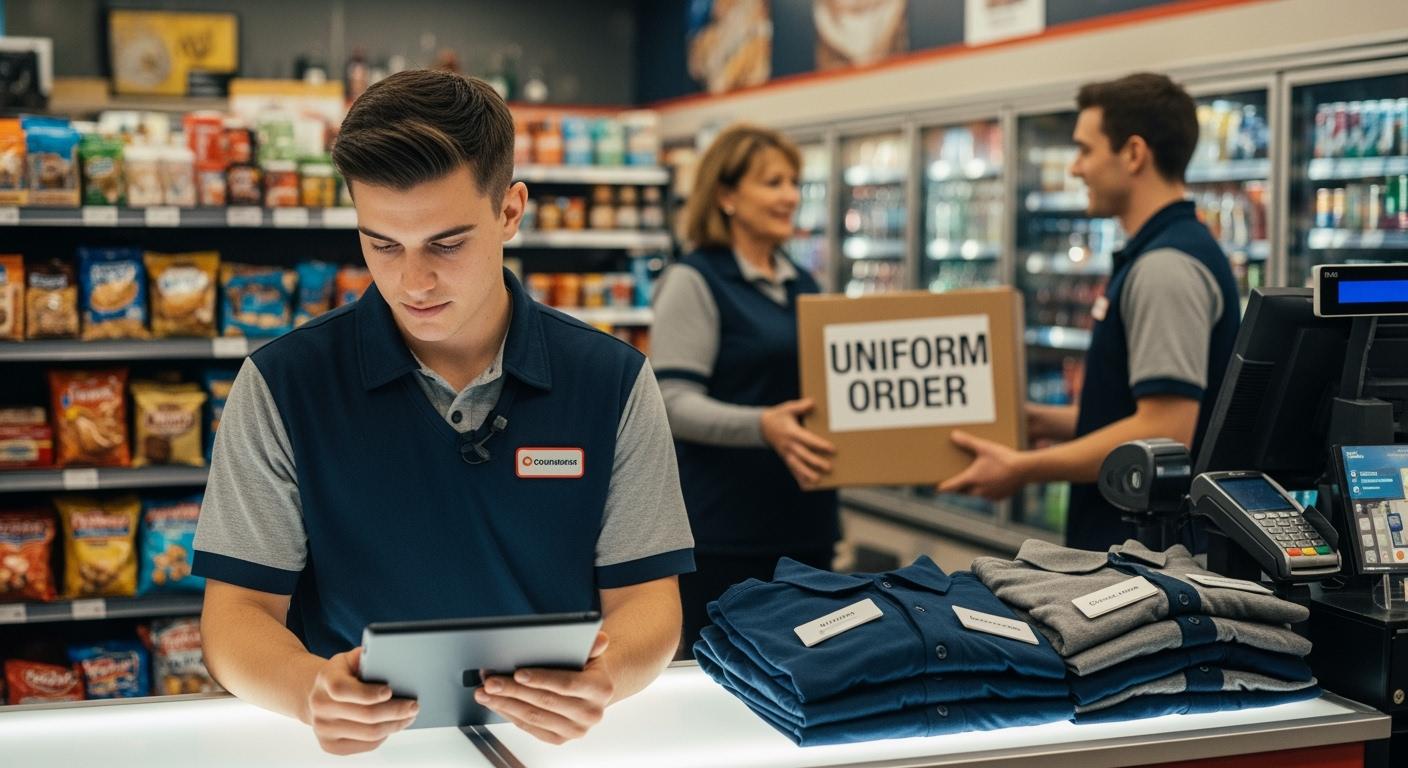
You can order uniforms for your convenience store staff through a streamlined process that uses online platforms and self-service tools. A well-designed uniform program ensures that your team receives high-quality, comfortable uniforms quickly. This approach not only boosts morale and professionalism but also makes daily operations run smoothly.
Employees feel more confident and proud when they wear uniforms that fit well and look professional.
Easy access to fresh uniforms supports hygiene standards and saves time for both staff and management.
A smooth convenience store uniform order process reduces administrative work and helps your store operate more efficiently.
Key Takeaways
A streamlined uniform order process boosts employee morale and professionalism.
Identify staff roles to select appropriate uniforms that enhance efficiency.
Prioritize comfort and functionality in uniforms to support long shifts.
Budget for uniforms by considering costs per employee and planning for turnover.
Use online platforms for easy ordering and inventory management.
Gather employee feedback to improve uniform fit and comfort.
Ensure uniforms meet safety standards to protect staff in hazardous environments.
Regularly review your uniform program to maintain efficiency and brand consistency.
Define Uniform Needs
Staff Roles and Requirements
Role-Based Uniforms
You must identify the different staff roles in your store before you select convenience store uniforms. Each role often requires a distinct uniform style to support daily tasks and maintain a professional image.
Cashiers greet customers and handle transactions.
Food prep staff work in areas where hygiene and safety matter most.
Fuel attendants operate outdoors and need uniforms that withstand weather and provide visibility.
Matching uniforms to each role helps your team perform efficiently and ensures customers recognize staff members easily.
Seasonal and Safety Considerations
You should plan for seasonal changes and safety requirements when choosing convenience store uniforms. Employees working outside need weather-appropriate gear, such as jackets for winter or breathable shirts for summer. Safety features, like high-visibility vests or flame-resistant fabrics, protect staff in hazardous environments.
Tip: Review local regulations and industry standards to ensure your uniforms meet safety guidelines.
Program Goals
Branding and Appearance
A successful uniform program supports your brand and creates a consistent look across all locations. Uniforms should be clean and classic, making employees stand out and reinforcing your store’s identity.
Uniform Need | Description |
|---|---|
Cleanliness | Employers prefer uniforms that are clean and presentable for customer interaction. |
Durability | Uniforms must withstand daily wear and tear due to the high-traffic environment. |
Functionality | Uniforms should be functional to assist employees in their tasks effectively. |
Brand Representation | Uniforms need to represent the brand clearly for customer recognition. |
Employee Comfort | Comfort is essential for employees working long shifts. |
Comfort and Functionality
You should prioritize comfort and functionality when selecting convenience store uniforms. Employees spend long hours on their feet, so breathable fabrics and ergonomic designs help them stay focused and productive.
Goal | Description |
|---|---|
Uniforms made from breathable fabrics enhance comfort, allowing employees to focus on service. | |
Brand Consistency | Standardized colors and logos create a unified image across locations, reinforcing professionalism. |
Customer Recognition and Trust | A well-designed uniform signals trust to customers, making employees visible representatives of the brand. |
Budget Planning
Cost Per Employee
You need to estimate the cost per employee for your uniform program. Factor in the price of shirts, pants, outerwear, and any required accessories. Durable materials may cost more upfront but reduce replacement expenses over time.
Planning for Turnover
You should plan for staff turnover when budgeting for convenience store uniforms. Keep extra uniforms in stock for new hires and seasonal staff. Automated reminders and inventory tracking help you stay prepared and avoid shortages.
Note: Regularly review your uniform needs to ensure your program stays efficient and cost-effective.
Select Convenience Store Uniforms

Style and Material Choices
Shirts, Pants, Outerwear
You need to choose uniform pieces that match the demands of your store environment. Many convenience stores select versatile options such as Carhartt hoodies, Champion sweatshirts, Nike Dri Fit pullovers, and Gildan blended uniform polo shirts. These styles offer a balance of comfort and professionalism. You can pair shirts with durable pants and add outerwear for employees who work outdoors or in cooler climates.
Carhartt hoodie: Ideal for colder weather and outdoor tasks.
Champion sweatshirt: Provides warmth and a casual look.
Nike Dri Fit pullover: Offers moisture-wicking properties for active staff.
Gildan blended polo shirt: Delivers a classic, professional appearance.
Durability and Fabric
You should prioritize fabrics that withstand daily wear and frequent washing. Brands like Red Kap, Carhartt, and Corner Stone supply durable materials designed for high-traffic environments. These fabrics help maintain a neat appearance and reduce replacement costs over time.
Tip: Select materials that resist stains and fading to keep convenience store uniforms looking fresh and professional.
Customization Options
Logo and Colors
Customizing uniforms with your store’s logo and a consistent color palette strengthens brand recognition. You can use two or three colors that reflect your brand’s identity and apply them across all uniform pieces. This approach helps customers remember your store and builds trust.
Customization Element | Impact on Brand Recognition |
|---|---|
Logo | Embeds your brand image in customers’ minds, making staff easily identifiable. |
Color Palette | Consistent use of colors increases recognition and emotional connection with your brand. |
Store Interior Match | Uniform colors that align with store décor reinforce a cohesive and professional impression. |
Store Identity
You reinforce your store’s identity by aligning uniform design with your overall branding. Uniforms that match your signage and interior décor create a unified look. Customers often judge the quality of your service based on visual cues, so consistency matters.
Employee Feedback
Fit and Comfort
You improve satisfaction and morale by involving employees in the uniform selection process. When you consider their preferences for fit and comfort, you create a program that supports productivity and engagement.
Employees who help choose uniforms feel more valued.
Comfort leads to better performance and higher morale.
Safety Compliance
You must ensure that convenience store uniforms meet safety standards. Gathering employee feedback helps you identify practical needs and address compliance issues. You can use several methods to collect input:
Method | Description |
|---|---|
Employees share honest opinions without fear of repercussions. | |
Surveys | You gauge general feelings and gather suggestions for improvement. |
Pre-implementation Feedback | You involve staff before making major changes, ensuring new uniforms meet their needs. |
Note: Incorporating employee feedback during uniform selection enhances functionality and supports a safer, more comfortable workplace.
Convenience Store Uniform Order Process
A streamlined convenience store uniform order process helps you save time, reduce errors, and ensure every employee receives the right uniform. By leveraging modern technology and thoughtful vendor selection, you can create a managed uniform program that supports your brand and daily operations.
Choose a Vendor
Selecting the right vendor is the foundation of an effective convenience store uniform order process. You need to evaluate suppliers based on several important criteria to ensure quality and consistency.
Local vs. National Suppliers
You can choose between local and national suppliers for your uniforms. Local vendors may offer faster response times and personalized service. National suppliers often provide broader product selections and advanced technology, such as a custom web portal for ordering. Consider your store’s size, location, and specific needs before making a decision.
Vendor Reputation
You should assess each vendor’s reputation by reviewing their track record and customer feedback. Reliable vendors deliver on time, maintain consistent quality, and offer responsive support. When evaluating potential partners, use the following criteria:
Fabric Composition: Look for durable and breathable blends like polyester-cotton.
Fit and Sizing Options: Ensure availability of extended sizes for comfort and image.
Pocket Placement and Functionality: Evaluate the number and size of pockets for accessibility.
Brand Identity Integration: Check the quality of logo placement and visibility.
Compliance Standards: Verify that uniforms meet relevant safety standards.
Tip: Request samples and references from vendors to confirm their ability to meet your requirements.
Set Up Online Ordering
A digital ordering system transforms the convenience store uniform order process. You can use a company store platform or a custom web portal to simplify uniform distribution and management.
Company Store Platforms
Company store platforms allow you to centralize uniform ordering for all employees. These platforms support bulk orders, repeat purchases, and real-time inventory tracking. You can tailor the platform to your brand, ensuring a consistent look and feel across all locations.
Feature | Description |
|---|---|
Role Differentiation | Distinguishes between different roles to offer appropriate uniform options. |
Departmental Needs | Supports varying needs across departments with tailored product suggestions. |
Location Relevance | Accounts for geographic differences, displaying items suited to local conditions or regulations. |
Customized Experiences | Allows customization of the user interface and content for each employee group. |
Dynamic Recommendations | Uses data-driven insights for real-time, personalized product recommendations. |
Flexible Ordering | Supports bulk ordering and repeat orders to streamline procurement processes. |
Role-Based Permissions | Controls access to features and data, ensuring sensitive information is only available to authorized personnel. |
Custom Branding | Enhances employee experience by reinforcing brand identity. |
Advanced Product Catalog | Manages a comprehensive range of products effectively. |
Real-Time Inventory Tracking | Keeps track of inventory levels in real-time to prevent overordering. |
Robust Security Measures | Ensures the security of sensitive information and compliance with policies. |
You benefit from uniforms at a touch of a button, complete customization, and support for all franchise locations. This approach reduces administrative work and helps you maintain brand consistency.
Employee Logins and Access
You can assign individual logins to each employee, allowing them to access the platform and order their uniforms directly. This self-service model empowers staff, reduces errors, and ensures accurate sizing and selection. Role-based permissions protect sensitive information and limit access to authorized users only.
Note: A secure login system also helps you track order history and manage uniform allowances for each employee.
Order Approval and Controls
Implementing order controls is essential for managing costs and maintaining oversight throughout the convenience store uniform order process.
Spending Limits
You can set spending limits for each employee or department. This feature prevents overspending and keeps your uniform program within budget. The platform can automatically enforce these limits during the ordering process.
Approval Workflows
Approval workflows add an extra layer of control. When an employee places an order, a designated manager reviews and approves it before processing. This step ensures compliance with company policies and helps you catch errors early.
Pro Tip: Automated notifications speed up the approval process and keep everyone informed about order status.
A well-designed convenience store uniform order process, supported by a managed uniform program and a robust custom web portal, ensures efficiency, accuracy, and brand consistency. By using online ordering platforms with individual logins, spending limits, and approval workflows, you create a seamless experience for both employees and management.
Manage Sizing, Inventory, and Reorders
Sizing and Fit
Measurement Guides
You need to provide clear measurement guides to help employees select the correct uniform size. Many convenience store staff face challenges when ordering uniforms, including inconsistencies in sizing across manufacturers and difficulty with self-measuring. These issues often lead to incorrect size orders and high return costs. To address these problems, you should:
Offer step-by-step measurement instructions with visuals.
Provide sample garments for employees to try on before placing an order.
Maintain a sizing chart that matches your chosen brands.
Tip: Accurate measurements reduce returns and ensure staff receive uniforms that fit well, supporting both safety and professionalism.
Special Sizing Needs
You must accommodate special sizing needs to keep your uniform program inclusive. Ill-fitting uniforms can prevent employees from performing duties safely and may result in lost wages while waiting for replacements. Consider offering extended sizes and tailoring options. Collect sizing information confidentially to avoid errors and delays. Lost forms or missing data can cause dissatisfaction and disrupt uniform management.
Inventory Tracking
Initial Distribution
You should implement a reliable system for initial uniform distribution. Organize uniforms by role and size to streamline handouts. RFID technology allows you to scan all items in a 10-foot radius, making inventory tracking up to 40% faster than traditional methods. Datascan’s self-scan devices also help you track individual items efficiently.
Inventory Method | Benefit |
|---|---|
RFID Technology | Fast, accurate scanning of large areas |
Self-Scan Devices | Efficient tracking of individual items |
Stock Rotation System | Keeps inventory fresh and reduces waste |
Returns and Exchanges
You need a straightforward process for returns and exchanges. Incorrect sizing or damaged uniforms can impact employee satisfaction and uniform management. Track returned items and update inventory records promptly. This approach helps you maintain accurate stock levels and ensures employees always have access to the uniforms they need.
Reordering Process
Automated Reminders
Automated reminders play a vital role in uniform management. Real-time tracking provides instant access to stock levels, allowing you to make informed decisions about reordering. Automated alerts trigger when inventory falls below minimum levels, ensuring popular items remain available.
Automated reordering prevents shortages.
Analytics and reporting offer insights into inventory turnover and sales trends.
New Hires and Seasonal Orders
You must plan for new hires and seasonal staff. Regular strategy reviews help you identify areas for improvement and cost savings. Staying agile enables you to adapt quickly to market changes, such as supply chain disruptions or the introduction of new products. Organize uniform management to support onboarding and seasonal fluctuations, keeping your team equipped and ready.
Note: A well-managed uniform program relies on efficient sizing, inventory tracking, and reordering processes. You create a seamless experience for employees and maintain brand consistency across all locations.
Delivery and Fulfillment

Shipping Options
Direct-to-Employee Delivery
You can streamline uniform distribution by shipping directly to employees. This approach reduces delays and ensures each staff member receives the correct items. Direct-to-employee delivery works well for stores with high turnover or multiple locations. You avoid bottlenecks and keep your team prepared for daily operations.
Bulk vs. Individual Orders
You may choose between bulk shipments to your store or individual packages sent to each employee. Bulk orders simplify inventory management for large teams and allow you to distribute uniforms during onboarding sessions. Individual shipments offer flexibility and convenience, especially for remote or multi-location staff.
Delivery Time | Description | |
|---|---|---|
In-stock fulfillment programs | Within 3 days | Rapid shipping from US fulfillment centers, ideal for high-turnover environments. |
Nationwide shipping | 3 days or less | Ensures uniforms are delivered quickly to avoid understaffing during employee transitions. |
Immediate outfitting for new hires | 3 days or less | Allows convenience stores to outfit new employees without delays associated with custom orders. |
Tip: Fast shipping options help you maintain staffing levels and avoid disruptions during busy periods.
Uniform Distribution
Pickup or Delivery
You can offer employees the choice to pick up uniforms at the store or receive them at home. Pickup works well for centralized locations and helps you verify sizing and fit on the spot. Home delivery provides convenience for staff who work at remote or satellite stores. You should document uniform policies in employee handbooks to ensure clarity and compliance.
Care Instructions
You support uniform longevity by providing clear care instructions. Include washing guidelines and stain removal tips with each uniform package. Proper care reduces replacement costs and keeps your team looking professional. You may also offer repair services to extend garment life and strengthen employee relationships.
Description | |
|---|---|
Advanced Inventory Management | Utilize systems to track stock and predict demand based on historical data. |
Seasonal Trend Awareness | Stay updated with seasonal trends to ensure uniforms are suitable for different weather. |
Consistent Branding | Ensure uniform designs reflect the client’s brand identity. |
Efficient Supply-Demand Balance | Maintain an efficient inventory system to avoid shortages during crucial times. |
Employee Engagement | Incorporate employee feedback in uniform design and distribution processes. |
Uniform Repair Service | Offer repair services to extend garment life and enhance client relationships. |
Note: Modern technology enables predictive analytics and automated processes, making uniform management easier and more accurate.
Handling Issues
Defects and Returns
You must address defects and returns quickly to maintain employee satisfaction. Establish a clear process for reporting damaged or incorrect uniforms. Track returned items and update inventory records to prevent shortages. Inconsistent deliveries or high turnover can complicate stock management, so you should monitor these factors closely.
Issue | Description |
|---|---|
Inventory Control | Managing stock levels effectively can be difficult due to limited space. |
Diverse Customer Preferences | Catering to varying tastes and demands complicates inventory management. |
Unpredictable Demand | Fluctuations in customer demand can lead to stockouts or overstocking. |
Inaccurate Sales Tracking | Poor tracking can result in mismanagement of inventory and sales data. |
Slow Checkout Processes | Inefficient checkout can deter customers and affect sales negatively. |
Inconsistent deliveries can leave stores unprepared for customer demand.
High employee turnover leads to inexperienced staff, affecting stock management.
Vendor Support
You benefit from strong vendor support throughout the uniform fulfillment process. Reliable vendors respond quickly to issues and help you resolve problems with defective items or delayed shipments. You should select partners who offer responsive customer service and flexible solutions for your store’s needs.
Selecting the wrong product can lead to customer dissatisfaction.
Poor inventory management results in stock discrepancies.
Inadequate warehouse capacity can hinder timely fulfillment.
Pro Tip: Establish centralized ordering systems and digital inventory tracking to automate reorders and reduce administrative work.
Program Management and Scaling
Multi-Location Stores
Centralized vs. Local Ordering
You manage uniforms for multiple store locations more efficiently by adopting centralized ordering systems. Cloud-based POS platforms connect all your stores, giving you a single dashboard to track inventory, sales, and uniform distribution in real time. This approach streamlines procurement and reduces errors. You can monitor stock levels and replenish uniforms across locations without manual intervention. Centralized ordering ensures that every store receives the correct products, maintains consistent pricing, and follows the same promotional guidelines. You avoid out-of-stock situations and optimize your product mix for each location.
Consistency Across Locations
Uniform consistency builds trust with customers and strengthens your brand image. You achieve this by using a multi-location POS system that standardizes products and pricing. When every employee wears the same style and color, customers recognize your brand instantly. You also maintain uniform standards by tracking inventory and order history for each location. Aggregated data helps you identify trends and address gaps quickly. Consistency across stores leads to a uniform customer experience and supports your reputation for professionalism.
Updating Uniforms
Branding Changes
You update uniforms to reflect changes in branding or customer expectations. The rise of fresh food offerings and competition with fast casual dining has prompted many convenience stores to adopt more polished staff appearances. Uniforms now play a key role in establishing brand identity and meeting food safety regulations. You should review your uniform design regularly to ensure it aligns with your current brand strategy and market trends. A refreshed look signals your commitment to quality and professionalism.
Communicating Updates
You communicate uniform updates clearly to your staff. Use employee handbooks, training sessions, and digital platforms to share new guidelines. Visual aids, such as posters or videos, help employees understand changes in style, color, or care instructions. You encourage feedback during the transition to address concerns and improve adoption. Clear communication ensures that everyone follows the updated standards and maintains a cohesive appearance.
Program Review
Employee Feedback
You measure the success of your uniform program by gathering employee feedback. Anonymous surveys and regular check-ins help you assess comfort, fit, and design preferences. Employees who feel comfortable and confident in their uniforms perform better and represent your brand positively. You use feedback to refine your program and address any issues promptly.
Cost and ROI
You track key metrics to evaluate the efficiency and financial impact of your uniform program. The following tables outline important measures:
Metric | Description |
|---|---|
Uniform satisfaction scores | Measures comfort, fit, and design of uniforms. |
Order error rate | Tracks errors in orders or sizing issues. |
Time from hire to uniform delivery | Measures efficiency in uniform distribution. |
Program spend vs. budget | Compares actual spending against budgeted amounts. |
Metric | Description |
|---|---|
Appearance audit scores | Assesses brand and customer impact. |
Order cycle time | Monitors efficiency in order processing. |
Stockout rate | Tracks frequency of stock shortages. |
Total cost per employee per year | Measures financial efficiency of the program. |
Tip: Regular program reviews help you identify areas for improvement and maximize your return on investment. You maintain a strong brand presence and support employee satisfaction by staying proactive.
You streamline your convenience store uniform order process by using customizable catalogs, employee logins, budget controls, and delivery tracking.
Feature | Benefit |
|---|---|
Customizable Product Catalog | Employees access only approved uniform styles, sizes, and colors. |
Employee Login and Order History | Staff reorder correct sizes and track past orders. |
Budget Controls and Allotments | You keep uniform spending within allowance. |
Shipping and Delivery Tracking | You monitor delivery progress and reduce issues. |
A branded and efficient uniform program fosters pride, unity, and higher job satisfaction. You retain staff and build a professional image by leveraging online tools and reviewing your program regularly.
Uniforms foster belonging and pride.
Unity increases job satisfaction.
Satisfied employees stay longer.
FAQ
How do you choose the right uniform vendor?
You should compare vendors based on product quality, delivery speed, and customer service. Request samples and check reviews. Reliable vendors help you maintain brand consistency and meet safety standards.
Can employees order uniforms themselves?
Yes, you can set up online platforms with individual logins. Employees select sizes and styles directly. This self-service approach reduces errors and saves time for managers.
What if an employee needs a special size?
You should offer extended sizing and tailoring options. Collect sizing information confidentially. This ensures every staff member receives a comfortable and professional uniform.
How do you handle uniform returns or exchanges?
You need a clear process for returns and exchanges. Track returned items and update inventory records promptly. Fast resolution keeps employees satisfied and maintains accurate stock levels.
How often should you review your uniform program?
You should review your program at least once a year. Gather employee feedback and analyze costs. Regular reviews help you improve comfort, appearance, and efficiency.
What features should an online uniform ordering platform include?
Feature | Benefit |
|---|---|
Individual Logins | Secure employee access |
Spending Limits | Budget control |
Approval Workflows | Policy compliance |
Inventory Tracking | Prevent shortages |
How do you manage uniforms for multiple store locations?
You should use centralized ordering systems. Cloud-based platforms let you track inventory, orders, and deliveries across all stores. This approach ensures consistency and simplifies management.