
Airport Lounge Staff Uniform OEM China | Branded Lounge & Gate Workwear
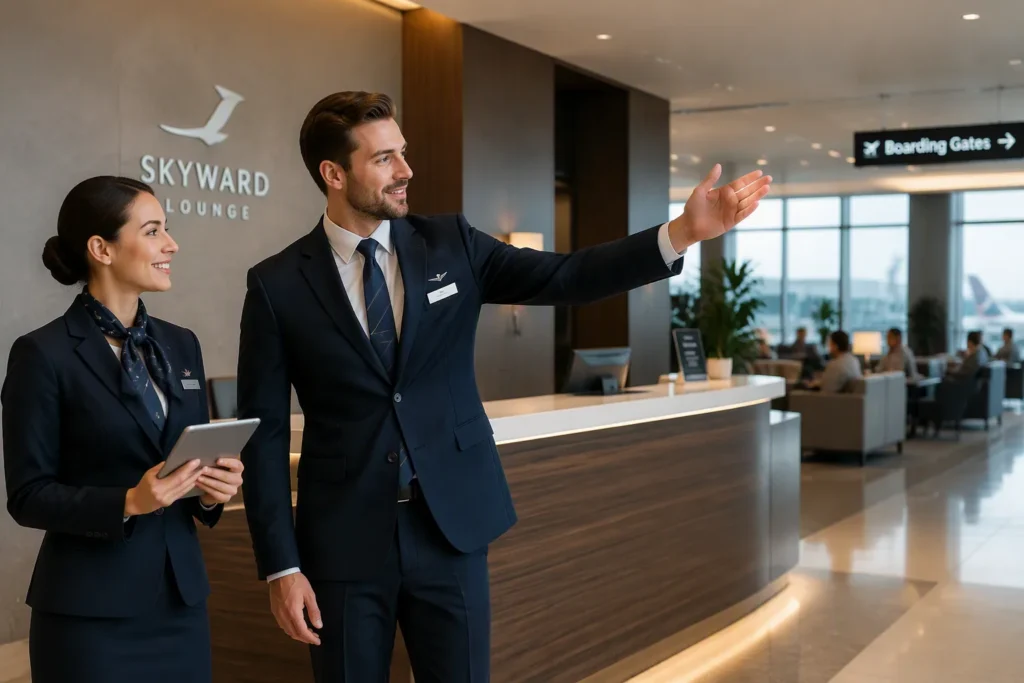
You will follow five steps to outfit your lounge teams: define specs, find a supplier, sample and negotiate, run quality control, and ship. This b2b sourcing guide targets airport lounge staff uniform oem china projects. Your staff need a polished look, all-day comfort, and consistent brand presentation.
Done right, sourcing uniforms from china cuts costs by 30–50% versus domestic procurement. You get new uniforms for lounges at airports that look sharp and last. This oem process works for any uniform program.
You will find actionable steps here, not theory. Contact two or three shortlisted suppliers this week for initial quotes.
Key Takeaways
Use five steps to get your lounge teams ready: set the specs, find a supplier, test samples and make a deal, check quality, and ship.
Buy uniforms from China to save 30–50% compared to buying them in the U.S.
Most Chinese OEMs take small orders of 50–100 sets for each style, which is great for small lounges.
Always ask for and check certificates like OEKO-TEX and ISO 9001 to make sure things are safe and well-made.
Reach out to two or three suppliers this week to get prices and begin your uniform project.
Airport Lounge Staff Uniform OEM China Specifications
Fabrics, Colors, and Logo Integration
Your lounge staff work long shifts in rooms with controlled air. They still need fabrics that resist wrinkles and blends that are easy to care for. Pick polyester-cotton mixes with a tight weave. These materials keep a professional shape through repeated wear and washing. Full-color brand copying matters for airline lounges. A good supplier prints or embroiders your logo and branding with sharp detail. You can get custom branding easily when you send vector files and Pantone color codes. Many factories also offer odm services. They change an existing design to fit your brand. This method saves time during production.
Quantities, Budget, and Lead Times
Figure out your order size from staff count and shift rotations. Count every person who wears the uniform across all shifts. Add a buffer of 10–15% for replacements and sizing swaps. Most Chinese OEMs accept an moq of 50–100 sets per style. This low moq helps small lounges in airports start a program without huge risk. Budget per set changes by fabric weight and design complexity. Standard lead times run 30–45 days after sample approval. Rush orders cost more. Plan your sourcing timeline around seasonal peaks. Chinese factories slow down during Spring Festival. Build that delay into your schedule.
Sourcing OEM Uniforms From Chinese Manufacturers
Online B2B Platforms and Trade Events
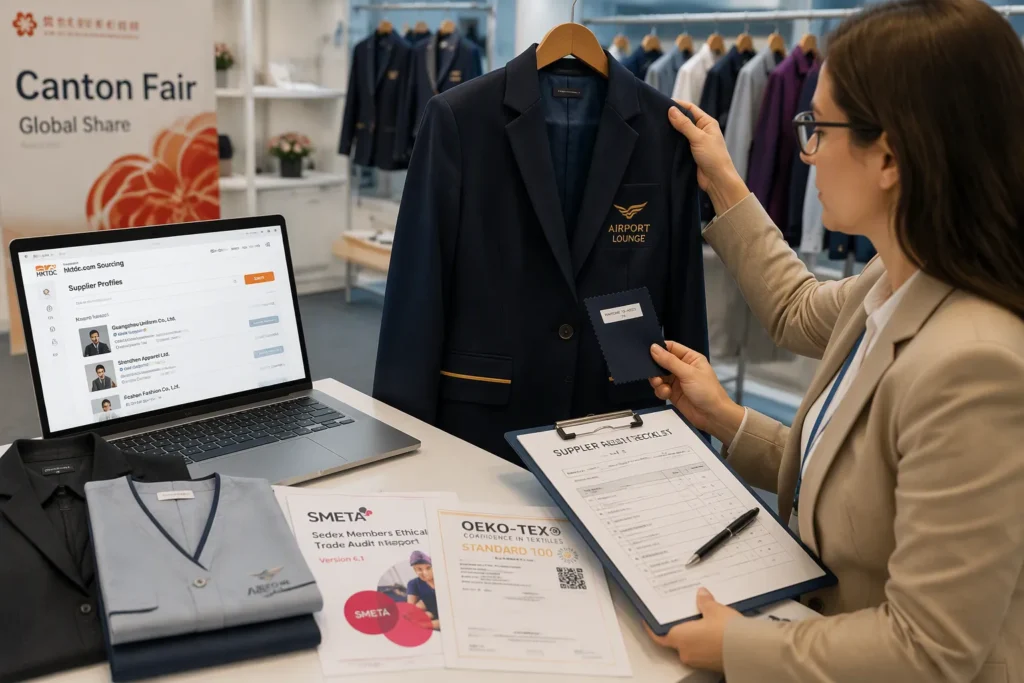
You have a few trusted ways to find a uniform supplier in China. Start with big B2B sites. Global Sources, TradeWheel, Made-in-China.com, and Alibaba.com have thousands of clothing makers. These sites let you sort by product type, location, and certification. You can also look for special suppliers like OH Uniform and CORHUNTER. These companies work on hospitality and aviation clothing. They know what lounges at airports need.
Trade shows let you meet people face to face. The Canton Fair in Guangzhou and Intertextile Shanghai connect you with factory owners directly. You can feel fabric samples and talk about your airport lounge staff uniform oem china project in person. Many factories in Guangdong serve the airport uniform niche. Their FOB prices range from $21.5 to $23.5 per set. This price covers standard polyester-cotton blends with logo embroidery. Always look for the Trade Assurance badge on Alibaba. This program protects your payment if the supplier does not meet agreed terms. It is a strong safeguard for first-time buyers.
Factory Verification and Handling Inquiries
Verification separates reliable partners from risky ones. Ask every potential supplier for audit documents. Social audits matter most for uniforms procurement. Look for SMETA (Sedex, 2-pillar or 4-pillar), BSCI (amfori, for EU buyers), or WRAP (US market, with Platinum, Gold, or Silver tiers). These audits cover labor rights and working conditions. Request the audit report cover page. It must show the audit date, registry number, scope, and any non-conformances. Use the audit number lookup on the issuing organization’s database. This step is the fastest way to confirm authenticity.
Quality and textile certifications add another layer. OEKO-TEX Standard 100 tests textiles for harmful substances. Verify the certificate number at oeko-tex.com. ISO 9001 covers quality management systems. Confirm it with the issuing certification body, such as SGS, TÜV, or BSI. ISO 14001 addresses environmental management. SA8000 covers social accountability. Check these at sa-intl.org. Certificate fraud is common in manufacturing hubs. Always verify certificate numbers independently. A supplier who refuses to provide the number or shows a mismatch is a serious warning sign.
When you handle inquiries, be specific. Send your tech pack with fabric specs, color codes, and logo files. Ask about their production capacity, lead times, and oem/odm services. A good supplier responds with detailed questions. They want to understand your lounge brand standards. Poor responses signal poor communication later. Shortlist two or three factories. Compare their quotes, sample policies, and communication speed. This b2b sourcing guide recommends you visit factories if possible. A factory visit reveals more than any document. You see their equipment, staff, and quality control process firsthand. For uniforms sourcing, factory direct relationships reduce costs and improve accountability. Your procurement team should treat this vetting stage as critical. It determines the success of your entire lounge uniform program.
OEM Sampling, Negotiating Price, and Payment Terms
Requesting and Evaluating Pre-Production Samples
You need a physical sample before you agree to make a large order. Ask your supplier for a pre-production sample once you finish the design. Most Chinese factories send samples in 7 to 14 days. You pay for the sample and shipping. Many suppliers give back the sample fee after you place a big order.
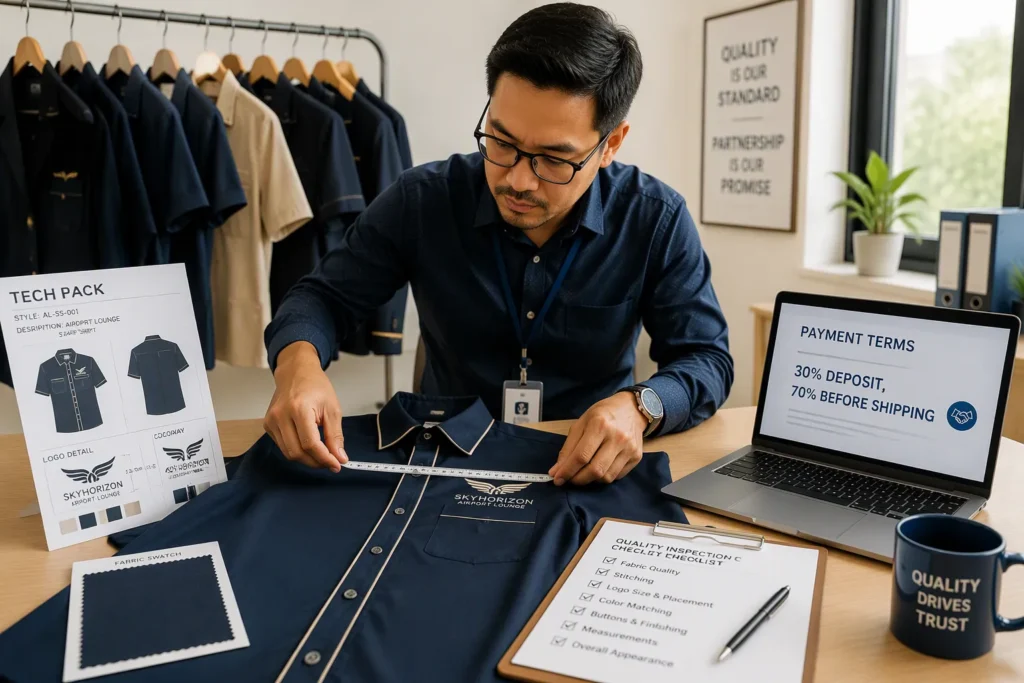
Look at the sample closely. Check the stitching first. Look for straight seams, even stitches, and no loose threads. Feel the fabric with your hand. It should feel like you asked. Cheap fabric feels rough or thin. Good polyester-cotton blends feel smooth and strong. Test how well it resists wrinkles. Squeeze the fabric in your fist. It should spring back with few creases.
Pay close attention to where the logo goes. Measure the distance from the collar or pocket to the embroidery. Compare it with your tech pack. A wrong logo spot hurts the professional look for your lounge staff. Check how thick the embroidery is and if colors match your Pantone codes. Bad digitizing causes puckering or broken threads. Ask for a photo of the logo area before the factory sends the sample.
Wash the sample one or two times. This shows if it shrinks or if the color runs. If the sample fails any check, ask for changes. Do not say yes to a sample that is not good enough. Your approval sets the standard for the big order.
MOQ Discussion and Payment Protection
Most Chinese OEMs set a minimum order of 50 to 100 sets per style. This minimum applies to lounge uniforms for airports. Smaller lounges can mix styles to meet the minimum. Ask your supplier if they can be flexible. Some factories take lower amounts for a small extra fee.
Payment terms follow a common pattern in China. You pay 30% deposit to begin production. You pay the rest 70% before shipping. This structure protects both sides. The deposit pays for raw materials. The final payment makes sure the factory ships on time.
Protect your money with Trade Assurance on Alibaba. This program keeps funds until you say the order is okay. For larger orders, use a letter of credit from your bank. An L/C costs more and needs paperwork. It gives strong protection for orders over $30,000. First-time buyers should start with Trade Assurance. It is easier and quicker to fix problems.
Talk about price after you approve the sample. Ask for a list of fabric, labor, and branding costs. This openness helps you compare prices from different suppliers. You get a discount when you order more than 500 sets. Ask how long the price is good for. Fabric costs change. A 30-day price is common. Lock in your price before you pay the deposit.
Quality Control and Logistics for Lounge Uniforms
Third-Party Inspections and Compliance Standards
A third-party quality inspection keeps your money safe before your goods ship. Inspectors usually check fabric problems, size accuracy, and embroidery quality. The inspector looks at each piece for holes, stains, or weaving issues. Size accuracy matters most for lounge uniforms. The inspector measures a sample set against your size spec sheet. Embroidery checks cover thread breaks, color matching, and logo placement. The inspector uses the AQL sampling standard. A typical AQL 2.5 means the batch passes if defects stay below 2.5%.
Compliance standards show that your supplier meets safety rules. OEKO-TEX Standard 100 tests for harmful substances in fabric. Ask your supplier for the certificate number. Check it at oeko-tex.com. Your supplier qc team should give you this paperwork. ISO 9001 covers quality management systems. A factory with ISO 9001 follows written steps for production and inspection. These standards give you confidence that your lounge staff uniforms meet international rules for your lounges.
Shipping, Incoterms, and Customs Clearance
Most lounge uniform shipments leave China from Guangzhou or Shenzhen. You pick an Incoterm to set payment and risk. FOB means the supplier pays costs until goods are on the ship. You pay for ocean freight and insurance. CIF means the supplier covers cost, insurance, and freight to the destination port. DDP means delivery to your door with customs clearance included. For first-time buyers, FOB is the safest choice. It keeps your costs steady and limits your risk.
Customs clearance needs a commercial invoice, packing list, bill of lading, and certificate of origin. Your freight forwarder handles these documents. Pick one with apparel import experience. Many airports require special compliance paperwork for imported goods. Sea freight from Shenzhen to the US West Coast takes about 15 to 20 days. Add 5 to 10 days for customs and delivery. Work these timelines into your rollout schedule for your airport lounge.
You now have a clear plan for your airport lounge staff uniform oem china project. First, define your specs. Second, find a supplier. Third, get samples and negotiate. Fourth, run quality control. Fifth, ship your order. Good communication and careful vetting help you succeed at every step. Ask detailed questions. Check every certificate. Compare samples with care.
Your next step is easy. Contact two or three shortlisted factories this week for initial quotes. Download our spec sheet template to organize your needs. Strong sourcing today builds a long-term partnership with a reliable supplier. That partner delivers new uniforms for your lounges year after year. Your lounge branding stays consistent. Your procurement costs stay low. Start now.
FAQ
What minimum order quantities apply for lounge uniform OEM projects?
Most Chinese OEMs take 50–100 sets per style. Some factories lower the MOQ for a small extra fee.
How long does sampling take for airport lounge staff uniforms?
Most factories send samples in 7 to 14 days. You pay for the sample and shipping.
What payment methods protect my uniform order?
Trade Assurance on Alibaba holds funds until you approve the order. A letter of credit works for orders over $30,000.
Which compliance certificates should a uniform supplier have?
Look for OEKO-TEX Standard 100, ISO 9001, and SMETA or BSCI social audits. Verify each certificate number online.