

Restaurant Front-of-House Staff Pants OEM | Host & Server Trousers
Table of Contents
Display
A dining-room trouser is the garment guests see from the waist down when a host walks them to a table or a server leans in to take an order. When the pant is right, nobody comments on it. They notice when one room’s black has gone slightly blue, when a knee bags after a month on the floor, or when a slanted pocket gapes every time a handheld goes in and out.
This guide is for purchasing and dining-room operations teams at multi-unit restaurant groups, and for uniform distributors who supply those programs, who buy adult front-of-house staff pants for hosts, servers, bussers, and floor supervisors. It stays on the trouser. If the guest-facing layer over a shirt is a vest or waistcoat, specify that garment on the restaurant front-of-house staff vest OEM page and keep this brief for the pant only. For a wider view of the trouser range we already cut, start from the pants category and return here for a dining-room staff specification.
The dining-room trouser has to look quiet after a long shift
A front-of-house pant is a service garment. It has to hold a clean line while the wearer walks, stands at a host stand, reaches across a table, and sits briefly at a side station.
The usual failure points are practical: shade drift between black lots under dining-room light; knee bagging that does not recover after a busy service; a hem that climbs after washing; pockets that print or gape when they hold a handheld or a check presenter; and a waistband that rolls or belt loops that twist after laundering. Write the specification around those points, then sample on real staff during a service, not only on a form in a bright room.
Choose cloth by the week on the floor, not by the first hand-feel
Swatches feel promising on a table. The useful question is how the cloth looks and sits after several services and a real wash route.
Polyester-cotton twill is the workhorse for many dining-room programs. A mid-weight twill in black or charcoal holds a crease, stays relatively matte, and takes repeated washing better than a soft all-cotton bottom. It is a solid starting point when staff wash trousers at home or when a group laundry runs a straightforward cycle.
Poly-viscose stretch twill (often a small elastane content in a matte charcoal or black) moves with the wearer on a reach across a table and usually recovers better at the knee and seat. It can look slightly dressier in a formal dining room, provided the surface stays matte.
If most staff walk long sections, start with a matte stretch twill and check recovery after a wash trial. If the program must hold a sharp crease and a stable black, start with polyester-cotton twill and confirm the shade under dining-room lighting. Hosts and servers should share one cloth family; change ease if needed, not the fiber blend.
Shanghai Top Fortune can provide third-party fabric test reports on request, so your team can review results such as shrinkage, colorfastness, and pilling against the test methods you specify. For a closer look at how we approach cloth and sampling, see About Clothing Fabrics.
Cloth | Look and movement | Best starting point for |
|---|---|---|
Mid-weight polyester-cotton twill | Matte, holds a crease, less give at the knee | Daily issue in black or charcoal across several rooms |
Fine poly-viscose stretch twill | Matte, dressier drape, better reach and recovery | Formal dining rooms and long walking sections |
A fit block for walking a floor
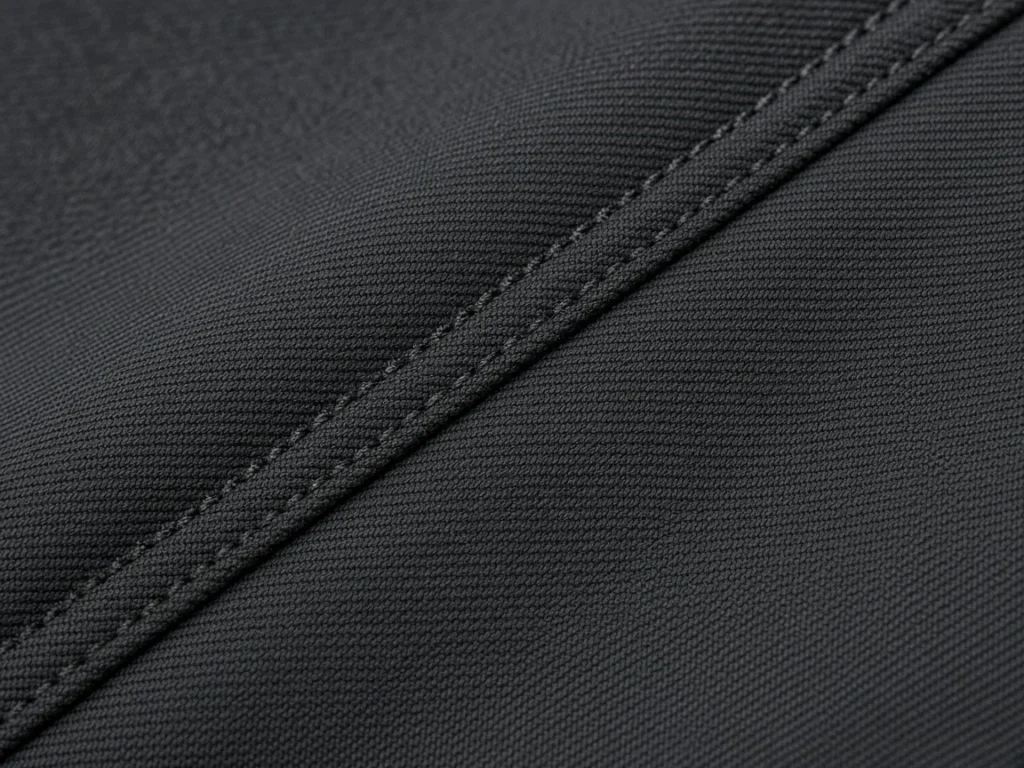
The block has to work on people who are on their feet for a full service. The waistband should stay put on a forward reach, without digging in at a side station. Leave enough thigh and seat ease to walk and to bend when clearing a table, without a baggy leg that looks sloppy in a formal room. On stretch cloth, check that the knee recovers; on a non-stretch twill, ease has to be cut in. Set a clean, slightly tailored hem break — too long and the hem walks under the heel; too short and it climbs after washing.
Survey real rosters, not a generic size chart. Hosts, servers, bussers, and floor supervisors can share one style when the cloth and the basic block stay the same. Sample a men’s block and a shaped women’s block together so the shade, pocket placement, and hem policy match.
Guests stand close enough to see a twisted belt loop and a wavy hem. Specify a stable waistband that does not roll after washing, with belt loops evenly spaced, bartacked, and wide enough for the belt your team actually issues. A plain stitched hem is usually the most reliable for a group that will reorder; record the finished inseam policy by size and keep a sealed sample so later orders do not arrive a fraction shorter.
Pocketing that stays quiet during service
Front-of-house pocketing should disappear until it is needed. A loud cargo layout belongs to another kind of pant and will fight the clean line you are paying for. A practical dining-room map is usually reinforced slanted side pockets that accept a hand, a pen, or a folded cloth without gaping; a secure back or interior pocket set so it does not print through a fitted seat; and, if needed, a narrow internal or side-seam pocket for a handheld or a check presenter, tested on the real device your rooms use.
Bartack the pocket mouths. Ask the sample wearer to load the pocket as they would during service, then walk, sit, and reach. If the pocket pulls open or the front distorts, change the bag, the angle, or the reinforcement before you approve bulk.
One black, one charcoal, held across every room
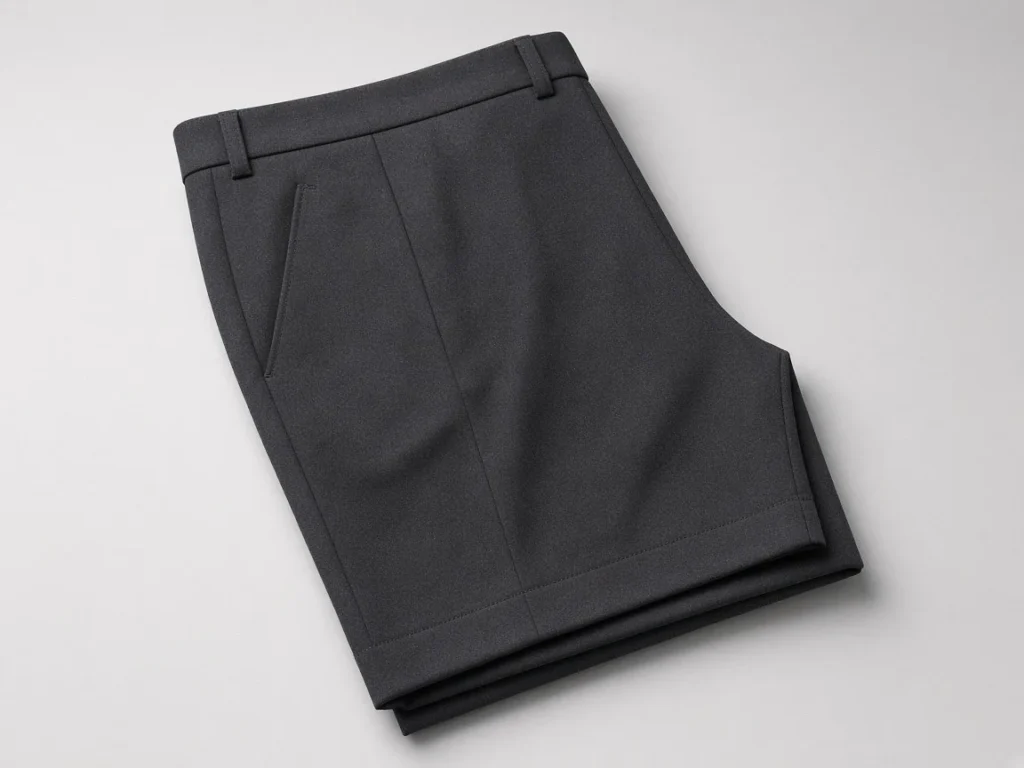
Color is where multi-unit programs most often drift. “Black” is not a single color under warm dining-room light, and charcoal can split into green-grey and brown-grey from one lot to the next. Approve a physical shade standard for each color, then view it in the dining room as well as in daylight. Seal a cutting of the approved lot with the purchase record. When you reorder, match to that sealed standard. If hosts wear charcoal and floor staff wear black, treat those as two shade standards inside one program.
Care that matches how the trousers will actually be washed
Write the care route into the brief before you fall in love with a cloth. Some groups issue trousers that staff wash at home. Others run a central laundry with a hotter cycle and a faster turn. The sample that matters is the one that has been through that route, then put back on for a service. Check shrinkage at the waist and the hem, crease retention, pocket bag twist, and whether the black has taken on a shine or a fade at the seat and thigh. If both routes will be used, test both and specify the more demanding route.
A pants-only RFQ for a dining-room program
Use this table as the quote document. A headcount without a cloth, a shade standard, or a wash route will produce a trouser that looks right on a hanger and uneven on the floor.
Item | What to send |
|---|---|
Who wears it | Hosts, servers, bussers, and floor supervisors, and whether they share one cloth |
Cloth and color | Named blend, weight, finish, matte requirement; black, charcoal, or both, with a physical standard |
Fit and hem | Men's, women's or shaped blocks; rise and inseam policy; roster survey |
Waistband and pockets | Band type and loop width; slanted side pockets; handheld or check-presenter needs |
Mark, care, packing | Logo file if the trouser carries a mark; home wash or central laundry; pack by dining room and arrival date |
Plan volume by style, not by the whole group. Host and floor versions count as one style only when the cloth and the basic block stay the same. When the fabric or the block changes, plan each style around about 2,000 pieces per style, combining room size runs that share the same cloth.
Put samples on a host shift at the stand and a floor service in the same room. Check the waistband on a forward reach, the knee after a section walk, pocket sit with a handheld or check presenter, and the hem after the agreed wash route. The pre-production sample must use the bulk cloth, production waistband trims, and the production mark if any. Approve it in writing and seal a copy at your office and at the factory.
Questions dining-room buyers ask about staff pants
How is this different from the restaurant front-of-house staff vest page?
That page specifies a vest or waistcoat worn over a shirt by waitstaff and hosts. This page specifies the trouser only. They are different garments and should be sampled separately, even when they share a color family.
Can hosts, servers, and bussers share one pant?
They can share one cloth, one shade standard, and one pocket family. Bussers may need a little more ease at the thigh and seat. That is still one program if the cloth stays the same; sample the ease on the people who will actually wear it.
What should the first sample prove?
A stable waistband, quiet pocketing under a real handheld or check presenter, a hem that stays after the agreed wash, a shade that holds under dining-room light, and a knee and seat that still look clean after a service.
About Top Fortune and a dining-room pants quote
Shanghai Top Fortune Industry Co., Ltd. has built OEM and ODM staff-apparel programs since about 2002 from a 1,506 m² facility in Songjiang. Sampling, sewing, and decoration sit under one roof, which helps a multi-room trouser stay on one sealed shade and one hem and pocket standard.
Request a restaurant front-of-house staff pants quote: rill@topfortunemail.com | WhatsApp +86 13524210501
Send the trouser brief, a physical shade reference if you have one, logo files if the pant carries a mark, a size survey by dining room, care expectations, and the date trousers must arrive. The sample that matters is the one worn through a service at the host stand and on the floor, not only the one that looks clean on a hanger.