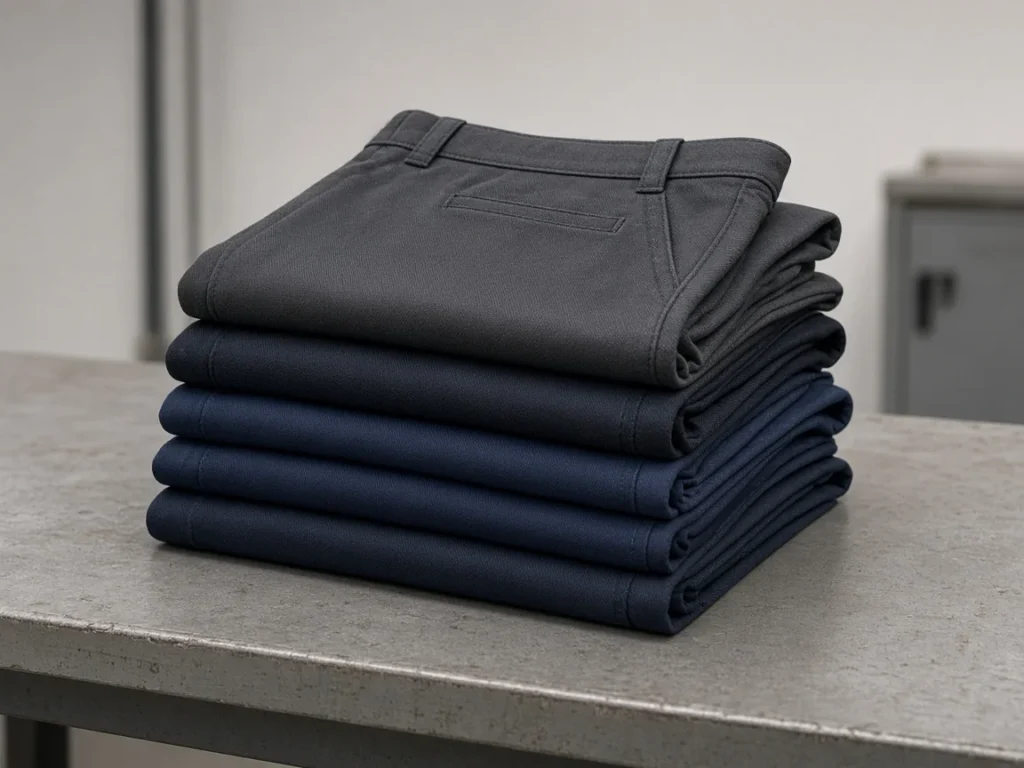

Tire Shop Technician Pants OEM | Auto Service Floor Crews
Table of Contents
Display
A tire-shop technician pant has to stand at a service bay for a full shift, take oil and grease at the knee and hem, hold the tools the crew actually carries, and still look like the same shop after a hard wash. That is a trousers brief, not a rewrite of a technician polo.
This page is for purchasing, shop operations, and brand teams who buy adult staff pants for tire and auto service floor crews. It stays on the trouser. The knit top is a separate style and is already covered on the tire shop technician polo shirt OEM page; share a color system if you want, but do not paste this pant spec into a polo order. A wider shop kit is also a different document; use the tire service center staff uniform OEM page for that program view, then return here for the pants only.
The failure points are oil, the knee, and the pocket
Ridgeway Tires can run a busy bay where trousers pick up oil at the mid-thigh and fade at the knee within a season. Southbay Auto Service can see the same cloth fail first at a loaded cargo pocket or at a hem that drags on a clean floor. In both shops the pant is judged at standing height, in motion around a vehicle, and after laundry — not on a hanger.
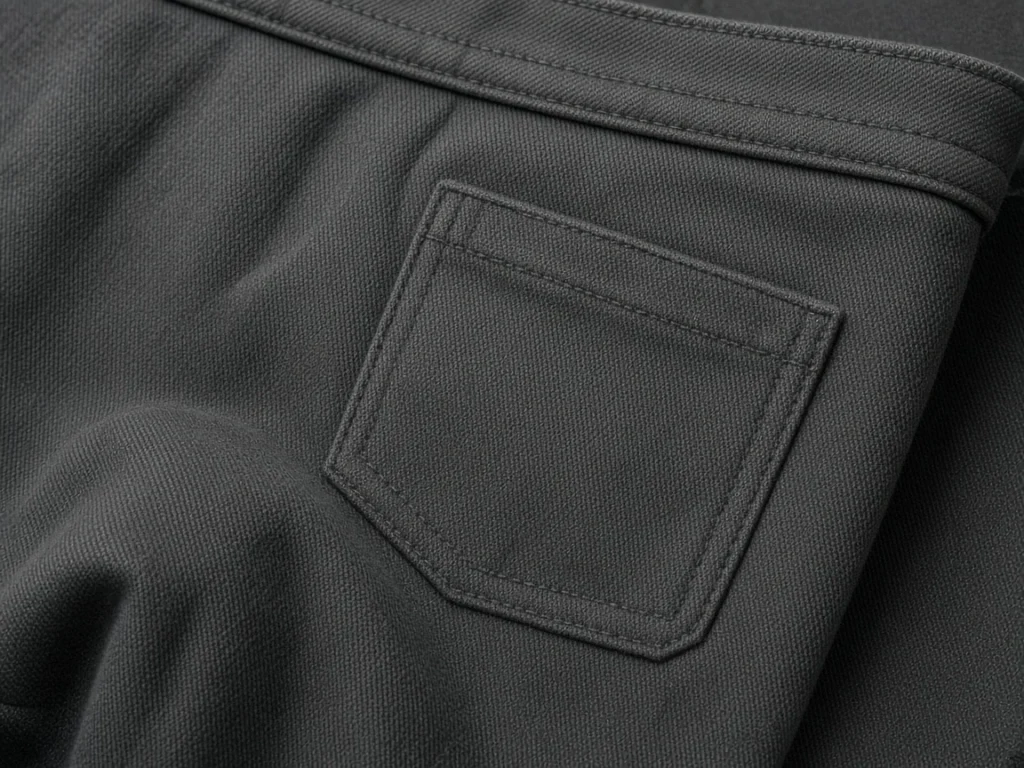
Common failures are predictable if you brief the trouser like a casual chino:
Oil and grease wick into a light cloth and will not release in the wash you actually run, so the shade looks blotchy by mid-cycle.
The knee bags or wears through because the block was not cut for kneeling and standing at a bay.
A shallow pocket dumps a gauge or a tool when the wearer stoops, or a bulky cargo catches on a wheel or a bench.
The seat and inner thigh wear faster than the color standard can be reordered.
Two shops receive slightly different charcoals, and float staff look like they came from another site.
This pant is for service-floor work. It is not a facility cleaning trouser with a pocket map for bottles and cloths; that brief lives on the property cleaning staff pants OEM page. Do not copy a janitorial pocket layout into a tire-shop order, and do not copy a desk trouser into a bay order.
A pant block for standing and kneeling at the bay
Get the block right before you argue about pocket flaps. Service-floor work is mostly standing, with regular kneeling, squatting, and a reach under a wheel arch or over a bench.
Rise and stride should allow a squat without pulling the waistband down or binding at the hip. A rise that works on a standing form can expose the shirt when the wearer kneels at a tire. Knee ease should be cut into the pattern, not added later as a patch that only hides a tight block. If you want a knee reinforcement, approve it on the production cloth and check that it still bends comfortably after a wash.
Length should clear the shoe in a standing photo and stay clear of the floor when the wearer walks the bay. A hem that soaks up oil will never look like the approved shade. Specify a clean hem finish and whether you want a slight break or a shorter service length. Cuffs that collect dirt are usually the wrong answer here.
Fit through the seat and thigh has to allow a wide stance at a wheel without looking oversized at the front counter if a technician steps out to speak with a customer. Offer men’s and women’s blocks, or a unisex block plus a shaped option, from a roster of people who work the bay — not from a single office fit model.
A mid-weight cotton-rich twill or a durable poly-cotton is the usual starting point. The cloth needs enough weight to hold a pocket load and enough recovery that the knee does not bag after a week. A very heavy cloth is tiring on a warm bay and slow to dry. A very light cloth will show oil sooner and wear at the pocket corners.
Pocket maps for the tools on a service floor
Pockets are the daily interface. Write a map for what the crew actually carries, then test it with those items, not with an empty sample.
A practical service-floor map is:
Two deep side pockets that keep a phone or a small notepad from sliding out on a stoop.
A back pocket with a secure closure for a wallet or a shop card, placed so it does not catch on a bench.
A cargo or tool pocket on one or both thighs for a gauge, a small tool, or gloves, with a flap or closure that stays shut when the wearer kneels.
A narrow slot for a pen or a tire-depth gauge, clear of the main cargo flap.
Keep the cargo pocket close to the body. A floppy, low pocket swings into a wheel and unbalances the trouser line in a standing photo. If Ridgeway Tires wants a fuller tool pocket and Southbay Auto Service wants a quieter front-of-bay look, keep one block and one color, and change only the cargo layout. Say that clearly on the brief so you are not quoted for two unrelated trousers.
Hardware should be low-shine and durable in a wash. Metal that rusts or paints that chip will mark the cloth. Rivets and bar-tacks belong at pocket corners, belt loops, and the fly, where load concentrates. Check that a loaded cargo does not pull the side seam or twist the leg.
Color hold after a grease-wash cycle
The shade is part of the shop standard. A charcoal that looks even on day one and mottled after oil and laundry undercuts the polo you may already have issued.
Name the wash route in the brief: shop laundry, home wash, typical temperature, and whether a degreasing step is used. Then wash-trial the production cloth with a realistic oil and grease mark, not only with a clean-water cycle. Check:
Release of oil at the knee, hem, and pocket mouth.
Shade change on the body versus the reinforcement, if you have one.
Shrinkage through the waist, seat, and length.
Stiffness or shine after repeated washes.
A soil-release finish can help, but only if you test it on the production twill and confirm it does not leave a greasy look in shop light. Dye migration from a contrast pocket bag can also stain a lighter cloth; approve pocket-bag color as part of the shade standard.
Lock one physical color standard and approve a lab dip on the production cloth, viewed in shop lighting. When Ridgeway Tires and a sister shop share a charcoal, they should share a dip and a retained swatch. Reorders should be matched to that swatch, not to a washed pair from last season.
If the pant must sit next to an existing technician polo, dip the two fabrics together. Knit and twill take dye differently; “same charcoal” is not a match until you see them on one person in the bay.
A pants-only RFQ for the service floor
Write the RFQ as technician trousers, not as a request for a full shop catalog.
Field | What to lock |
|---|---|
Who wears it | Service-floor technicians; front-of-bay cover if they share the same family |
Cloth | Twill composition and weight; soil-release if tested |
Block | Rise, stride, knee ease, hem length for standing and kneeling |
Reinforcement | Knee or pocket-corner stays, if any, approved on the real cloth |
Pocket map | Side, back, cargo or tool pocket, and gauge slot; closures |
Color | Physical standard; dip beside any existing technician polo |
Wash trial | Shop or home route, degrease step, oil-mark method, shrinkage limits |
Fit and sizes | Roster survey; men's and women's or shaped |
Logo or label | Size, method, and placement if the pant carries a mark |
Packing | By shop; size marks; in-hands date |
This table is the quote document. A headcount without a pocket sketch, or a color name without an oil-wash method, will produce a trouser that looks right on a hanger and fails at the bay.
Plan volume by style, not by the whole company. A quieter cargo layout and a fuller tool pocket count as one style only when the cloth and block stay the same. When the fabric or the block changes, plan each style around about 2,000 pieces per style, combining shop size runs that share the same cloth.
Put samples on technicians who will actually work a service day: standing at a wheel, kneeling, and walking to the front of the bay. Load the pockets. Check waist sit on a squat, knee ease, hem clearance, and whether a cargo flap stays shut. Then wash the sample on the agreed cycle, including a realistic oil mark, and inspect shade and shrinkage before you sign.
The pre-production sample must use the bulk cloth, production trims, and the approved pocket map. Approve it in writing and seal a copy at your office and at the factory. Do not release cutting from an unloaded proto or from a photo of a catalog work pant in a similar color.
Questions service-floor buyers ask
How is this different from the tire-shop technician polo page?
That page specifies a knit top for tire-shop crews. This page specifies the pants worn on the service floor. Share a color system if you want; sample and quote them as separate styles.
How is this different from a tire service center uniform page?
That page is a wider shop kit. This brief stays on the trouser only: oil and grease, knee and rise, and pocketing for bay work.
How is this different from property-cleaning staff pants?
Cleaning trousers are built for facility work, with a different wear pattern and a pocket map for bottles and cloths. These technician pants are cut and pocketed for standing and kneeling at an auto service bay, and they are wash-tested for oil.
What should the first sample prove?
Block comfort on a service day, pocket hold with real tools, oil release and shade hold after the agreed wash, and a visual match to any existing technician polo.
About Top Fortune and a tire-shop pants quote
Shanghai Top Fortune Industry Co., Ltd. has built OEM and ODM staff-apparel programs since about 2002 from a 1,506 m² facility in Songjiang. Sampling, sewing, and decoration sit under one roof, which helps a multi-shop trouser stay on one sealed twill and one pocket standard. More about the company is on the About Us page.
Request a tire-shop technician pants quote: rill@topfortunemail.com | WhatsApp +86 13524210501
Send the pants RFQ, the pocket sketch, logo or label files if needed, a size survey by shop, care expectations, and the date trousers must arrive. The sample that matters is the one worn on a service day, loaded at the pocket, and washed with an oil mark — not only the one that looks clean on a hanger.