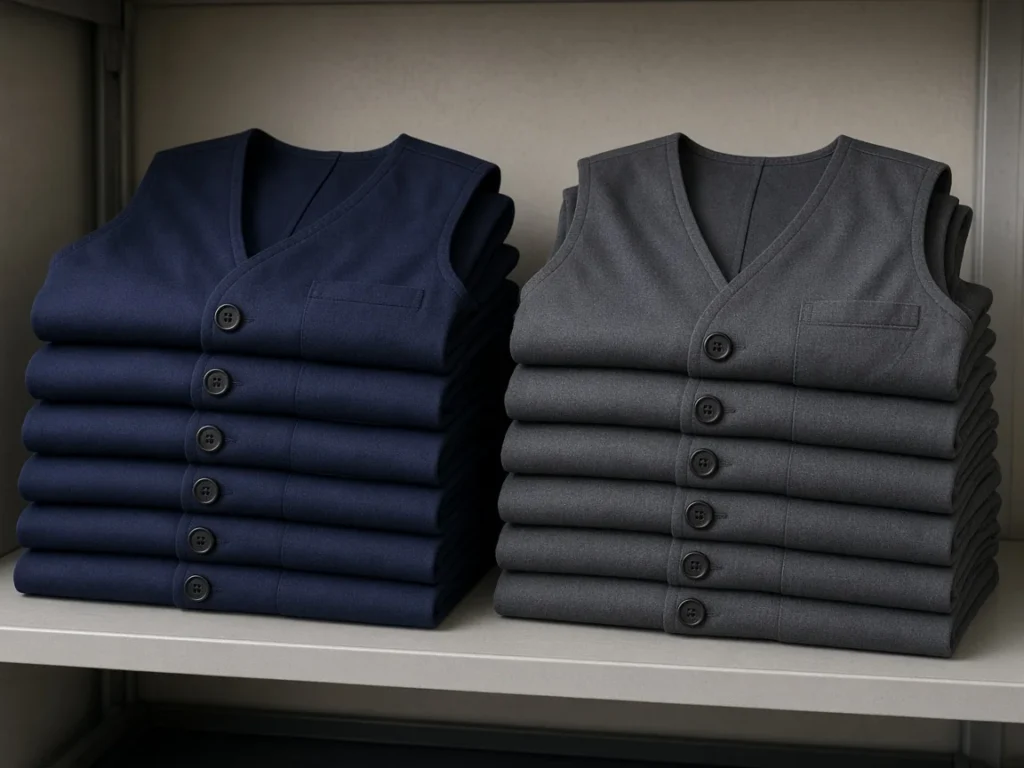

Restaurant Front-of-House Staff Vest OEM | Waitstaff & Host Crews
Table of Contents
Display
A front-of-house vest is the formal layer a dining room puts over a shirt already in service. It has to look composed at a host stand, stay in place through a reach across a table, and still leave a clean front when a handheld or a check pad sits in the pocket. That is a waistcoat brief, not a rewrite of a dining-room polo.
This page is for restaurant-group operations, FOH managers, purchasing, and brand teams who dress adult waitstaff and host crews in a vest or waistcoat. It assumes a base shirt is already chosen, or will be chosen as a separate style. If your guest-facing top is a polo, keep that knit on the restaurant front-of-house polo shirt OEM page and specify this vest as the layer over a shirt, not as a substitute for that polo program. A broader waitstaff kit is also a different document; use the restaurant waitstaff uniform OEM page for that wider view, then return here for the waistcoat only.
Formality is in the waistcoat, not in a new shirt program
Lumen Table can run a calm dining room in a navy waistcoat over a white or light shirt. Copper Service can do the same with a charcoal vest and a slightly softer shirt cloth. In both rooms the vest is what guests read as formal. The shirt is the base. Trying to make the vest do the shirt’s job, or the shirt do the vest’s job, usually produces a layer that is too heavy, too short, or too busy at the chest.
This page stays on the vest. Do not use it to redesign the shirt, and do not fold other dining-room pieces into the same style code. The waistcoat here is a closed or buttoned front over a shirt, cut to the dining-room standard you want guests to see at the table.
A retail merchandising vest is not this garment. If you have used a sports nutrition retail staff vest brief in another channel, do not paste it into a dining-room order; the length, pocket map, and formality are different.
Length and armhole judged on the shirt already in service
The vest is only as good as its sit over the base layer you already wear. Ask for length and armhole to be approved on that shirt, in the size range your crew actually uses, not on a bare sample form.
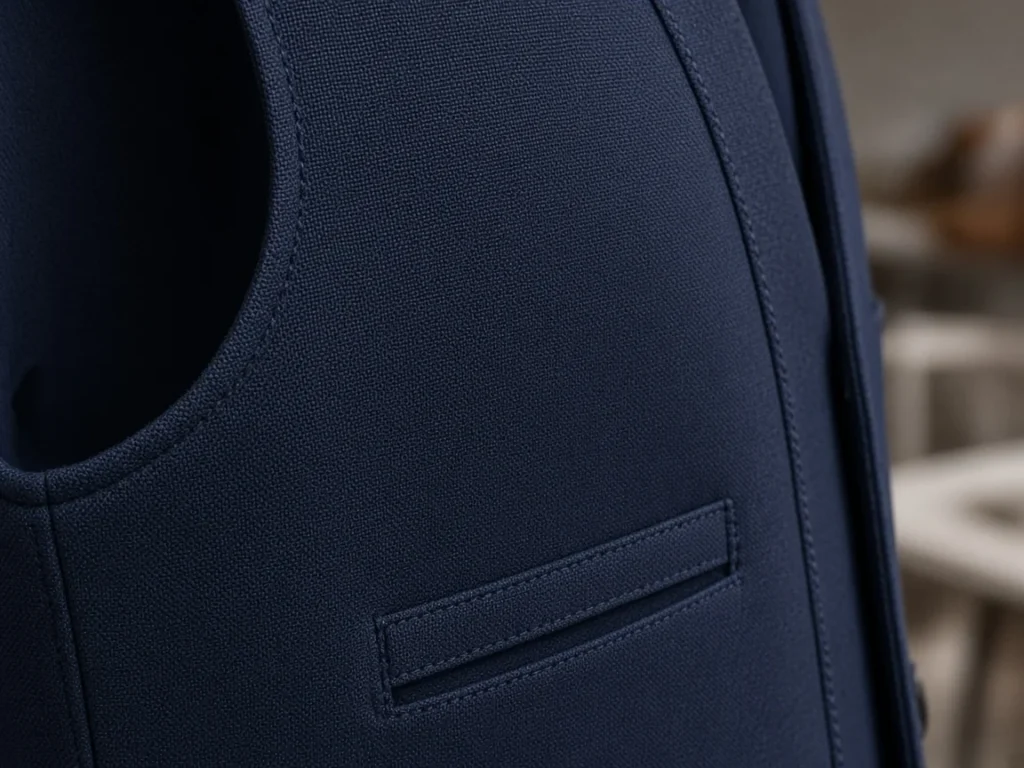
Body length should cover the shirt waist and stay put when the wearer reaches across a set table or leans in to speak with a seated guest. A vest that rides up looks unfinished in a dining-room photo; a vest that is too long bunches at a service station. Specify whether the front and back hem are level, and how much of the shirt is meant to show at the sleeve and at the neck.
The armhole is the motion test. It has to clear the shirt sleeve without cutting into the arm on a reach, and it must not gape at the side when the wearer is standing in conversation. A dining-room waistcoat is often worn for an entire service; a tight armhole becomes the first complaint. A loose armhole looks informal at the host stand.
Fit through the chest and waist should be neat on a closed front without pulling at the buttons when the wearer sits, and without floating away from the shirt when they walk the room. Offer men’s and women’s blocks, or a unisex block plus a shaped option, from a roster survey. Host and floor staff should be in that survey, because a host vest that only fits a standing greeting will fail on a floor shift.
Cloth hand-feel matters at guest distance. A mid-weight woven with a quiet surface is the usual starting point. A stiff shell holds heat through a long service, and a fabric that shines under dining light will be more visible than a small logo error. View the sample in the room’s actual light, seated and standing.
Host stand vs floor: same vest, readable roles
Role should be readable without breaking the dining-room standard. The usual tool is color depth, a lining contrast, or a small trim change, not a different vest pattern for every job.
Hosts and greeters often need the sharpest front and the cleanest neckline, because they are in arrival photos and at the first greeting.
Floor waitstaff need the same brand mark with a little more ease through the armhole and hem, because they reach, walk, and carry through a service.
Floor leads can wear a tonal contrast at the lining, the front edge, or a slightly deeper shade of the same color, so they can be found in the room without a second logo system.
Lumen Table might run a navy vest at the host stand and a slightly lighter navy on the floor, with the same mark size and the same button count. Copper Service might hold one charcoal body and use a contrast lining only for leads. In both cases, logo size, button color, and length stay locked. Do not change body color, trim, and logo color all at once, or the family resemblance disappears.
Specify button count, button color, and whether the front is meant to close fully during service. A vest worn open needs a front edge that still hangs clean and a logo that still reads. A vest meant to stay closed needs a closure that does not gape after a few hours.
Handheld, check pad, and a clean front
Waitstaff and hosts carry a small set of tools: a handheld, a check pad, a pen, sometimes a wine tool or a room card. The vest has to hold those items without breaking the clean front guests see at the table.
A practical map is one or two welt pockets placed where a pad or device sits flat, plus an interior or hidden pocket for a spare pen or card. Pockets should be deep enough that a handheld does not tip out when the wearer leans over a table, and shallow enough in appearance that the front does not bulge in a standing photo. Avoid large patch pockets on the guest-facing side; they read as utility wear in a dining room.
Test the pocket map with the actual device and pad your rooms use. A pocket drafted for a paper pad can be useless for a handheld, and the reverse is also true. If hosts carry less than floor staff, keep the same exterior look and change only the interior layout, or issue the same pocket map to both.
The chest mark should sit clear of the pocket line and remain visible when the vest is closed. Embroidery needs a sew-out on the production cloth; a dense stitch will pucker a lighter woven. A flat mark must stay flexible over a dart or a pocket bag. Send vector artwork, finished size, and thread or film colors, and approve the decoration on the real fabric, viewed under dining light.
Shade lots across dining rooms
Shade is the multi-outlet problem. Lock a physical color standard and approve a lab dip on the production cloth, viewed in service lighting, not only in daylight in an office. When Lumen Table and a sister dining room share a navy, they should share a dip and a retained swatch. Reorders should be matched to that swatch, not to a memory of last season’s vest.
A waistcoat RFQ should stay on this garment.
Field | What to lock |
|---|---|
Worn over | Named base shirt: cloth, color, collar type, sleeve length |
Who wears it | Hosts, waitstaff, and floor leads if they stay in the same family |
Cloth | Mid-weight woven; lining if any; hand-feel under dining light |
Length | Front and back hem relative to the shirt; sit when reaching a table |
Armhole | Clearance over the shirt sleeve; no gape at a standing greeting |
Closure | Button count and color; worn closed or open during service |
Pockets | Welt or hidden pockets for handheld and check pad; interior layout |
Color board | Body, lining, and trim by role; one physical standard |
Logo | File, size, placement, method, sew-out on the real cloth |
Sizes | Roster survey; men's and women's or shaped |
Packing | By dining room; size marks; date for a new-room opening |
This table is the quote document. A headcount without the shirt underneath, or a color name without a dining-light check, will produce a vest that looks right on a form and short or stiff in service.
Plan volume by style, not by the whole group. Host and floor versions count as one style only when the cloth stays the same. When the fabric or the lining changes, plan each style around about 2,000 pieces per style, combining room size runs that share the same cloth.
Sign off during service lighting
Put samples on a host shift at the stand and a floor service in the same room, worn over the approved shirt. Check length on a reach across a table, armhole comfort after an hour, button hold when seated at a service station, and whether a handheld in the pocket prints through the front.
View the sample in the dining room’s service lighting, not only in a corridor. Clean it on the agreed care route before you sign, then check shade, lining sit, and embroidery after that cycle.
The pre-production sample must use the bulk cloth, production buttons, and the production mark. Approve it in writing and seal a copy at your office and at the factory.
Questions dining-room buyers ask about a staff vest
How is this different from the restaurant front-of-house polo page?
That page specifies a dining-room polo as the guest-facing knit. This page specifies a vest or waistcoat worn over a shirt by waitstaff and hosts. They are different garments and should be sampled separately.
How is this different from the restaurant waitstaff uniform page?
The waitstaff uniform page is a wider kit. This brief stays on the waistcoat only: length, armhole, formality, and pocketing for a handheld or check pad.
Can hosts and floor staff share one vest?
They can share one cloth, one logo size, and one color family. They may need a slightly different ease or a lining contrast for leads. That is still one program, not two identities.
What should the first sample prove?
Length and armhole over the approved shirt, a clean front with a handheld or check pad in the pocket, formal sit at the host stand, and a shade match under dining-room light.
About Top Fortune and a dining-room vest quote
Shanghai Top Fortune Industry Co., Ltd. has built OEM and ODM staff-apparel programs since about 2002 from a 1,506 m² facility in Songjiang. Sampling, sewing, and decoration sit under one roof, which helps a multi-room waistcoat stay on one sealed shade and one mark size. More about the company is on the About Us page.
Request a restaurant front-of-house staff vest quote: rill@topfortunemail.com | WhatsApp +86 13524210501
Send the waistcoat brief, a sample of the shirt worn underneath, logo files, a size survey by dining room, care expectations, and the date vests must arrive. The sample that matters is the one worn through a service at the host stand and on the floor, not only the one that looks clean on a form.