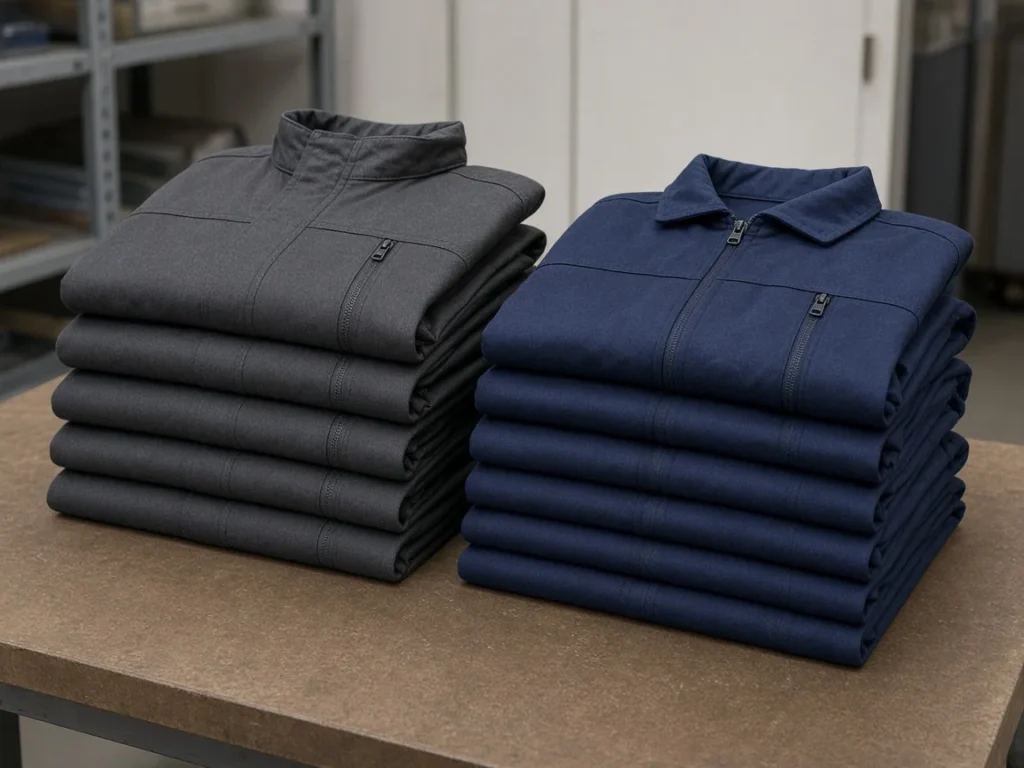

Supermarket Staff Jacket OEM | Grocery Floor & Backroom Crews
Table of Contents
Display
A supermarket staff jacket is the layer a grocery crew puts on over a polo already in the program. It has to add warmth in a cooler aisle, take a carton on a shoulder without twisting the zip, and still look like the same store when it is worn open on the sales floor. That is a layering brief, not a rewrite of a grocery polo.
This page is for purchasing, store operations, and brand teams who buy adult staff jackets for supermarket floor and backroom crews. It is written for shops that already have, or will keep, a knit top as the daily shirt. If your current top is a supermarket staff polo, keep that brief on the supermarket staff polo shirt OEM page and specify this jacket as the outer layer over it. This is also not a convenience-store work shirt program; a compact c-store counter shirt has a different pocket map and is covered on the convenience store staff work shirt OEM page.
Wear it over the polo you already approved
Brookfield Grocery can keep one navy polo across a group and add a jacket only where aisles run cold or backroom doors stay open. Mill & Market can do the same with a charcoal polo and a slightly deeper jacket. In both banners the jacket has to sit over a knit you have already signed, or will sign as a separate style.
Start the jacket brief with the garment underneath: body color, knit weight, hem length, and logo size. A shell that looks balanced on a hanger can bunch at the polo collar, hide the shirt mark, or feel bulky at the shoulder once it is worn in an aisle. Dip the jacket fabric against the physical polo standard. Knit and shell take dye differently; “same navy” is not a match until you see the two together under grocery light.
Do not use this page to redesign the polo. If the knit is wrong, fix the knit on its own brief. The jacket should follow the polo color system, not invent a third palette for “floor presence.”
A wider supermarket uniform catalog is a different document. If you need to place this jacket next to other grocery staff pieces, use the supermarket retail staff uniform OEM page as the program view, then come back here for the jacket only.
Cooler aisles, ambient floor, and a dock-adjacent back room
Grocery floors are not one climate. A dairy or produce aisle is often cooler than the centre of the store. A back room near a receiving door can be colder still, then warm up during a pallet break. The jacket has to work in that range without becoming a different identity in each zone.
The usual path is one pattern and one logo size, with weight as the only change if you need it:
The sales-floor jacket is a mid-weight shell that can be worn open for most of a shift and closed in a cooler aisle.
A backroom version can use the same pattern with a slightly denser face, or a light wind-resistant finish, for staff who move in and out of a receiving door at Mill & Market.
Keep color, length, and mark size identical so float staff still photograph as one crew.
Do not invent a louder shell for the floor and a utility shell for the back room. If a function needs a cue, use a small inner contrast or a sleeve mark, not a new silhouette. This jacket is worn over a grocery polo on a wide floor; it is not a button-front work shirt for a tight stockroom.
View swatches under the store’s actual aisle lighting. A shade that looks correct in a factory booth can go cold or green under typical grocery LEDs, especially next to fresh-food cases. Approve the jacket and the polo in the same light, zipped and open.
Zip, hem, and pockets that work while stocking
Most grocery jackets fail in motion, not on a hanger. Staff reach a high shelf, lean into a case, carry a tray, or push a roll cage with the jacket only half closed.
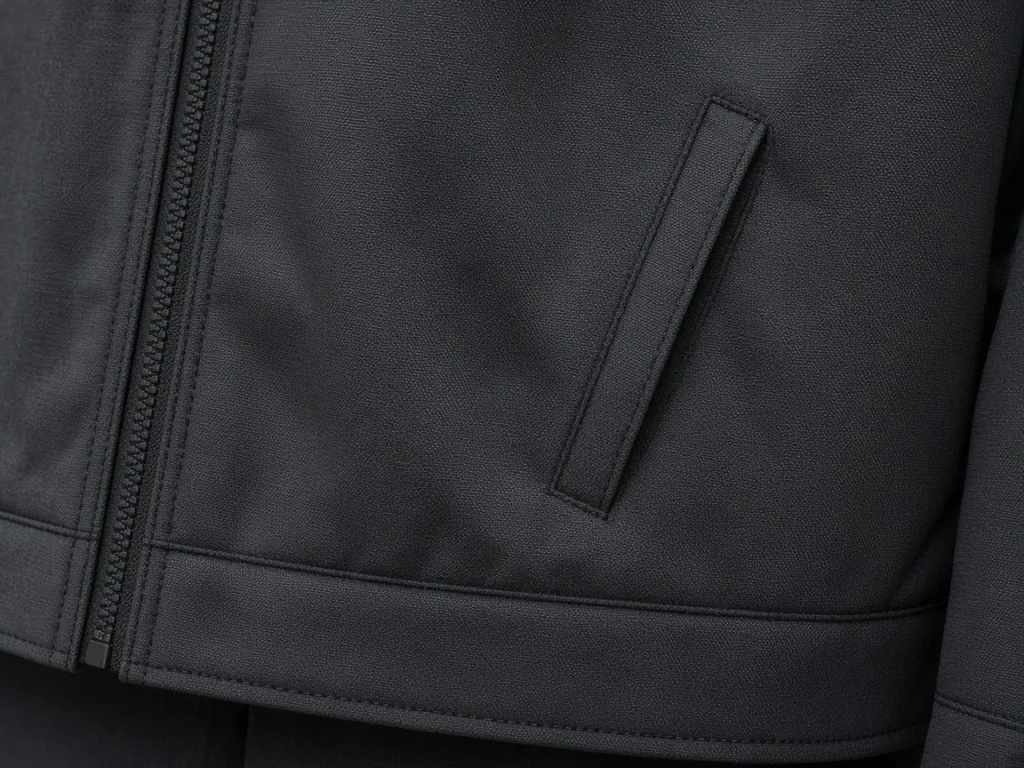
Specify a zip that runs freely over a polo placket and does not catch the knit underneath. A full-length zip is the usual choice so the jacket can be worn open on the ambient floor and closed in a cooler aisle. Pulls should be easy to find with one hand and low-shine enough for a customer-facing photo. A chin guard helps when the jacket is zipped in a cold aisle.
Hem and sleeve length have to cover the polo when the wearer reaches up, without flooding the hand at rest. A hem that rises off the polo during a high reach looks unfinished from the aisle. Side zips or a little extra back length can help, as long as the jacket still hangs clean when worn open.
Pockets should serve floor work without looking like field gear:
Two hand pockets with a secure closure for a phone, a glove, or a small scanner.
One interior or chest pocket for a store card or keys, placed so it does not crowd the logo.
Avoid large lower cargo pockets on the sales-floor version; they catch on cases and bulge when the wearer leans into a shelf. A quieter backroom pocket can be added on the same pattern if you keep the exterior look consistent.
Test the pocket map with the items your crew actually carries, not with an empty sample.
Keep the jacket in the grocery color standard
The jacket is often worn open, so the interior, zipper tape, and inside placket become part of the customer view. Specify those trims, or they will arrive as a surprise contrast.
Place the primary mark on the left chest so it still reads when the front is open. Confirm that the decoration stays flat when the placket folds back, and that it does not sit directly on a thick seam. Embroidery on a light shell needs a sew-out on the real fabric; a dense stitch will pucker. A flat mark must stay flexible near a zip. Send vector artwork, finished size, and thread or film colors, and approve the decoration on the production shell.
Brookfield Grocery should lock one palette, one logo size, and one thread or film color before a second store orders. Give each site its own size pack, not its own colorway. A jacket program breaks when Store A reorders a slightly different charcoal and Store B shortens the body.
Offer men’s and women’s blocks, or a unisex block plus a shaped option, from a roster that includes floor and backroom staff. Pack by store or cluster so a Mill & Market opening kit is not picked from a carton meant for another banner.
Ask the factory how long it will hold the shell shade and the pattern. A grocery jacket is a reorder product. If the shade cannot be repeated next to the polo you already issued, the layering program is already in trouble.
A layering brief grocery buyers can quote from
Write the RFQ as a jacket worn over a named polo, not as a vague request for “store jackets.”
Field | What to lock |
|---|---|
Worn over | Existing or planned grocery polo: color, weight, hem, logo size |
Who wears it | Sales-floor crews and backroom crews; float staff if they share the same family |
Shell | Mid-weight woven or light softshell; denser face only if the back room needs it |
Climate notes | Cooler aisle, ambient floor, and receiving-door conditions |
Closure | Full-length zip; pull type; chin guard if needed |
Pockets | Hand pockets plus one secure interior or chest pocket; backroom variant if any |
Color and trims | Physical standard; dip beside the polo; zipper and inner contrast |
Logo | Size, method, left-chest placement when worn open |
Fit | Men's and women's or shaped; reach and open-front checks |
Care | Typical wash route and shade-hold method |
Issue plan | Headcount by store; size packs; in-hands date |
This table is the quote document. A store count without the polo underneath, or a color name without a physical dip, will produce a jacket that looks right alone and wrong in the aisle.
Plan volume by style, not by the whole group. Floor and backroom versions count as one style only when the fabric stays the same. When the shell changes, plan each style around about 2,000 pieces per style, combining store size runs that share the same cloth.
A shift trial in the aisle before you cut
Put samples on people who will actually wear them: a cooler-aisle shift, a dry-grocery stocking run, and a receiving-door period if you have a denser backroom layer. Wear the jacket over the approved polo, zipped and open. Check collar sit, zip catch, hem coverage on a high reach, and whether a loaded hand pocket swings into a case.
Wash the sample on the agreed care cycle before you sign. Grocery jackets often go through frequent, practical washes. Check pilling where cartons rub the shoulder, and check shade against the polo after that cycle.
The pre-production sample must use the bulk shell, production hardware, and the production mark. Approve it in writing and seal a copy at your office and at the factory. Do not release cutting from an unworn proto or from a photo of a catalog jacket in a similar color.
Questions grocery buyers ask about a staff jacket
How is this different from a supermarket staff polo?
A supermarket staff polo is a knit top for grocery and front-end crews. This page specifies the jacket worn over that knit for floor and backroom work. Share a color system; sample and quote them separately.
How is this different from a convenience-store work shirt?
A c-store work shirt is a woven shirt with a pocket map for a compact counter and stockroom. This jacket is an outer layer for a supermarket floor, worn over a grocery polo, with zip and pocketing for aisle and backroom work.
Do floor and backroom crews need two jackets?
Not two identities. They can share one pattern, one color, and one logo. You may need a slightly denser backroom layer. Treat a different fabric as its own style for volume planning.
What should the first sample prove?
Fit over the approved polo, warmth and mobility in a cooler aisle, a zip that does not catch the knit, pockets that work while stocking, and a shade match when the jacket is worn open.
About Top Fortune and a supermarket-jacket quote
Shanghai Top Fortune Industry Co., Ltd. has built OEM and ODM staff-apparel programs since about 2002 from a 1,506 m² facility in Songjiang. Sampling, sewing, and decoration sit under one roof, which helps a multi-store jacket stay on one sealed shade next to the polo it is worn over. More about the company is on the About Us page.
Request a supermarket staff jacket quote: rill@topfortunemail.com | WhatsApp +86 13524210501
Send the layering brief, a swatch or sample of the polo worn underneath, logo files, a size survey by store, care expectations, and the date jackets must arrive. The sample that matters is the one worn open in an aisle and closed in a cooler bay — not only the one that looks clean on a hanger.