

Convenience Store Staff Work Shirt OEM | Twill & Cargo Shirts
Table of Contents
Display
A convenience store is a small machine: a counter, a tight back room, a cooler wall, and a crew that moves between all three in the same hour. The garment that fails first is usually the shirt — not because the logo is wrong, but because the pockets dump a scanner, the collar collapses under canopy lighting, or the fabric shows coffee and carton rub after a week of night shifts.
This page is a buyer brief for a woven staff work shirt only. It is not a general convenience-store uniform catalog, and it is not a supermarket staff polo program. A polo is a knit with a soft collar and a clean front. A work shirt is a button-front woven, usually in twill, with a collar stand and a pocket map you can actually use in a compact store.
Overseas purchasing, operations, franchise, and owner-operators use this brief to lock fabric, pockets, and fit before they ask for a quote.
The c-store work shirt problem: pockets, counters, and a tight back room
LaneLight Stores can have two people on a late shift: one on the register, one in the stockroom, and both covering the delivery door when a truck arrives. They lean on a counter, reach a top shelf in an aisle that is barely a cart wide, and brush past carton edges all night. A fashion shirt or a thin office shirt has no flap closures, binds at the shoulder, and looks worn at the placket before the next reorder arrives.
A work shirt earns its place if three things are true:
A cashier can lean forward without losing a pen or a set of keys.
A stocker can carry a scanner or a small notepad without clipping hardware that catches on a cooler handle.
The same color and logo still look presentable when that stocker comes out to cover the register.
Dockside Mart does not need a warehouse overshirt that looks out of place at the counter. It needs a mid-weight twill shirt that can be specified in two pocket versions without splitting the brand.
If you are comparing this to a grocery knit program, use the supermarket staff polo shirt OEM guide for the polo path. Stay here when the brief is a woven work shirt for convenience-store crews. For a wider grocery context, see supermarket retail staff uniform OEM.
Twill and cargo-pocket builds that belong on a c-store floor
Start with a poly-cotton or cotton-rich twill. The diagonal twill face hides light abrasion better than a plain poplin, and it takes a flap pocket without looking sloppy. Mid-weight is the usual starting point: light enough for a warm night shift, heavy enough not to look cheap under bright canopy lights. Ask for two swatch weights and wash them the way your crews actually wash shirts — often a frequent home or store wash, not a showroom cycle.
Construction details that matter more than a style sketch:
A collar stand that stays up after washing, because a flat collar reads as an informal leftover at the register.
A placket with durable buttons and bar-tacks at the base, where cashiers twist and lean.
A back yoke and a slightly easier shoulder, so a case can go onto a waist-high shelf without the shirt pulling across the chest.
Side vents or a slightly longer back hem if the shirt is worn untucked in the stockroom.
Pocket corners bar-tacked, and pocket bags strong enough for keys and a compact scanner.
A cargo-style work shirt is not a shirt with random extra pockets. It is a planned lower utility pocket — usually a flap patch or a side cargo pocket — added only where the task needs it. Keep that pocket off the elbow and off the embroidery zone. A large lower cargo on every cashier shirt looks bulky at the register and catches on the counter edge. Use cargo pockets on the stockroom or delivery-door style, not as a default on the front-end shirt.
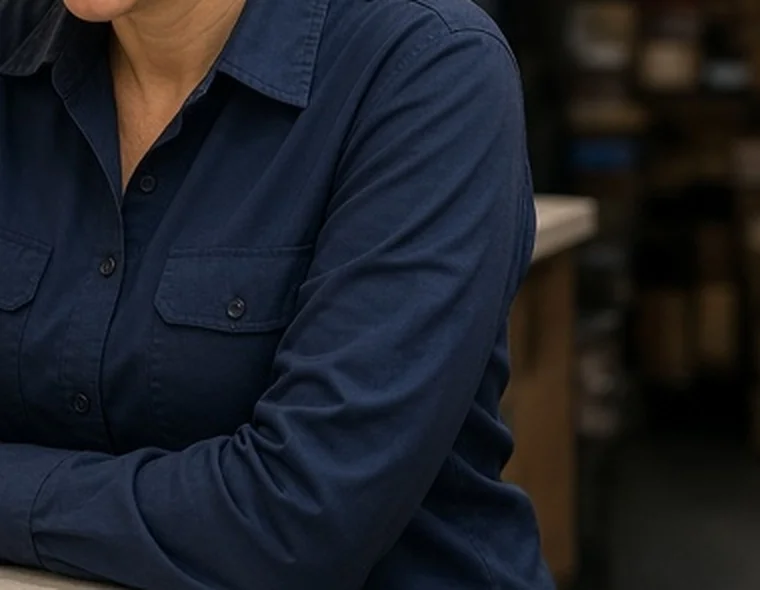
What cashiers carry vs what night stockers carry
Write the pocket map before you style the shirt. The map is the document your supplier can sew to, and it is the difference between one useful program and a generic “shirt with pockets.”
Role | What is carried on shift | Pocket map that usually works | What to avoid |
|---|---|---|---|
Counter / cashier | Pen, keys, small notepad, sometimes a handheld | Two chest pockets; one narrow pen slot; flaps or a secure welt | Large lower cargos that hit the counter |
Stockroom / delivery door | Scanner, keys, delivery slip, marker | Chest pockets plus one lower cargo or utility pocket with a flap | Open patch pockets that dump when bending to a low shelf |
Shift lead | Phone, keys, a cleaner front for customer contact | Cleaner chest layout; optional low-profile utility pocket | A third color or a completely different fabric just to mark seniority |
LaneLight Stores can run a short-sleeve twill shirt at the register and a long-sleeve cargo work shirt in the stockroom, both in the same navy, both with the same left-chest mark. Shoppers still see one team. The lead can be marked with a cuff accent or a slightly cleaner pocket layout, not a new cloth.
State whether the shirt is worn tucked or untucked. That single note changes hem length, venting, and where a lower cargo sits on the hip.
Fabric weight, stain-release, and the wash cycle you actually run
C-store shirts pick up coffee, slush, cooler condensate, and cardboard dust. A stain-release finish on the twill face is worth specifying if it survives repeated washing and does not change the embroidery surface. Confirm that in writing on the sample, not as a catalog claim.
Set colorfastness and shrinkage limits in the brief. A shirt that fades at the collar or tightens through the chest will not match the next size top-up, and a small c-store group feels that immediately because there is no deep buffer stock.
Dark navy, charcoal, and black hide stockroom marks. A mid-tone brand color can work at the counter if you accept a slightly sharper show of stains. If you use an accent, keep it on a cuff, a placket stitch, or a sleeve mark — and lock a physical color standard on the actual twill, not on a knit substitute.
Logo rules are simple and should stay fixed: left-chest embroidery, clear of the pocket flap; optional sleeve mark for a banner identifier. Send vector artwork, finished size, and named thread colors. Approve a sew-out on the production twill. Stitch density that sits well on a polo knit can pucker a lighter woven.
A one-page brief that produces a comparable quote
Send one page, the same way, to every factory. A vague request for “c-store work shirts” will come back as three different garments.
Field | What to lock |
|---|---|
Style codes | Counter shirt and stockroom shirt, named separately |
Fabric | Twill composition, weight, stain-release if required |
Color | Physical standard or Pantone; lab dip on the twill |
Pocket sketch | Chest, pen slot, and any cargo; closures and placement |
Sleeve | Short, long, or both, by role |
Logo | File, size, placement, thread colors |
Fit and sizes | Unisex and/or women’s; real crew size curve, S–3XL or as surveyed |
Wear note | Tucked or untucked; register lean and shelf reach |
Packing | Size stickers; carton by banner or store |
Date | In-hands date for openings or seasonal hiring |
Add wash-test method and shrinkage limits. Attach the pocket sketch. If LaneLight and Dockside Mart share a body and differ only by a sleeve mark, say so, so the factory does not price two full developments.
Wear-test on a register and at a delivery door
A hanger sample is not enough. Put the counter shirt on a cashier for a full shift and the cargo shirt on a stocker who will take a delivery. Check:
Collar shape after four hours and after one wash.
Whether chest flaps stay closed when the wearer leans on the counter.
Whether a lower cargo sits clear of the hip when the wearer climbs a short step stool.
Shoulder ease when a case goes onto a shelf.
Shrinkage through the chest and sleeve.
Order the smallest and largest sizes of each fit, plus one mid size. A cut that works at M can bind at 3XL on a reach. Then approve a pre-production sample (PPS) in the bulk twill, the approved color, the final pocket map, and the production embroidery. Sign it, and keep a sealed copy at your office and at the factory. Do not release cutting on comments alone.
Plan replenishment around openings and hiring waves. Pack by banner so a Dockside Mart carton is not mixed with a LaneLight delivery. A combined run of about 2,000 pieces per style keeps fabric and cutting efficient when several stores share one shirt body.
A factory-ready twill block with your embroidery is enough for a pilot or a tight store opening. Move to your own pocket map and fit block when the program has to repeat for years across banners. A middle path works well here: keep a proven twill body, then specify your pockets, thread colors, and a private label. Write that choice on the brief so you are not quoted for a full new pattern when you only need a cargo variant.
Browse uniforms if you need to place this work shirt next to other adult staff styles without turning this page into a catalog.
Questions c-store buyers ask before cutting
How is this different from a convenience-store uniform catalog?
Those pages mix many garments into one program. This brief specifies a woven staff work shirt only — twill and cargo-pocket builds for counter and stockroom crews.
How is this different from a supermarket staff polo?
A supermarket staff polo is a knit shirt for grocery and front-end crews. This program is a button-front woven work shirt with a pocket map designed for compact c-store counters and stockrooms.
Do cashiers and stockroom staff need two shirts?
They need one fabric, one color family, and one logo standard. They often need two pocket maps and sometimes two sleeve lengths. That is still one program, not two brands.
What makes a first quote usable?
The one-page brief above, a pocket sketch, logo files, a size curve, and a date. Name each style and the quantity you expect by banner.
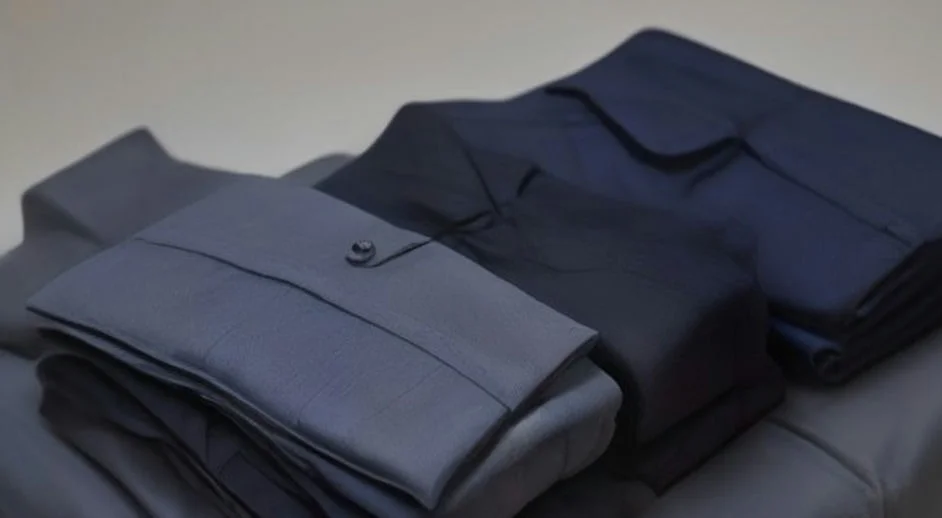
About Top Fortune and a work-shirt quote
Shanghai Top Fortune Industry Co., Ltd. has built OEM and ODM staff-apparel programs since about 2002 from a 1,506 m² facility in Songjiang. Pattern, sampling, sewing, and embroidery sit under one roof, which helps a two-pocket-map work shirt stay on one sealed twill and one logo standard. More background is on the About Us page.
Request a convenience-store staff work shirt quote: rill@topfortunemail.com | WhatsApp +86 13524210501
Send the one-page brief, the pocket sketch, logo files, size curves, quantities, and the date shirts must arrive. The first sample should be a shirt you can put on a real register shift, not only a photo of a blank twill.