

Workwear Wholesale Distributor OEM Partnership Guide | China Factory
Table of Contents
Display

Partnering with a China factory for OEM workwear is a repeatable process. You shortlist, negotiate, gate samples through PPS to bulk, control quality and compliance, manage logistics and communication, and sustain the relationship.
This guide starts after shortlisting. It focuses on building an ongoing workwear wholesale distributor OEM partnership, not on how to choose a factory.
You get practical assets: a partnership-model comparison, an RFQ and commercial terms table, sample-to-PPS-to-bulk gates, a red-flag checklist, and a copy-paste kickoff checklist. Each one supports a decision you will make in the first months of the relationship.
Key Takeaways
Choose a partnership model that fits your business stage: private label for brand control, open catalog for speed, or exclusive runs for territory protection.
Set clear commercial terms in writing, including lead times, sample rules, and payment milestones, to avoid misunderstandings.
Use approval gates from sample to bulk production to ensure quality and consistency across reorders.
Watch for red flags like vague answers or unwillingness to put terms in writing, and look for healthy signs like proactive communication.
Maintain a regular communication rhythm and review performance quarterly to build a lasting partnership.
Workwear Wholesale Distributor OEM Buyer Intent
Who This Guide Serves
You run a wholesale distribution business, a regional importing operation, or a brand-agnostic dealership. Your customers are trade buyers who order in volume and expect repeatable sizing, fabric, and finishing across seasons. You are not a school purchasing department, and you are not shopping for a single promotional run.
This guide speaks to that commercial reality. You need a factory that can hold a specification across reorders, absorb forecast changes, and support several labels from one production base. A workwear wholesale distributor OEM program lives or dies on those three capabilities, not on a one-time sample.
Expect a practical threshold before serious talks begin: about 2,000 pieces per style for true custom private label. Plan your first assortment around that volume and the conversation moves faster.
Entity Snapshot and Contact Path
Shanghai Top Fortune Industry Co., Ltd. is the manufacturer behind this guide. The company was founded around 2002 and operates a 1,506 m2 factory in Songjiang, Shanghai. It runs OEM and ODM workwear programs and exports to Europe, the Middle East, Oceania, Southeast Asia, and the Americas. You can review the company profile at https://www.workwearmanufacturer.com/ and the background page at https://www.workwearmanufacturer.com/about-us/.
Reach the team directly by email at rill@topfortunemail.com or on WhatsApp at +86 13524210501. The address is Floor 3 Building 20 Haier Zhigu No.66 Guangfulin East Road Songjiang Shanghai 201600.
Before you discuss capability, confirm the legal entity and bank beneficiary match across the quotation, invoice, and purchase order. Ask for a live video walkthrough of the sample room and the sewing line that will run your garment class. WeChat and WhatsApp both work well for this, and clear English plus photos and videos bridge most language gaps. Slow or vague responses at this stage deserve attention.
Partnership Models for Workwear Wholesale Distributor OEM
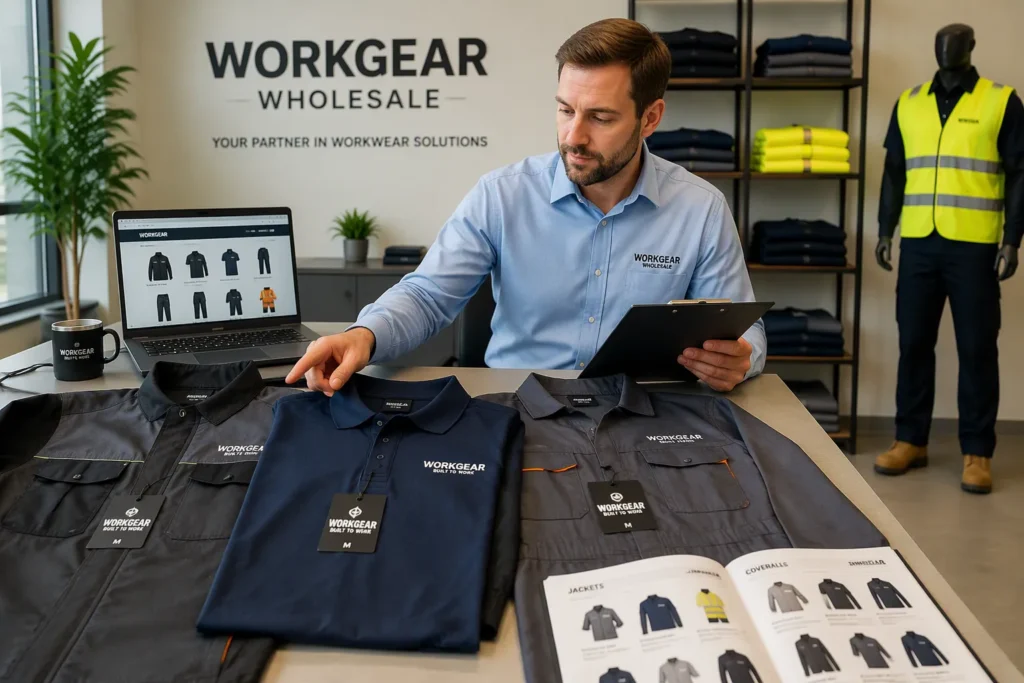
Three models dominate serious workwear wholesale distributor OEM programs. Each one fits a different stage of your business, and none is inherently better than the others.
Model | What you control | Where it fits best |
|---|---|---|
Private label | Your brand, labels, packaging, and SKU list | Distributors building a defensible brand and margin |
Open catalog | Selection from a factory's existing range | Fast entry, testing demand, filling gaps |
Exclusive runs | Colorway, construction, and territory | Established distributors with proven sell-through |
Private label suits you when you want margin control and a catalog your competitors cannot copy. Open catalog works when speed matters more than differentiation. Exclusive runs reward you once you know which styles sell.
Private Label vs Open Catalog vs Exclusive Runs
A private-label program starts narrow. Begin with about six SKUs on one shared fabric platform. This keeps minimums, colors, and stock manageable. A sensible first range covers a jacket, trouser, polo, coverall, softshell, and winter jacket, which lets you quote a full uniform without dead stock. Stock core sizes from S to 3XL and make 4XL to order.
Order labels, tags, and cartons in bulk from day one. This step roughly halves per-piece branding cost. Build on an existing certified construction where tenders demand it, because certification is usually the longest lead item. Decide barcode requirements before artwork goes to print, since different channels need different codes and late changes force reprints. Plan product photography before goods arrive, because private-label products sell from images.
The payoff is control of labels, colorways, and reorder consistency, not a one-off margin claim.
Open catalog and exclusive runs carry their own logic. Open catalog lets you test demand with minimal commitment. Exclusive runs protect your position in a territory, but they raise minimums.
SKU Architecture and Exclusive Colorways
Fabric mills often set minimum yardage for custom dye lots. A custom-color blend may require a full mill dye lot, and the garment factory may then need a full color run for that style. Your order quantity rises with exclusive colors. Production time can matter as much as quantity when workwear is needed quickly; confirm manufacturing, decoration, and shipping timelines before ordering.
Production time can matter as much as MOQ when workwear is needed quickly; confirm manufacturing, decoration, and shipping timelines before ordering.
Brief a China factory for a multi-brand catalog with one document per brand. State the fabric platform, size spec, color references, label placement, and packing method. Keep shared constructions across brands where possible. This approach protects each label’s identity while holding your total SKU count and inventory risk down.
RFQ and Commercial Terms
Lead Times, Sample Rules, and Reorder SLAs
Your RFQ sets the commercial frame for the whole partnership. Ask for terms in writing, not verbal estimates. The table below shows what to compare across suppliers.
Term | What to request | What to watch |
|---|---|---|
Lead time | Bulk lead time from PPS approval, stated in days | Whether the clock starts at PPS sign-off or at deposit |
Sample rules | Prototype and PPS cost, turnaround, and refund policy | Whether sample fees credit against the bulk order |
Reorder SLA | Repeat-run lead time and stock-fabric availability | Whether reorders skip sampling or repeat PPS |
Treat the quoted price as an opening position. Manufacturers typically expect negotiation on quoted prices, and this is normal commercial practice, not a red flag. Negotiate on total landed cost: fabric platform, trim standardization, and order consolidation often move the number more than a straight discount request.
Forecast Commitments and Payment Structure
Share a rolling forecast, not a single order. Give a firm commitment for the current run and a non-binding estimate for the next two quarters. This lets the factory reserve fabric and line time without forcing you to carry inventory you cannot sell.
Structure payment around milestones. A deposit at order confirmation, a balance against shipping documents, and clear terms for reorders are standard. Tie the final payment to inspection results so quality stays connected to cash. Confirm the beneficiary name matches the entity on your purchase order before the first transfer.
Sample to PPS to Bulk Gates
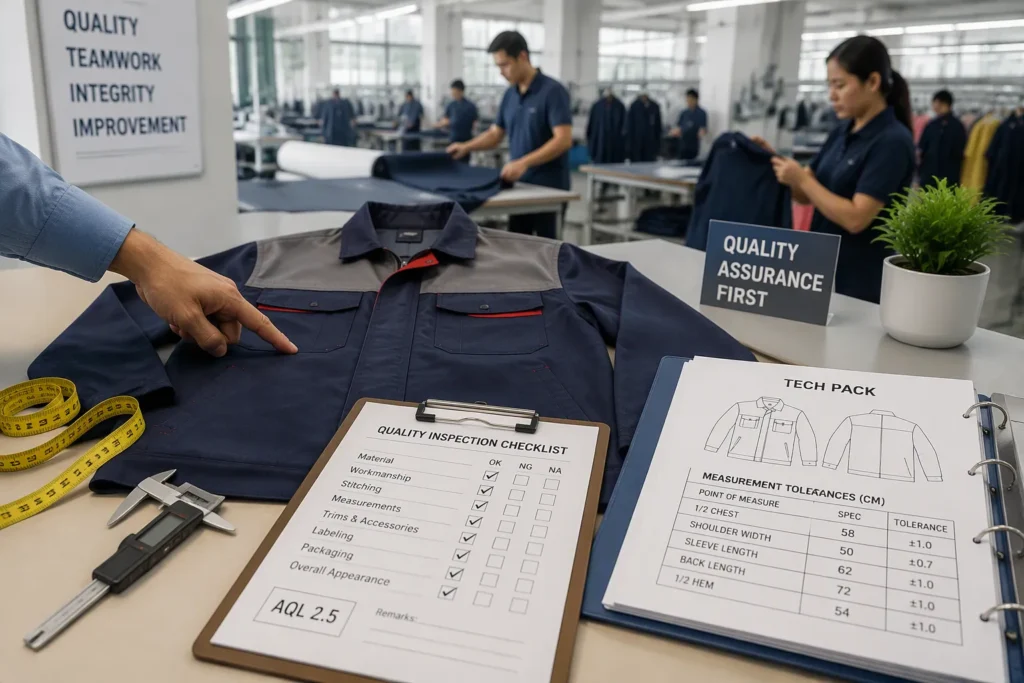
You move from concept to bulk through a fixed sequence of approval gates. Each gate produces a record you can point to later. Skip a gate and you lose the reference that protects both sides.
Start with the use case. Define the garment’s intended use and its exclusions, and record the accepted scope. Next, map the system and its risks into an engineering brief. Then resolve articles and construction into a quotation baseline. These three steps settle what you are buying before anyone cuts fabric.
The prototype comes next. Approve the prototype configuration as the governing sample. This sample becomes the production reference for every future run. Lock key measurements to a batch tolerance of plus or minus 1cm and write that tolerance into the tech pack before bulk cutting. Bulk then moves under controlled release, with the order evidence filed against the approved sample. The final gate covers reorder changes, where you re-confirm article and component availability, retained samples, approved deviations, claims, and live production terms.
QC Sampling Cadence
For a first run, inspect bulk against the signed-off sample at AQL 2.5. If bulk drifts from that sample, the factory remakes it. This rule is simple and it works, because the approved sample carries every decision you already made.
Build a sampling cadence around volume and risk. Check the first off-tool pieces before the line runs at full speed. Pull mid-run samples at intervals you set in the tech pack. Inspect finished goods before packing. Keep one retained sample from each batch on file.
Your approval record should capture the approved manufacturer, style, color, and size range. Add fit options and approved alternatives, artwork version, decoration method, dimensions, and placement. Include manufacturer documentation for product claims, care information, the sample approval date, the approver, and the intended-use boundaries. Write a substitution rule: no change without named approval. Keep the safety decision separate from the brand and logo approval, and require the supplier to flag discontinuations and spec changes rather than auto-substituting.
Ongoing Reorder Gates
Reorders run faster once the pattern and size set are on file, typically in 10–15 days. Speed does not remove the gate. Before each repeat run, re-confirm that the article, components, and approved deviations still match the retained sample.
Run a readiness check before launch. Confirm that a planned hire gets approved garments before the first assignment. Confirm you can cover a late hire who needs an out-of-stock size. Confirm routine replacement works while the normal approver is away. Confirm a task change triggers a fresh clothing approval. Confirm the supplier flags an alternate garment when stock runs out. Confirm a leisure gift order neither reduces required issue nor grants workwear approval. Each case needs a named decision owner, an approved next action, and a completion or exception record.
Red Flags vs Healthy Partnership Signals
Warning Signs in Communication and Terms
Watch how a factory answers before you watch what it quotes. Vague replies about lead time, sample cost, or who owns the pattern signal trouble ahead. A supplier who avoids written terms, changes the price after sampling, or cannot name the person responsible for your account will struggle to hold a specification across reorders.
A factory that will not put a term in writing will not honor it under pressure.
Treat these patterns as early warnings, not proof of bad faith. Ask one direct question and note the response time and the clarity of the answer. Two slow, evasive replies across different topics tell you more than any brochure.
Sourcing route matters here. A trading company or agent fits best when you need consolidated shipments, small mixed orders, or help navigating several factories at once. A direct factory fits best when you need pattern control, exclusive colorways, and a stable production line. Neither route is wrong; match the route to your program.
Signals of a Durable OEM Relationship
Healthy partners volunteer information before you ask. They flag a fabric delay, propose an alternative trim, and confirm your approved sample ID in writing. They keep a retained sample on file and reference it when a reorder question comes up.
Look for consistency across touchpoints. The quotation, invoice, and purchase order name the same legal entity. The same contact answers email and WhatsApp. Sample feedback comes back with photos and a clear next step.
A durable relationship also shows commercial maturity. The factory negotiates on total landed cost rather than defending a single number, and it credits sample fees against bulk. These habits cost little and signal a partner who plans to stay.
Partnership Kickoff Checklist
Copy-Paste Checklist for Distributors
Use this list to open the relationship on a clean footing. Copy it into your project file and tick each line before the first deposit.
Verify the legal entity, bank beneficiary, and purchase order name match.
Send the tech pack, target quantity, target price, and delivery window in one brief.
Ask for a sample timeline in writing, including revision rounds.
Confirm dye-lot minimums and trim setup costs upfront.
Approve the sealed sample as the bulk reference before cutting.
Set the QC cadence: first-off pieces, mid-run pulls, and final inspection.
Clarify bulk lead time after sample approval, not from deposit.
Settle HS-code and tariff responsibility before you commit.
Lock reorder-governance terms: reorder cadence, repair turnaround, and size-audit ownership.
Write a failure clause naming penalties for reorder cut slips.
Agree a weekly summary and a named account contact.
Expect fabric, sizing, and fill questions before any quote arrives. That is a healthy sign, not a delay.
First 90 Days After Kickoff
Days one to thirty cover onboarding. Share your forecast, confirm the approved sample ID, and book the sample window. Sample development typically runs 7–14 working days for pattern making, material booking, first sewing, and fit review.
Days thirty-one to seventy-five carry the first bulk run. Bulk production usually takes 25–40 days after deposit, covering fabric inspection, cutting, sewing, sealing, and inline and final QC. Plan roughly 6 to 9 weeks from brief to dispatch for a first program, plus transit time.
Avoid communicating only at order milestones; a weekly summary prevents small specification drifts from becoming bulk problems.
Days seventy-six to ninety shift to reorder planning. Confirm stock-fabric availability, re-confirm the retained sample, and set the repeat-run calendar. Demand an audit trail for every batch to protect landed cost.
Logistics and Communication Cadence
Shipping, Incoterms, and Lead-Time Planning
Incoterms decide who books freight, who pays for it, and where risk passes to you. No single term fits every distributor. EXW puts the most work on your side and suits buyers with a strong forwarder. FOB hands the main carriage to you once goods clear the port, which many importers prefer for cost visibility. CIF and DDP shift more of the burden to the factory, and they fit best when you want a landed-cost figure without managing carriers yourself. Match the term to your team’s capacity, not to habit.
Plan lead time backward from your selling season. The factory sets a clear sampling and production timeline once you approve the price, and you should hold that timeline in writing. Sea freight suits full containers and flexible windows; air freight protects a tight launch. Pack garments to your brand requirements before dispatch, and confirm the packing method in the tech pack. Build a buffer for customs clearance at destination.
Escalation Paths and Review Rhythm
A named account manager anchors the relationship. The team assigns one during qualification review, which typically completes within 48 hours of your application. Route routine questions to that manager, and keep one shared thread per order so nothing scatters across channels.
Set a weekly written summary covering production status, open samples, and shipping milestones. Escalate in defined steps: account manager first, then the production lead for a line or quality issue, then commercial management for pricing or term disputes. Name a response window for each step in the agreement. Quality escalations rest on evidence, so reference the 100% end-line inspections and AQL checks, plus any third-party inspection report, when you raise a claim.
Building a Sustainable Workwear Wholesale Distributor OEM Partnership
Performance Reviews and Continuous Improvement
Set a review rhythm and keep it. A quarterly review gives you and the factory a fixed point to compare performance against the terms you agreed at kickoff. Bring data, not impressions. Track on-time delivery against the promised window, first-pass inspection results against AQL 2.5, reorder turnaround against the 10–15 day target, and the count of specification deviations caught before packing. A factory that improves these numbers across two or three quarters is a partner worth investing in.
Balance cost against performance in every review. A lower unit price means little when reorders slip or inspection failures rise. Weigh the total landed cost against delivery reliability, sample discipline, and communication quality. When a gap appears, agree on one corrective action with an owner and a date. Follow up at the next review. This habit turns a workwear wholesale distributor OEM relationship into a cycle of steady improvement rather than a series of complaints.
Scaling, Redundancy, and Long-Term Alignment
Plan your growth with the factory, not around it. Share your forecast for the next two quarters and flag any new brand or category early. A factory that knows your direction can reserve fabric and line time before you place the order. Keep your SKU architecture stable as volume grows, and add styles on proven fabric platforms. This approach protects your margin and keeps quality predictable.
Build redundancy without splitting your program. Hold a second approved source for your highest-volume styles, and keep retained samples for both. Review that backup source once a year so it stays ready. Long-term alignment rests on shared planning, honest reviews, and clear terms. Treat the factory as a partner in your growth, and the workwear wholesale distributor OEM program becomes an asset rather than a cost center.
You now have a clear mental model for a workwear wholesale distributor OEM partnership. Shortlist the factory, negotiate terms, gate samples through PPS to bulk, control quality and compliance, manage logistics and communication, and sustain the relationship over time.
Keep cost and performance in balance. Vetting, contracts, quality control, and communication are ongoing disciplines, not one-time tasks.
Ready to start? Email rill@topfortunemail.com or message WhatsApp +86 13524210501. Review our capabilities at https://www.workwearmanufacturer.com/ and our background at https://www.workwearmanufacturer.com/about-us/.
FAQ
What is the minimum order quantity for a private-label workwear program?
Plan for about 2,000 pieces per style for true custom private label. This volume covers fabric booking, trim setup, and label production. Build your first assortment around that figure and the factory can quote and schedule faster.
Do factories charge for samples, and will they credit the fee?
Most factories charge for prototype and PPS samples. Ask whether the fee credits against your bulk order. Get the refund policy in writing before you approve artwork. A factory that credits sample costs signals it expects a long relationship.
How fast can a factory repeat a reorder?
Reorders typically run in 10–15 days once the pattern and size set are on file. Speed does not remove the gate. Re-confirm the retained sample and component availability before each repeat run.
Why do exclusive colorways raise my minimum?
Custom dye lots drive the number. A mill may require a large minimum yardage for a custom shade, and the garment line then needs a matching piece count per color. Confirm dye-lot minimums before you commit to an exclusive shade.
How do I brief one factory for several brands?
Send one document per brand. State the fabric platform, size spec, color references, label placement, and packing method. Share constructions across brands where you can. This protects each label’s identity and holds your total SKU count down.