

Corporate Polo OEM Buyer Guide China | Office & Field Teams
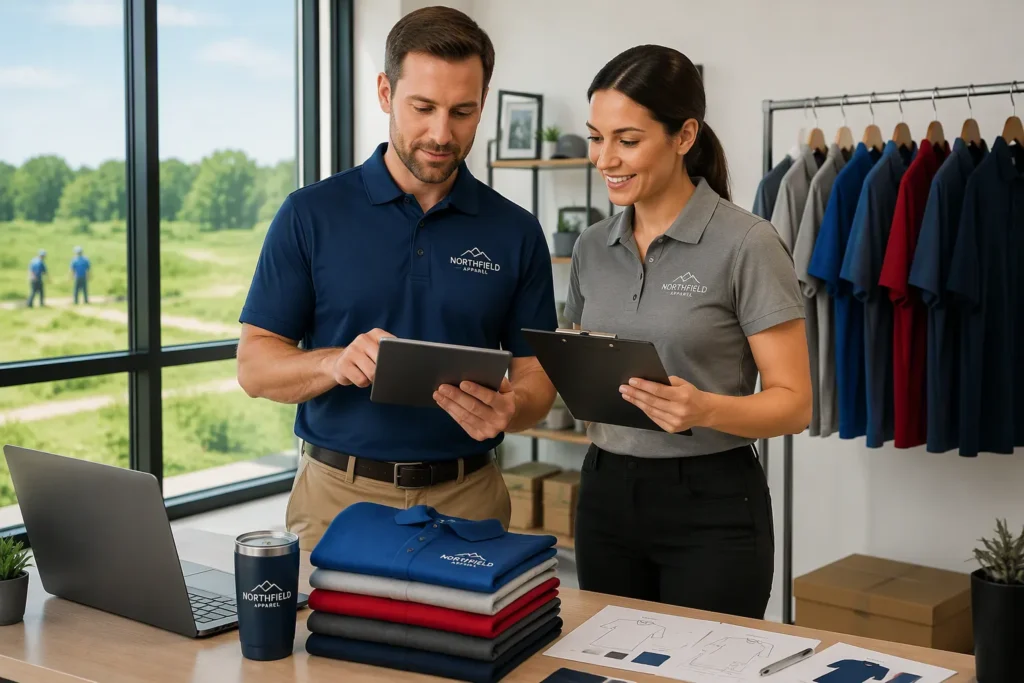
Buyers who order corporate polo OEM programs from China have one big choice: how to order one polo line that works for both office staff and field crews. The office team needs a clean, neat look for meetings and front-desk work. Field teams need the same shirt to hold up through heat, movement, and frequent washing. One program, two wearing environments — that is the dual-use challenge.
This guide answers it step by step. It covers fabric and spec choices, sizing and branding, quality control, order quantities, and lead times. Buyers finish with a ready-to-use RFQ table and a pre-PO checklist they can send straight to a factory.
Key Takeaways
Start by designing for the field team, then make changes for the office team.
Pick the fabric weight based on what each team does and the climate they work in.
Set the color standards before production starts so reorders stay consistent.
Give the factory exact details, not vague words.
Try out both the office and field versions before you make a large order.
Use the RFQ table to keep all your order details in one place.
Choose between catalog or full OEM based on how long the program lasts and how much control you need.
Approve a pre-production sample to set the quality standard.
Quick Takeaways
What Buyers Should Know First
A corporate polo program works or fails based on the brief, not the factory. Buyers who come to a Chinese OEM with a clear split between office wear and field wear get faster sampling and fewer revisions. They also get a shirt that both groups really wear. Buyers who send one vague request for “company polos” often end up with a compromise garment that fits neither group.
Four points guide the whole decision:
Two environments, one line. Office staff judge a polo by how it looks and feels at a desk. Field crews judge the same polo by durability, airflow, and how it holds up to repeated washing. The fabric and construction must meet both needs, or the program needs two variants under one design language.
Specify fabric weight by role. A lighter, smoother face looks good in an office. A denser knit with better moisture handling stands up outdoors. The weight decision drives everything downstream, including logo method.
Lock color before the first bulk run. Reorders are where programs break. A shade that shifts between lots forces mixed batches in the field and complaints from managers.
Brief the factory in data, not adjectives. Size breakdowns, logo placement coordinates, and packaging labels work better than words like “modern fit” or “premium feel.”
The Dual-Team Rule of Thumb
The main idea for this guide is simple: design for the harder environment, then finish for the softer one. Field conditions set the floor for fabric performance and stitching durability. Office expectations set the ceiling for collar shape, placket neatness, and logo refinement.
A practical version of the rule: pick one base fabric family that meets field requirements, then adjust weight, color depth, and logo method for the office variant. This keeps the two groups looking unified while letting each get the hand feel it needs. Buyers who flip the rule — starting from an office shirt and pushing it outdoors — usually return to sampling within a season.
Where Programs Go Wrong
Most failures come back to three habits. The first is sampling only the office version and assuming the field version will follow. The second is approving a logo on a digital mockup without seeing it stitched on the actual blank. The third is treating color consistency as a production detail rather than a specification item.
Each of these can be prevented at the brief stage. A factory that receives both variants for sampling, sees the logo on real fabric, and gets a written color standard can hold the program together across reorders. The sections that follow show how to build that brief.
Corporate Polo OEM: Entity and Buyer Intent
Factory Snapshot
Shanghai Top Fortune Industry Co., Ltd. is the factory behind this guide. The company started around 2002. It runs a 1,506 m2 factory in Songjiang, Shanghai. It makes OEM and ODM programs for workwear and corporate apparel. Its exports go to Europe, the Middle East, Oceania, Southeast Asia, and the Americas. Buyers can see the product range at https://www.workwearmanufacturer.com/ and read the company background at https://www.workwearmanufacturer.com/about-us/.
The factory handles the full corporate polo OEM cycle in one place. This includes fabric sourcing, sampling, bulk sewing, embroidery and print, quality control, and export packing. That range matters for dual-team programs. One team owns the office variant and the field variant from first sample to final carton. Handoffs between separate vendors — a common cause of shade drift and size gaps — go away. Buyers also get one contact for spec changes, which shortens revision cycles. The Songjiang location gives export buyers a Shanghai shipping base with steady freight links.
Minimum order quantity is about 2,000 pieces per style. Buyers should plan the office and field variants as one style family with shared fabric and color standards. This keeps the order in a single production run and protects consistency across both teams. A split order across two factories rarely keeps a shade match, and field crews notice the difference first. Buyers who need a second colorway for a new region can brief it against the same standard.
Who This Guide Serves
This guide is for adult B2B buyers: corporate and enterprise uniform managers, brand merchandisers, and wholesale distributors. These buyers order for staff, not for students. School uniform programs follow different rules on sizing, durability, and seasonal change, so this guide leaves them out. The same applies to PPE and hi-vis lines. Those products carry their own standards and sit outside a corporate polo brief.
Each buyer type brings a different question to the factory. A corporate uniform manager wants one look across departments and a size run that covers desk staff and site crews. A brand merchandiser cares about logo placement, label design, and packaging that matches a retail or promotional campaign. A distributor needs stable specs, repeatable colors, and cartons that ship without repacking. The sections below address all three.
The RFQ table later in this guide works for all three buyer types. It captures the fields each one needs in a single document.
Table of Contents
Quick Takeaways
Corporate Polo OEM: Entity and Buyer Intent
Who Buys Corporate Polos
Spec Choices: Office vs Field
RFQ Table
OEM Process: Inquiry to Shipment
Catalog vs Corporate Polo OEM
Buyer Checklist Before PO
Who Buys Corporate Polos
Three types of buyers make up most corporate polo OEM programs. Each one writes a different brief, and each one judges the finished shirt by a different standard. A factory that knows which type it is talking to can ask the right questions early and avoid a round of resampling.
HQ Brand and Marketing Teams
Head office buyers own the brand. Their brief focuses on control: one logo size, one placement rule, and one color standard that every region must follow. They usually give a brand guide with exact thread colors and a preferred blank shade. They want the polo to look the same in a trade show photo, a careers page, and a branch office.
This buyer type cares most about the sample stage. They will compare a stitched logo against a Pantone reference and reject a shade that is even slightly off. They also ask for packaging that matches the brand, like a printed poly bag or a folded carton insert. The factory brief should record logo dimensions in millimeters, placement measured from the placket, and a written color target for every reorder.
Regional Operations Buyers
Regional buyers own the fit. Their brief focuses on the people who wear the shirt: site crews, drivers, warehouse staff, and front-desk teams across several locations. They know that a size run built for office staff leaves field crews short in the shoulders and tight across the chest.
This buyer type needs a size breakdown by location and by role, not one blended total. They also need fabric that suits the local climate. A northern depot and a southern depot may be in the same program but need different weights. The factory brief should list each site, its headcount, its size mix, and any climate note. Regional buyers also value a buffer stock allowance, because replacing a single worn shirt mid-season is easier than opening a new production run.
Distributors and Resellers
Distributors buy for resale. Their brief focuses on the carton, the label, and the repeat order. They need a polo that ships without repacking, with size stickers, barcode labels, and inner packs that match their own catalog structure.
This buyer type judges a program by how little work it creates downstream. A clean carton with a readable size mark saves warehouse labor. A stable color across reorders protects the reseller’s reputation with its own accounts. Distributors also ask for neutral branding options, so the same blank can carry different client logos over time. The factory brief should state pack ratios, label format, and the color standard that every future run must match.
Spec Choices: Office vs Field

Fabric Weight by Role
Fabric is the first choice that makes an office team different from a field team. Buyers should match three things to each group: the job they do, the local weather, and how often the shirt gets washed. A receptionist who wears the polo twice a week and washes it at home has different needs than a technician who wears it five days a week in heat and sends it through an industrial laundry.
Three fabric families cover most corporate polo OEM programs. Each one fits a different role, and none of them is a bad choice by itself.
Fabric family | Best fit | Climate fit | Wash behavior |
|---|---|---|---|
Cotton-rich | Office-focused roles, staff who meet clients | Mild to warm, indoor settings | Soft feel; may need care to keep its shape |
Poly-cotton blend | Mixed office and light field use | Wide range | Keeps color and shape well through frequent washing |
Performance polyester | Field-focused roles, active crews | Hot and humid conditions | Dries fast; handles moisture well |
Office-Forward Options
Cotton-rich knits give the smoothest surface and the most polished look. They hang well, hold a crisp collar, and look clean in brand photos. Office staff who sit at a desk or meet clients all day notice the feel first, and cotton-rich fabric delivers it. A poly-cotton blend also works well here when the buyer wants the shirt to keep its shape through repeated home washing. Both options suit indoor climates and moderate wash cycles.
Field-Forward Options
Performance polyester earns its spot outdoors. The fiber pulls moisture away from the skin and dries fast, which matters for crews working in heat or humidity. Poly-cotton blends sit in the middle and handle light field duty well, especially in mixed climates where one shirt must serve several sites. Buyers with a hot, humid service region should lean toward performance fabric for the field variant and keep the office variant in cotton-rich or blend.
Collar, Placket, and Fit
The collar carries the office look. A structured collar with a fused interlining stands up under a jacket and keeps its shape all day. Field crews often prefer a softer, less stiff collar that moves with them. Buyers can specify both under one design language: same collar shape, different interlining stiffness.
Placket construction follows the same logic. A clean three-button placket with matched buttons reads as formal. Reinforced stitching at the placket and side seams adds durability for field wear without changing the front look. Fit should stay the same across both variants so the two teams look like one company. Buyers should state chest, body length, and sleeve length tolerances in the tech pack instead of relying on words like “regular fit.”
Embroidery vs Print
Logo method depends on the blank fabric. Embroidery suits cotton, poly-cotton, and pique knits. Stitched thread holds up to washing and gives a premium look that brand teams prefer. Dense embroidery can make a lightweight performance knit stiff, so buyers should test stitch density on the actual blank before approval.
Print works well on performance polyester and smooth-faced fabrics where a fine detail or multi-color mark is needed. Heat-transfer and screen methods each act differently across wash cycles, and the factory should confirm the method against the fabric’s care label. Long-sleeve variants need placement checks at the cuff and forearm, where a logo can catch on surfaces.
Color consistency belongs in the spec, not in production follow-up. Buyers should issue a written color standard — a Pantone reference or a physical approved swatch — and require the factory to match every reorder against it. Thread color for embroidery needs its own standard, separate from the fabric shade. This one step protects a corporate polo OEM program across seasons, because a shade drift between lots shows up first on field crews who work side by side.
RFQ Table

A request for quotation works best as a clear, organized document. The buyer fills in every field, and the factory quotes against a fixed brief. This takes out the guesswork that can stretch sampling into weeks. The three tables below cover the fields a corporate polo OEM inquiry needs.
Core Spec Fields
Core fields define the garment itself. Buyers should fill them in for the office variant and the field variant separately. Then they should note which values the two share. Shared values protect the unified look. Different values show the factory exactly where the variants diverge.
Field | What to Specify | Why It Matters |
|---|---|---|
Style reference | Office variant and field variant, labeled as one family | Keeps both variants in a single production run |
Fabric family | Cotton-rich, poly-cotton, or performance polyester per variant | Drives hand feel, drying behavior, and logo method |
Fabric weight | Target weight per variant, stated in the unit the factory quotes in | Sets the drape and the heat tolerance of the shirt |
Knit structure | Pique, jersey, or interlock | Changes surface texture and how a logo sits |
Color | Written standard plus a physical approved swatch | Anchors every reorder to one shade |
Collar and placket | Collar shape, interlining stiffness, button count | Separates the office look from the field feel |
Stitch and seam notes | Reinforcement points at placket, side seams, and shoulders | Adds field durability without changing the front |
Buyers should attach a tech pack to the table. The pack carries the measurements and construction sketches. The table carries the decisions. Together they give the factory a brief it can sample against without follow-up questions.
Sizing and Branding Fields
Sizing and branding fields turn a garment spec into a wearable program. Buyers should give a size breakdown by team and by site, not one blended total. A blended total hides the gap between desk staff and site crews until the first fitting.
Field | What to Specify | Why It Matters |
|---|---|---|
Size range | Full run from smallest to largest, with the size scale named | Prevents gaps at the top of the range |
Size breakdown | Units per size, split by office and field | Matches production to real headcount |
Fit tolerances | Chest, body length, and sleeve length allowances | Replaces vague words like "regular fit" |
Logo method | Embroidery or print, chosen per fabric | Protects the blank and the mark |
Logo placement | Position measured from the placket, in millimeters | Keeps every shirt identical |
Logo size | Height and width per placement | Stops drift between reorders |
Thread or ink color | Separate standard from the fabric shade | Keeps the mark sharp on every lot |
Label and hangtag | Woven label text, care label content, tag placement | Meets retail and corporate handover needs |
Buyers should approve the logo on the actual blank, not on a screen. Stitch density reads differently on a performance knit than on a cotton pique. A physical approval sample settles the question before bulk starts.
Delivery and Packaging Fields
Delivery fields decide how the order arrives and how easily it moves through a warehouse. Distributors care most about this group. Corporate buyers care about it at handover, when shirts go to individual staff.
Field | What to Specify | Why It Matters |
|---|---|---|
Pack ratio | Units per poly bag, per inner pack, per carton | Sets warehouse labor and shelf fit |
Size marking | Sticker format and placement on the bag | Speeds picking and reduces mis-ships |
Carton labeling | Barcode format, carton mark content | Supports resale and cross-docking |
Shipping terms | Named Incoterm and destination port | Fixes who owns freight and risk |
Ship window | Target departure window and arrival buffer | Aligns production with rollout dates |
Buffer stock | Extra units held per size for replacements | Covers mid-season wear without a new run |
Documentation | Packing list and commercial invoice format | Clears customs without delay |
Buyers should check the ship window against their own rollout calendar. A polo program that lands after a launch date loses its purpose. The factory can plan production backward from a fixed window once the buyer states it in the RFQ.
OEM Process: Inquiry to Shipment
A corporate polo OEM program goes through five stages: inquiry, sampling, PPS approval, bulk production, and shipment. Each stage passes a fixed decision to the next one. Buyers who treat the stages as one sequence get a result they can predict. Buyers who skip a stage pay for it later in rework or delay.
Inquiry and Sampling
The inquiry starts with the RFQ tables from the section before. The buyer sends the completed tables, a tech pack, and any brand guide. The factory reviews the brief and sends back questions on fabric availability, logo method, and size range. A clear brief makes this exchange shorter. A vague brief turns it into a week of emails.
Sampling comes after the quote. The factory builds a sample in the agreed fabric and color, with the logo stitched or printed on the real blank. Buyers should ask for both the office variant and the field variant at this stage. One sample cannot prove a dual-team program. The buyer then checks fit on real wearers, compares the logo against the color standard, and confirms the collar shape. The factory’s corporate polo OEM page at https://www.workwearmanufacturer.com/corporate-polo-shirts-oem-china-manufacturer/ explains the sample options in more detail. Buyers who need a faster path can review the custom program at https://www.workwearmanufacturer.com/custom-polo-shirt-oem-manufacturer-china/.
PPS Approval and Bulk
PPS stands for pre-production sample. This is the final reference garment. The factory makes it in the bulk fabric, with the bulk logo, the bulk label, and the bulk packaging. The buyer signs it off in writing. From that point, the PPS becomes the standard for every unit in the run.
Buyers should treat PPS approval as a formal gate. Check the fabric shade against the approved swatch. Measure the chest, body length, and sleeve against the tech pack. Confirm the logo position in millimeters from the placket. Confirm the label text and the care content. A signed PPS protects both sides, because it takes opinion out of the bulk inspection.
Bulk production starts after sign-off. The factory cuts, sews, and finishes the order in one run. Buyers should ask for a production schedule at this point and a named contact for updates. A single point of contact keeps the office variant and the field variant on the same timeline.
QC Gates and Shipping
Quality control runs at more than one point. The factory checks fabric on arrival, inspects work in progress at the sewing line, and runs a final inspection before packing. The final gate matters most to buyers. Inspectors check measurements against the PPS, stitch quality at the placket and side seams, logo placement, and color match under standard light.
Buyers can ask for inspection photos at each gate. Photos of the real bulk units give remote buyers a clear view without a site visit. Any unit that fails a check goes back for rework before packing.
Packing follows the delivery fields in the RFQ. The factory bags, labels, and cartons the order to the agreed pack ratio. Shipping then moves by the named Incoterm to the destination port. The factory sends the packing list and commercial invoice with the shipment. Buyers should confirm the ship window against their rollout date one last time before the containers leave.
The full contact block for this factory:
Email: rill@topfortunemail.com
WhatsApp: +86 13524210501
Address: Floor 3 Building 20 Haier Zhigu No.66 Guangfulin East Road Songjiang Shanghai 201600
Catalog vs Corporate Polo OEM
Buyers face a real choice here: pick a ready catalog polo, or build a full corporate polo OEM program. Neither route wins by default. The right answer depends on how far apart the office team and the field team sit in their needs, and how much color control the buyer wants across reorders.
Factor | Catalog route | Full OEM route |
|---|---|---|
Design control | Limited to stock colors and cuts | Buyer sets fabric, collar, fit, and trim |
Dual-team fit | One shirt must serve both groups | Separate office and field variants under one look |
Color across reorders | Depends on stock lots | Anchored to a written standard and approved swatch |
Branding | Standard placement options | Logo size, position, and thread color set by the buyer |
Best use | Fast, small, or low-risk rollouts | Multi-site programs with a long life |
When Catalog Fits
Catalog works well for a short campaign, a pilot order, or a single office location. The buyer picks a stock polo, adds a logo, and gets the goods on a short timeline. No sampling cycle stands between the brief and the delivery. A buyer who needs shirts for a trade show in a few weeks gains more from speed than from a custom collar.
Catalog also suits buyers who have not yet mapped their size breakdown. A first order shows how the team actually wears the shirt. That feedback then feeds a later custom run. Buyers can review stock options at https://www.workwearmanufacturer.com/custom-polo-shirt-manufacturer/ before deciding.
When Full OEM Pays Off
Full OEM pays off when the program spans several sites and several years. The buyer controls the fabric weight for each team, the collar stiffness, and the logo placement in millimeters. That control protects the unified look that head office wants.
The bigger gain sits in reorder color consistency. A written color standard plus a signed PPS sample gives every future run one fixed target. Field crews who work side by side notice a shade shift first. A catalog route cannot promise that match, because stock lots change. A custom program can.
Hybrid Programs
Many buyers land between the two routes. They take a stock fabric family for speed, then specify a custom collar, logo placement, and size run. This hybrid keeps the sampling cycle short and still gives the office and field variants a shared design language.
The same logic carries into other garments. A buyer who builds a polo program often adds a custom softshell jacket on the same color standard, so the layered look stays consistent across seasons. The jacket program at https://www.workwearmanufacturer.com/custom-softshell-jacket-oem-workwear/ follows the same brief-first approach. One color standard then covers both product lines.
Buyer Checklist Before PO
A purchase order locks in the brief. Buyers should treat the time before the PO as a final checkpoint. The checklist below covers the six areas that decide whether a corporate polo OEM program runs smoothly: fabric, fit, logos, quality, reorders, and supplier confirmation. Each item takes only minutes to check and saves weeks of rework.
Spec and Sample Sign-Off
The signed PPS sample is the base for everything that follows. Buyers should check the bulk fabric shade against the approved swatch under standard light. They should check the collar stiffness, the placket stitching, and the seam reinforcement against the tech pack. A written sign-off takes personal opinion out of the final inspection.
Fabric family and weight confirmed for each variant, office and field
Color matched to the written standard and the physical swatch
Collar, placket, and button count approved on the real shirt
PPS sample signed and dated, with one copy kept by each side
Logo method tested on the actual fabric, not a digital mockup
Sizing and Branding Files
Size data protects the fit for both teams. Buyers should send a size breakdown split by office and field, with units per size. They should state chest, body length, and sleeve tolerances in the tech pack. A blended total hides the gap between desk staff and site crews until the first fitting.
Branding files need the same care. Logo position should be measured in millimeters from the placket. Thread or ink color needs its own standard, separate from the fabric shade. Label text, care content, and hangtag placement belong in the file set too.
Size range and scale named, with no gaps at the top
Units per size listed by team and by site
Logo height, width, and placement fixed in millimeters
Thread or ink color standard issued in writing
Woven label and care label content approved
Quantity and Delivery Confirmation
The last step confirms numbers and dates. Buyers should check the total against the approved size breakdown and add a buffer stock allowance per size. They should confirm the pack ratio, size stickers, and carton marks with the distributor or warehouse that receives the goods.
Delivery terms close the checklist. The buyer confirms the named Incoterm, the destination port, and the ship window against the rollout calendar. The supplier then confirms the production schedule in writing. A corporate polo OEM order that clears these gates moves from PO to shipment without surprises.
Total quantity and buffer stock agreed per size
Pack ratio, stickers, and carton labels confirmed
Incoterm, port, and ship window fixed in the PO
Production schedule acknowledged by the supplier
Named contact for updates recorded on both sides
Request a Quote
What to Prepare
A quote request goes fastest when the buyer sends a complete package. The RFQ tables earlier in this guide are the main part of that package. Buyers should fill in the core spec fields, the sizing and branding fields, and the delivery fields for both the office variant and the field variant. A factory can quote against a fixed brief in one pass. A brief that is not complete turns into a round of clarifying emails before any work starts.
Three supporting documents complete the package. A tech pack holds the measurements, construction sketches, and stitch notes. A brand guide gives the logo files, thread or ink color standards, and label artwork. A size breakdown lists units per size, split by team and by site. Buyers who plan a layered uniform program can also flag interest in a matching outer layer through the custom jacket program at https://www.workwearmanufacturer.com/custom-jacket-manufacturer/. That step lets the factory line up the polo color standard with the jacket line from the first quote.
Buyers should state the target ship window and the destination port in the same message. These two details let the factory plan production backward from a real date. A quote without a date tells the factory nothing about urgency or capacity.
How to Reach Us
Buyers can send the completed RFQ package right to the factory contact listed earlier in this guide. The email address is rill@topfortunemail.com. The WhatsApp line is +86 13524210501 for buyers who want a faster exchange on sampling questions or file formats. Both channels reach the same team that handles corporate polo OEM programs from inquiry through shipment.
The factory sits at Floor 3 Building 20 Haier Zhigu No.66 Guangfulin East Road Songjiang Shanghai 201600. Buyers who plan a factory visit can set up a sampling review at this address. A site visit lets the buyer check fabric hand feel, compare logo methods on real blanks, and meet the QC team before the first bulk run.
A useful first message names the buyer type, the team sizes, and the two wearing environments. For example: a distributor needs 2,000 units across two variants for office staff and field crews in a hot climate. That one sentence tells the factory which fabric families to quote and which logo methods to test. The team then replies with questions, a sampling plan, and a production timeline. Buyers who send the full package in the first message usually reach the sample stage within one exchange.
A smooth corporate polo program follows a clear path. Buyers define what the office team needs and what the field team needs. They lock fabric and branding specs, then build a size breakdown backed by real headcount data. They approve a PPS sample and confirm quantities, buffer stock, and lead times before the PO.
One well-briefed OEM partner can serve both teams without splitting the program. The RFQ table and contact details above give buyers a simple starting point. Send the completed tables to the factory team, and the sampling conversation can begin.
FAQ
How does a buyer brief one polo program for two very different teams?
Start with the tougher wearing setting. Field conditions set the lowest bar for fabric performance and seam strength. Office needs then set the collar shape, placket neatness, and logo quality. One shared design language with two variants keeps both teams looking like one company.
Can the factory produce separate office and field variants in a single run?
Yes. Buyers should label both variants as one style family in the RFQ. Shared fabric and color standards keep them in a single production run. This protects shade consistency across both teams and avoids the handoff problems that come from splitting an order between vendors.
What drives the minimum order quantity for a corporate polo program?
The minimum order quantity depends on the style family and the fabric chosen. Buyers should confirm the current figure with the factory during the inquiry stage. Planning the office and field variants as one family helps the order qualify as a single run rather than two separate programs.
How long does sampling take, and what should buyers expect to receive?
Timing changes with fabric availability and logo complexity, so buyers should confirm the schedule at inquiry. The sample should arrive in the agreed fabric and color, with the logo applied to the real blank. Buyers should ask for both variants, not just the office version.
Which logo method suits performance fabric best?
Embroidery works well on cotton, poly-cotton, and pique knits. Dense stitching can make a lightweight performance knit stiff, so buyers should test stitch density on the actual blank. Print works better on smooth-faced performance polyester where fine detail or multi-color marks are needed.
How do buyers keep color consistent across reorders?
Issue a written color standard, such as a Pantone reference or a physical approved swatch. Require the factory to match every reorder against it. Thread color for embroidery needs its own separate standard. A signed PPS sample then anchors each future run to one fixed target.
What size data should accompany the order?
Buyers should send a size breakdown split by office and field, with units per size and per site. A blended total hides the gap between desk staff and site crews. Chest, body length, and sleeve tolerances belong in the tech pack, not in vague fit descriptions.
When should a buyer choose a catalog polo instead of a full OEM program?
Catalog fits short campaigns, pilot orders, or a single office location where speed matters more than a custom collar. Full OEM pays off for multi-site programs that run across several years and need fixed color control. Many buyers combine both routes.