

What Are the Typical Designs of School Uniforms in the Philippines
Table of Contents
Display
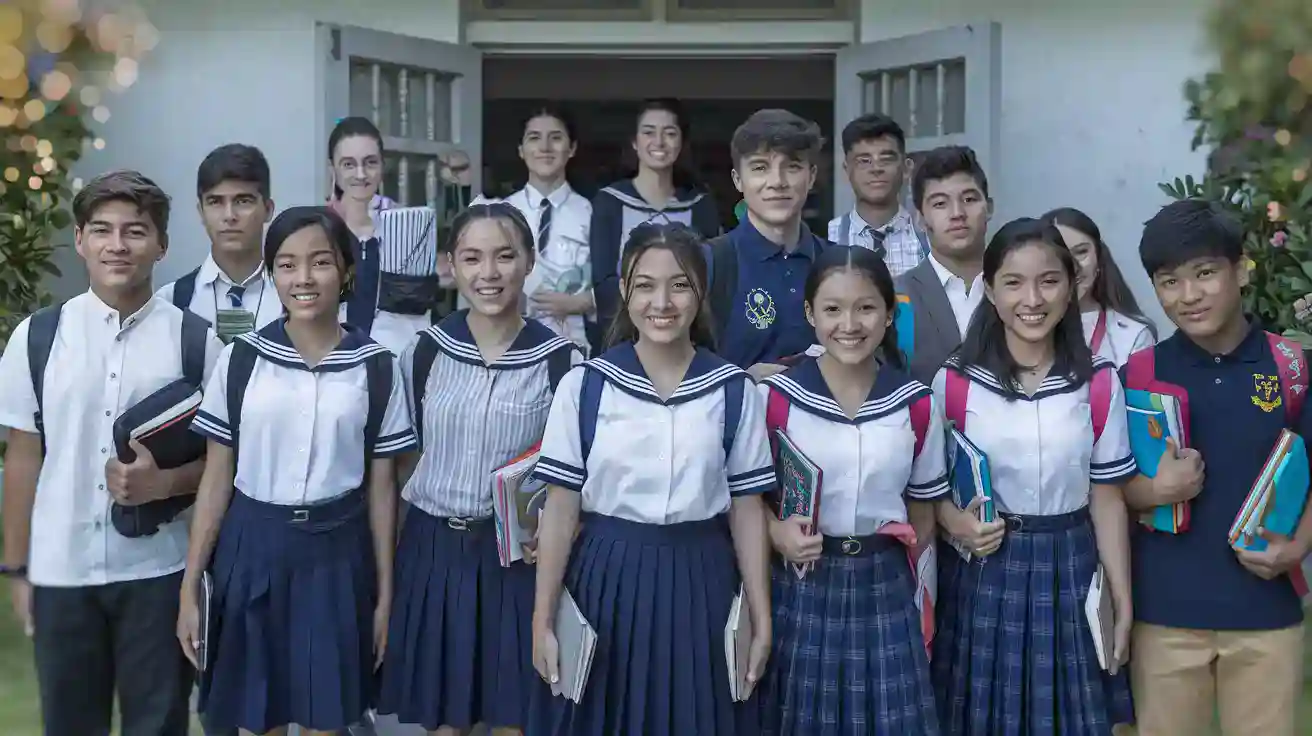
When I walk through a typical school in the Philippines, I notice that boys often wear white button-up shirts with light brown knee-length trousers, while girls choose white blouses paired with long skirts. Public primary schools usually stick to these colors and styles, but secondary schools and private institutions show more variety by reflecting their official school colors in their uniforms. Many schools use lightweight cotton fabrics to keep students comfortable in the tropical climate. I have also seen modern trends like the addition of vests or unique insignias, and some Muslim girls wear a white hijab as part of their attire. The design of philippines school uniforms changes from primary to secondary level, highlighting both tradition and evolving fashion.
Key Takeaways
Boys typically wear white button-up shirts with dark pants, while girls wear white blouses with skirts in Philippine schools.
Public primary schools often have standard colors, while secondary and private schools show more variety in uniform designs.
Lightweight cotton is the most common fabric for uniforms, ensuring comfort in the tropical climate.
Uniform policies promote discipline and unity among students, helping them feel part of a group.
Recent trends include gender-neutral options, allowing students to choose between pants and skirts.
Cultural elements, like hijabs for Muslim girls, are incorporated into uniforms to respect diverse backgrounds.
The pandemic led to more flexible uniform policies, focusing on student comfort and affordability.
New government guidelines aim to make uniforms more inclusive and practical for all students.
Philippines School Uniforms: Overview
Standard Styles
Colors
When I visit schools across the country, I see that colors play a big role in the design of philippines school uniforms. Most public elementary schools use blue skirts and white shirts for girls, while boys wear white shirts and dark pants. Private schools often have their own color schemes, but they still follow the basic pattern. In secondary schools, I notice that girls sometimes wear ties, and boys usually wear long pants with polo shirts. Some colleges require uniforms, especially for medical students, but others do not.
Fabrics
I have found that lightweight cotton is the most common fabric for philippines school uniforms. This choice helps students stay comfortable in the tropical climate. Schools want uniforms that are easy to wash and durable enough to last the whole school year. Mass production makes these uniforms affordable and available for families. Uniforms must stand up to daily wear, so manufacturers focus on comfort and durability.
Functionality
The Department of Education sets guidelines for standard school uniform designs. These guidelines include:
Uniforms for classroom and office-based personnel.
Clear rules for colors and styles.
Requirements for insignias and accessories.
Mass production and standardization help families get uniforms easily. I see that strict uniform policies promote discipline and unity among students. Uniforms look similar from school to school, which makes students feel like part of a group.
I notice that schools try to balance practicality with cultural identity. Some rules seem complicated, especially when students learn online. Heavy uniforms can make students uncomfortable in the hot weather. The traditional influences of uniforms as symbols of school pride may not matter as much when students study from home.
Primary School Uniforms
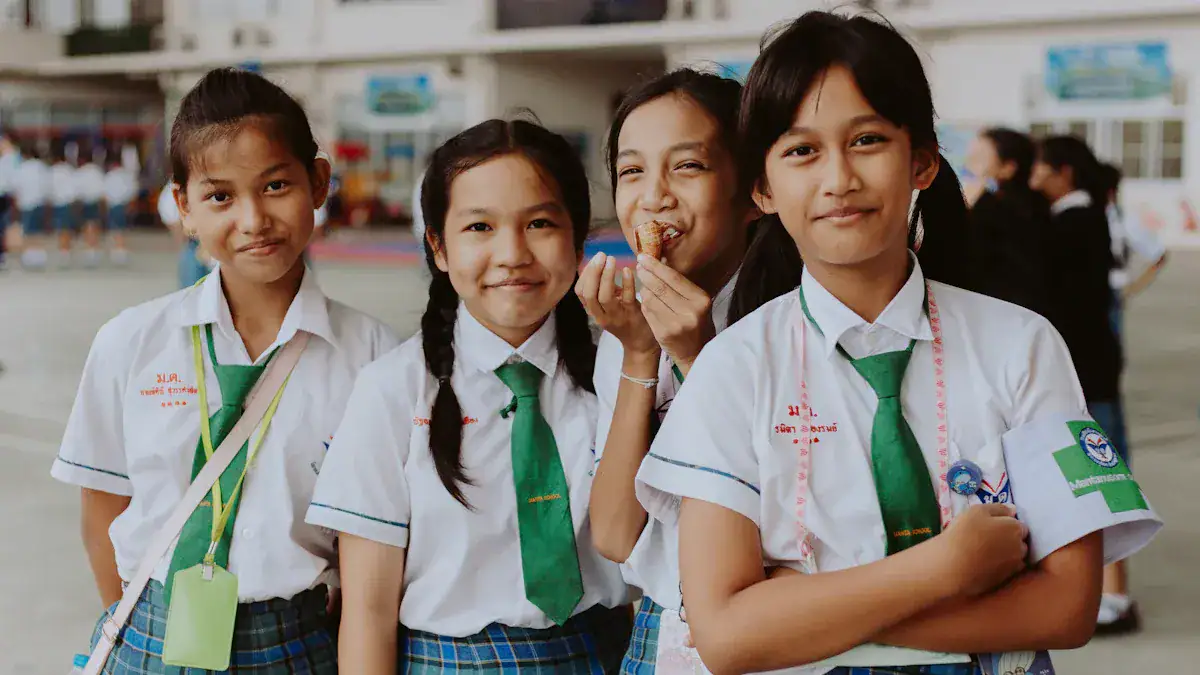
Boys’ Uniforms
Shirt Styles
When I visit primary schools, I see that boys usually wear white, short-sleeved, buttoned-up shirts. These shirts look neat and simple. Some schools add a small logo or patch on the pocket. I notice that international schools sometimes require a blazer or vest, which makes the uniform look more formal. A few schools ask boys to wear a necktie, especially on special occasions.
Pants
I often spot boys wearing light brown knee-length trousers. In other schools, navy blue trousers are common. Some schools allow navy blue long trousers, especially during cooler months. The choice of pants depends on the school’s policy and the climate in the area.
Typical features of boys’ uniforms:
White, short-sleeved, buttoned-up shirts
Light brown knee-length trousers or navy blue trousers
Navy blue long trousers in some schools
Optional blazer or vest in international schools
Necktie required in select schools
School Insignia
Most schools add their insignia to the shirt pocket or collar. I see embroidered logos, patches, or printed designs. These insignias help students show pride in their school. Some schools use colored trims or stripes to make their uniforms unique.
Girls’ Uniforms
Blouse
Girls in primary schools usually wear a short-sleeved white blouse. Sometimes, the blouse has a school logo on the chest or sleeve. The design stays simple and comfortable for daily use.
Skirt Colors
I notice that pleated skirts are the most popular choice. These skirts usually reach the knee and come in navy blue or khaki. Some schools choose other colors to match their official school colors. The skirt style remains modest and practical.
Accessories
Girls wear black leather shoes and white socks with their uniforms. Some schools allow a cardigan or blazer, especially during rainy days. I see that accessories like ribbons or pins are sometimes part of the uniform, but these depend on the school’s rules.
Style | Description |
|---|---|
Blouse | Short-sleeved white blouse, sometimes with a school logo. |
Skirt | Pleated skirt, usually knee-length, in a designated color (often navy blue or khaki). |
Shoes and Socks | Black leather shoes and white socks. |
Optional Accessories | A school cardigan or blazer. |
I find that standardized designs help students feel united. Most schools keep the uniforms simple, but some add unique features like colored trims, school patches, or special accessories. These small details make each school’s uniform stand out while still following the basic pattern of philippines school uniforms.
Secondary School Uniforms
When I visit secondary schools in the Philippines, I notice that uniforms look more formal compared to those in primary schools. The designs often reflect a sense of maturity and school pride. I see that both boys and girls wear uniforms that set them apart from younger students. Many schools have started to introduce modern trends, such as vests and coordinated accessories, to update their look.
Boys’ Uniforms
Polo Shirts
Most boys in secondary schools wear crisp, white polo shirts. These shirts usually have collars and short sleeves. Some schools add a school logo or colored piping on the collar or sleeves. I sometimes see boys wearing long-sleeved polos during special events or ceremonies. The shirts always look neat and pressed, which gives a smart appearance.
Dark Pants
I observe that dark pants are a standard part of boys’ uniforms at this level. Navy blue and black are the most common colors. The pants are usually straight-cut and made from sturdy fabric. Some schools allow boys to wear belts, which adds to the formal look. I rarely see shorts in secondary schools, as long pants are the norm.
Vests
Recently, I have seen more schools adding vests to their uniforms. The vests often match the color of the pants or have the school’s emblem on them. Wearing a vest makes the uniform look even more polished. Some schools require vests only on certain days, while others make them a regular part of the outfit.
Girls’ Uniforms
Blouse Styles
Girls in secondary schools usually wear blouses with more tailored designs. The blouses often have collars and sometimes include a ribbon or tie at the neck. I notice that some schools choose blouses with puffed sleeves or decorative buttons. The fabric remains lightweight for comfort, but the style looks more mature than in primary school.
Skirt Colors
Skirts for girls in secondary schools come in darker shades, such as navy blue, black, or even deep green. The skirts are usually pleated and fall below the knee. Some private schools use unique colors to stand out from public schools. I see that skirt length and color can vary, but the overall style stays modest and formal.
Vests
Many girls now wear vests as part of their uniforms. The vests often match the skirt and may feature the school insignia. I think vests add a layer of sophistication and help students look unified. Some schools allow students to remove the vest during hot weather, but most require it for assemblies or special occasions.
I have noticed that color and style variations depend on the type of school. Public schools often keep the same colors as elementary uniforms, with only slight changes for high school. Private schools, on the other hand, use more distinct colors and sometimes require extra items like ties for girls or coordinated colors for boys. Here is a table that shows these differences:
School Type | Uniform Style Description | Color Variations |
|---|---|---|
Public Schools | Generally similar to elementary uniforms, with slight variations for high school students. | Often the same colors as elementary, but may vary slightly. |
Private Schools | May have specific requirements like ties for girls and coordinated colors for boys. | Typically more distinct colors to differentiate from public schools. |
I find that secondary school uniforms in the Philippines balance tradition with new ideas. The use of dark pants, tailored blouses, and vests creates a formal look. At the same time, schools add their own touches through color and accessories. These changes help students feel proud of their school and keep the uniforms practical for daily use.
School Uniforms: Gender Differences
Boys vs. Girls
When I look at school uniforms in the Philippines, I see clear differences between what boys and girls wear. Most schools assign uniforms based on a student’s sex at birth. Boys usually wear white button-up shirts with dark pants or shorts, while girls wear white blouses with skirts. These rules do not stop at clothing. Schools also set strict guidelines for hair. Boys must keep their hair short, and girls cannot cut their hair too short. I have seen how these rules can make some students feel uncomfortable, especially those whose gender identity does not match these expectations. The focus on traditional influences shapes these policies, but it can also create challenges for students who want to express themselves differently.
I notice that these gender-specific rules affect more than just appearance. They can impact how students feel about themselves at school. Some students struggle to fit in when their gender expression does not match the uniform they are required to wear. This can make school a stressful place for them.
Here is a simple table that shows the main differences:
Category | Boys’ Uniforms | Girls’ Uniforms |
|---|---|---|
Top | White button-up shirt | White blouse |
Bottom | Dark pants or shorts | Skirt |
Hair Policy | Short hair required | Long hair preferred, short hair limited |
Unisex Options
Recently, I have seen some schools start to offer more flexible uniform choices. For example, Pamantasan ng Lungsod ng Maynila now lets students pick between a plain white polo or a white blouse with a tie. They can also choose to wear pants or a skirt, no matter their gender. This policy gives students more freedom to dress in a way that matches their identity. I think this is a big step toward making schools more inclusive.
Senator Raffy Tulfo has also pushed for a law that would let female students wear trousers in all schools. If this bill passes, it will help create a more equal environment for everyone. I believe that these changes show a move away from strict gender rules and toward a system where students can feel comfortable and accepted.
I feel hopeful when I see schools adopting gender-neutral uniform policies. These changes support LGBTQIA+ students and help everyone feel like they belong. When schools remove sex-based guidelines, they show respect for all students’ rights.
While most schools still follow traditional gender rules, I see a growing trend toward unisex options. These changes may take time, but they show that schools are starting to listen to students’ needs. I hope more schools will follow this example and make school uniforms a source of pride for every student.
Regional and School Type Variations
Public vs. Private
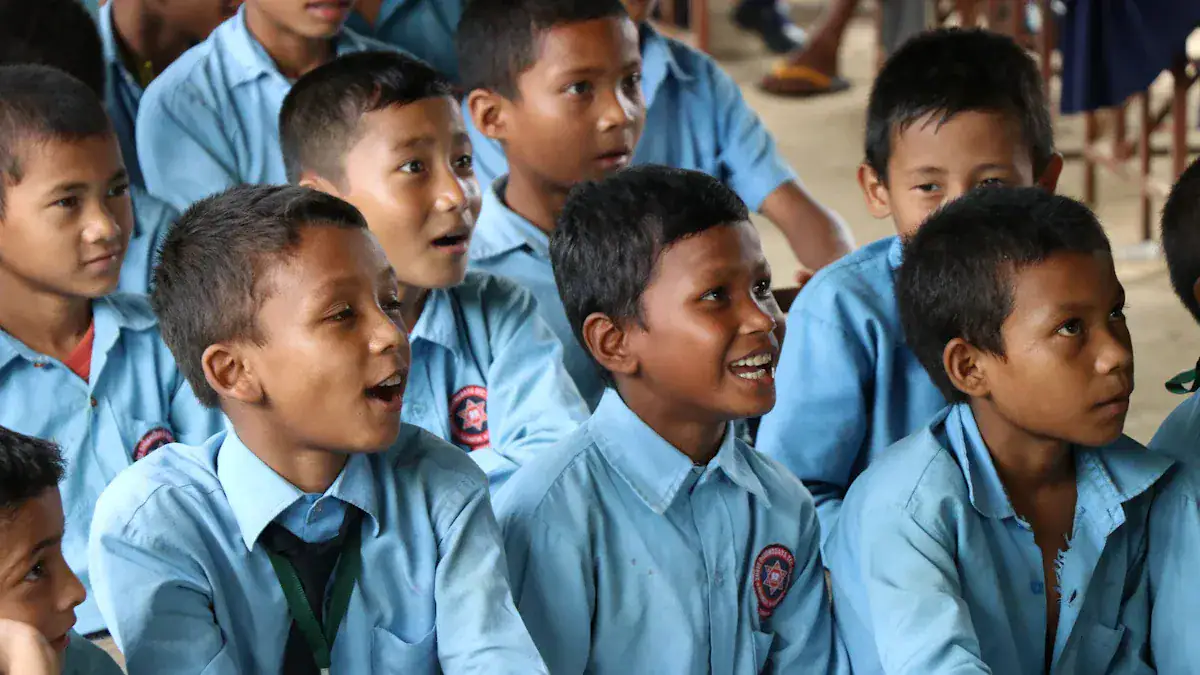
When I compare school uniforms in public schools and private schools, I see clear differences in style and variety. Public schools usually follow a standard design. Boys wear white short-sleeved button-up shirts with light brown knee-length trousers. Girls wear white blouses with long skirts or sometimes checkered skirts. In secondary public schools, boys switch to white polos with brown slacks or black trousers. Girls wear white or yellow blouses with checkered deep green skirts. Private schools show much more variety. I notice that private schools often choose unique patterns and colors. Many private schools include blazers in their uniforms for both boys and girls. Some private schools use specific colors and patterns to set themselves apart.
Here is a table that shows these differences:
School Type | Boys’ Uniform Description | Girls’ Uniform Description |
|---|---|---|
Public Primary | White short-sleeved button-up shirts, light brown knee-length trousers | White blouse with long skirts or checkered skirts |
Public Secondary | White Polo with brown slacks or black trousers | White or yellow blouse with checkered deep green skirt |
Private Schools | Varies widely in pattern and color, often includes blazers | Often includes blazers, may have specific colors and patterns |
I think private schools use their uniforms to express school identity. Public schools focus more on unity and simplicity.
Cultural Elements
I see that school uniforms in the Philippines often reflect traditional influences. Some schools add local touches to their designs. For example, I have seen schools in Muslim communities where girls wear a white hijab with their uniform. In other regions, schools use native fabrics or embroidery to show pride in their culture. Some private schools include patterns inspired by local art. I believe these details help students feel connected to their heritage. I also notice that some schools allow students to wear accessories that represent their culture, such as pins or ribbons with traditional designs.
I feel that these cultural elements make school uniforms more meaningful. Students learn to respect their roots while following school rules.
Special Schools
Special schools in the Philippines have their own uniform styles. Science high schools often require more formal uniforms, such as blazers and ties. I have visited technical schools where students wear practical uniforms, like polo shirts with the school logo and dark pants. Some private schools for the arts allow students to wear more creative outfits, sometimes with brighter colors or unique patterns. I see that special schools use uniforms to match their focus. For example, medical schools require white uniforms to show professionalism. I think these choices help students prepare for their future careers.
Science high schools: Blazers, ties, formal look
Technical schools: Polo shirts, dark pants, school logo
Arts schools: Creative patterns, brighter colors
Medical schools: White uniforms, clean appearance
I notice that each type of school uses uniforms to support its mission and values.
Uniform Policy Updates
Government Guidelines
I have seen many changes in the rules for school uniforms in the Philippines. The Civil Service Commission released new dress code guidelines in December 2024. These guidelines ask school personnel to wear ASEAN-inspired attire on the first Monday of each month. From the second to the fourth Mondays, they must wear Filipiniana-inspired clothing. The Department of Education is now updating its uniform committee to match these new rules. The focus is on making uniforms more inclusive and practical. DepEd has six months to create new internal guidelines. Until then, school staff must follow the old uniform policies.
CSC guidelines include ASEAN-inspired attire on the first Monday.
Filipiniana-inspired clothing is required from the second to fourth Mondays.
DepEd is working on new guidelines for inclusivity and practicality.
Old uniform rules remain in place until new ones are released.
I think these updates show a move toward respecting both tradition and modern needs. The government wants school uniforms to reflect traditional influences while also meeting the needs of today’s students and staff.
COVID-19 Impact
During the pandemic, I noticed big changes in how schools handled uniforms. Many schools stopped requiring uniforms for online classes. Students wore casual clothes at home, which made learning more comfortable. Some schools allowed students to wear their uniforms only during exams or special online events. When face-to-face classes returned, schools gave families more time to buy uniforms. I saw that some schools even let students wear old uniforms or mix and match pieces if they could not afford new ones.
I believe the pandemic taught schools to be flexible. Uniform policies became less strict, and schools focused more on student comfort and safety. This shift helped many families who struggled with the cost of new uniforms.
Trends
I have observed several modern trends in school uniforms across the country. Many schools now offer gender-neutral options, letting students choose between pants and skirts. Some schools use lighter fabrics and simpler designs to help students stay cool. I see more schools adding vests, ties, and unique insignias to make their uniforms stand out. Private schools often lead the way in adopting new styles and colors. Public schools follow, but they keep some elements of traditional influences.
Trend | Description |
|---|---|
Gender-neutral options | Students can choose pants or skirts regardless of gender. |
Lightweight fabrics | Uniforms use cooler materials for comfort. |
Unique accessories | Vests, ties, and insignias add style. |
Flexible policies | Schools allow mixing old and new uniform pieces. |
I think these modern trends show that schools want students to feel comfortable and proud. Uniforms now balance tradition with new ideas. I expect more schools to update their policies and designs in the future.
I see that school uniforms in the Philippines feature white shirts and dark pants for boys, while girls wear blouses and skirts. Primary uniforms look simple and practical, but secondary uniforms appear more formal with vests and tailored designs. Recent policy changes allow fabric variance, inclusivity for religious needs, and flexible supplier choices. The table below shows notable updates:
Aspect | Details |
|---|---|
New Guidelines | |
Fabric Variance | Allowed based on climate, following the Philippine Tropical Fabric Law. |
Inclusivity Changes | Sleeve length changes for religious reasons permitted. |
Supplier Regulations | No exclusive suppliers; any compliant source is allowed. |
Teachers wear four sets of uniforms weekly.
Fridays are non-uniform days.
DepEd has six months to draft new guidelines.
I believe these changes make school uniforms more inclusive and practical for everyone.
FAQ
What colors do most school uniforms in the Philippines use?
I usually see white shirts paired with navy blue, brown, or black pants and skirts. Some private schools choose unique colors to match their school identity.
Can students choose between pants and skirts?
I notice that most schools assign pants to boys and skirts to girls. Some schools now offer gender-neutral options, letting students pick what feels comfortable.
Are school uniforms required for online classes?
During online classes, I saw many schools relax uniform rules. Students often wore casual clothes at home. Uniforms became optional for virtual learning.
Do schools allow religious accessories with uniforms?
I have seen schools permit religious accessories like hijabs for Muslim girls. Some schools also allow longer sleeves or special pins for religious reasons.
How do schools handle uniform costs for families?
Schools often use mass-produced uniforms to keep prices low. I have seen some schools allow old uniforms or mixing pieces to help families save money.
What shoes do students wear with uniforms?
Most students wear black leather shoes with white socks. Some schools allow sneakers for physical education days.
Are there differences between public and private school uniforms?
I notice public schools use standard designs and colors. Private schools often add blazers, ties, or unique patterns to show school pride.
Can students personalize their uniforms?
Schools usually set strict rules, but I have seen students add small accessories like pins or ribbons. Major changes are not allowed.