

Puffy Vest Showdown Weighing Synthetic and Down Pros and Cons
Table of Contents
Display
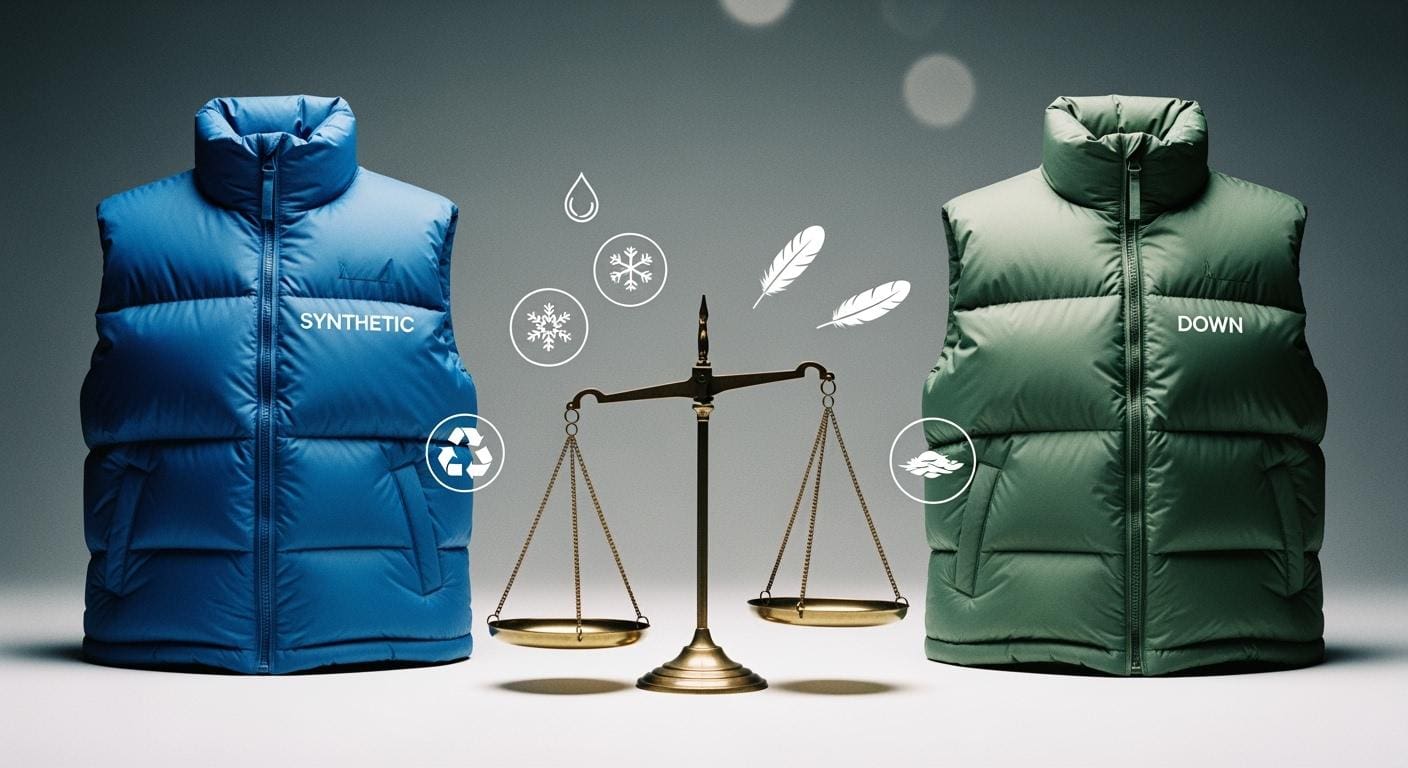
Imagine you are picking out a puffy vest for your next hiking trip or for staying warm on your daily commute. You might wonder if synthetic or down works better for you. The answer depends on what you value most. Some people choose synthetic because it stays warm even when wet, costs less, and supports animal protection. Others prefer down for its warmth and light weight. Today, many outdoor enthusiasts lean toward synthetic options for these reasons:
Synthetic down was valued at $99.3 billion in 2023 and may reach $166.4 billion by 2032.
Synthetic vests perform well in wet weather and cost less than down.
More people now care about animal welfare, boosting synthetic’s popularity.
You can check the quick comparison table below for a fast look at the main differences.
Key Takeaways
Synthetic vests stay warm even when wet, making them ideal for rainy or humid conditions.
Down vests offer superior warmth-to-weight ratios, perfect for cold, dry climates.
Synthetic options are generally more budget-friendly, making them great for occasional use.
Allergy sufferers may prefer synthetic vests, as they are hypoallergenic and do not contain natural allergens.
Down insulation is lightweight and compressible, making it easy to pack for travel.
Consider the weather and your activities when choosing between synthetic and down vests.
Both types of vests have unique care needs; down requires more attention to maintain loft.
Look for ethical certifications like Responsible Down Standard (RDS) for down vests or recycled materials for synthetic options.
Puffy Vest Comparison Table

Synthetic vs Down Overview
When you compare puffy vests, you want to see the differences at a glance. The table below gives you a quick overview of how synthetic and down vests stack up in the most important areas. This helps you decide which vest fits your needs best.
Attribute | Synthetic Insulation | |
|---|---|---|
Warmth | More warmth for its weight | Less warm for the same weight |
Weight | Lighter, great for weight-sensitive activities | Heavier and bulkier for similar warmth |
Water Resistance | Loses warmth when wet | Stays warm even when wet |
Cost | More expensive | More budget-friendly |
Allergy | May cause allergies | Non-allergenic, good for sensitive users |
Ethics | Animal welfare concerns, needs responsible sourcing | Often uses recycled materials, vegan-friendly |
You notice that down vests give you excellent warmth without adding much weight. This makes them a favorite for backpackers and anyone who wants to travel light. If you plan to hike in cold, dry places, down insulation keeps you comfortable with less bulk.
Synthetic vests offer reliable warmth even if you get caught in the rain. You do not have to worry about losing insulation when your vest gets wet. This makes synthetic a smart choice for damp climates or activities where you might sweat a lot. Synthetic insulation also dries faster, so you can wash and reuse your vest with less hassle.
Cost matters for many people. Down vests usually cost more because they use natural materials and special processing. Synthetic vests often cost less, so you can get good performance without spending a lot. If you want a vest for occasional use or you are on a budget, synthetic options make sense.
Allergy concerns can affect your choice. Some people react to down feathers, so synthetic insulation provides a safe, non-allergenic alternative. You also might care about animal welfare. Down comes from birds, so you need to check if the vest uses responsibly sourced materials. Synthetic vests do not use animal products and often include recycled fibers, making them a vegan-friendly and eco-conscious option.
Tip: Think about your main activities and the weather you expect. If you want the lightest, warmest vest for dry conditions, down is hard to beat. If you need a vest that handles wet weather, costs less, or avoids animal products, synthetic is your best bet.
Warmth
When you choose a puffy vest, warmth often tops your list of priorities. Both down and synthetic insulation offer unique benefits, but their warmth and performance can differ depending on your needs and the environment.
Down Insulation
Thermal Efficiency
Down insulation stands out for its exceptional thermal efficiency. You get more warmth for less weight, which makes it a favorite for cold-weather adventures. Down uses a rating called “fill power” to measure how much space one ounce of down occupies. Higher fill power means better insulation with less material. This feature allows you to pack a lighter vest without sacrificing warmth. Many outdoor enthusiasts prefer down for its superior warmth-to-weight ratio. You can expect down insulation to keep you comfortable in freezing temperatures while keeping your pack light.
Note: Down remains the clear winner in warmth-to-weight ratios. You will notice that down vests feel lighter and more compressible than synthetic options.
Cold Weather Performance
If you plan to spend time in dry, cold conditions, down insulation delivers outstanding performance. It traps heat efficiently and keeps you warm even when temperatures drop well below freezing. Laboratory tests show that down is generally warmer than synthetic alternatives, making it the best choice for extreme cold. However, you should remember that down insulation loses its insulating power when it gets wet. In dry climates, though, you will enjoy unmatched warmth and comfort.
Synthetic Insulation
Warmth When Wet
Synthetic insulation offers reliable warmth even in damp or wet conditions. Unlike down, synthetic insulation retains its loft and insulating properties when exposed to moisture. This makes synthetic vests ideal for rainy, humid, or unpredictable weather. You do not have to worry about losing warmth if your vest gets wet from rain or sweat. Synthetic insulation is water-resistant and dries quickly, so you can stay comfortable and active in changing conditions.
Synthetic insulation maintains warmth in wet environments.
Down insulation loses its loft and warmth when wet.
Breathability
You will also find that synthetic insulation often provides better breathability. This feature helps regulate your body temperature during high-energy activities. If you hike, run, or move a lot, synthetic vests allow moisture to escape, reducing the risk of overheating. Synthetic insulation supports active use and keeps you comfortable during intense outdoor adventures.
Insulation Type | Thermal Efficiency | Moisture Resistance | Weight | Pros | Cons |
|---|---|---|---|---|---|
Down | Superior warmth-to-weight ratio | Loses insulation when wet | Lightweight | Exceptional warmth | Less effective in wet conditions |
Synthetic | Slightly less warm than down | Maintains insulation when wet | Heavier | Versatile and affordable | Slightly less warmth than down |
Tip: If you expect wet weather or need a vest for active use, synthetic insulation offers dependable warmth and breathability. For dry, cold climates, down insulation gives you the best warmth-to-weight performance.
Weight & Packability
When you compare puffy vests, weight and packability often influence your decision. You want a vest that feels light and packs down small, especially if you travel or hike. Both down and synthetic vests trap air to create warmth, but they differ in how much space they take up and how easy they are to carry.
Down Vests
Lightweight
You notice that down vests feel lighter than synthetic vests. The natural structure of down clusters creates a high warmth-to-weight ratio. This means you get more insulation without extra bulk. If you plan to hike long distances or travel with limited space, you appreciate how little a down vest weighs. Many outdoor enthusiasts choose down for activities where every ounce matters.
Down vests provide excellent warmth with minimal weight.
You can wear a down vest all day without feeling weighed down.
Backpackers and travelers often prefer down for its light feel.
Compressibility
Down vests excel in compressibility. You can squeeze a down vest into a small stuff sack or corner of your backpack. The loft of down allows it to spring back after packing, so you do not lose insulation. If you need to save space, down vests make packing easy.
Down vests compress tightly, making them ideal for day trips.
You can pack a down vest in your carry-on or hiking bag with room to spare.
Down insulation regains its shape quickly after unpacking.
Tip: If you want a vest that packs down small and feels light, down offers the best performance for travel and outdoor adventures.
Synthetic Vests
Heavier
Synthetic vests tend to weigh more than down vests. The fibers used in synthetic insulation do not trap as much air per ounce. You may notice the difference when you carry your vest for long periods. Synthetic vests still provide warmth, but you sacrifice some lightness.
Synthetic vests add extra weight compared to down.
You might choose synthetic for short trips or daily wear where weight matters less.
Some synthetic vests use advanced fibers to reduce weight, but most remain heavier than down.
Bulkier
Synthetic vests do not compress as tightly as down vests. The insulation fibers resist packing down, so you need more space in your bag. If you travel often, you may find synthetic vests take up more room. However, synthetic vests still offer good packability for occasional use.
Synthetic vests fit in your backpack, but they use more space than down.
You may prefer synthetic for multi-day trips, especially in wet conditions.
Synthetic insulation dries quickly, so you can pack it away even if it gets damp.
Note: Synthetic vests work well if you need durability and reliable warmth, but they do not match the compressibility of down.
Feature | Down Vests | Synthetic Vests |
|---|---|---|
Weight | Very light | Heavier |
Compressibility | Packs very small | Packs less tightly |
Best Use | Day trips, travel | Multi-day trips, wet weather |
You should consider how much weight and space you want to carry. Down vests suit you if you value lightness and easy packing. Synthetic vests work better if you need durability and do not mind a little extra bulk.
Water Resistance
When you choose a puffy vest, water resistance becomes a key factor, especially if you spend time outdoors in unpredictable weather. Both down and synthetic vests react differently to moisture. Understanding these differences helps you pick the right vest for your needs.
Down Vests
Loses Warmth When Wet
Down vests provide excellent warmth in dry conditions. However, when down gets wet, it loses its loft and insulating power. Water causes the clusters to clump together, trapping less air. You may notice that a wet down vest feels heavy and cold. If you hike in rainy or humid environments, this loss of warmth can become a problem. Many outdoor enthusiasts avoid down vests for wet climates because of this weakness.
Tip: Always check the weather before heading out with a down vest. If you expect rain, consider packing a waterproof shell or choosing a different insulation type.
Water-Resistant Treatments
To help down vests perform better in damp conditions, many brands use water-resistant treatments. The most common treatment is Durable Water Repellent (DWR). DWR creates a surface that causes water to bead up and roll off the fabric. You find two main types of DWR: fluorinated and PFAS-free. Fluorinated DWR, especially long-chain versions, works well at repelling water and oils. However, these treatments raise environmental concerns. PFAS-free options have become more popular as brands move toward safer chemicals. These newer treatments bead water effectively at first, but they do not last as long and need more maintenance. You may see a shift toward PFAS-free DWR, but these finishes still lag behind fluorinated ones in long-term durability and oil resistance.
Synthetic Vests
Insulates When Wet
Synthetic vests handle moisture much better than down. The fibers in synthetic insulation resist clumping and keep their loft even when wet. You stay warmer if your synthetic vest gets soaked by rain or sweat. This makes synthetic vests a smart choice for wet climates, high-output activities, or situations where you cannot avoid moisture. Synthetic insulation tolerates dampness and recovers its shape quickly, so you do not lose as much warmth.
Synthetic vests keep you insulated in wet conditions.
Down vests lose their insulating power when saturated.
Quick Drying
You also benefit from the quick-drying nature of synthetic vests. After exposure to rain or sweat, synthetic insulation dries faster than down. Both types of vests perform poorly when fully soaked, but synthetic insulation recovers loft better and dries more reasonably. You should avoid soaking any vest completely, but if it happens, synthetic vests bounce back sooner. This feature adds convenience for travel, daily wear, or multi-day trips where you need your gear to dry overnight.
Note: If you expect wet weather or plan to be active, synthetic vests offer reliable warmth and faster drying times.
Feature | Down Vest | Synthetic Vest |
|---|---|---|
Water Resistance | Needs DWR, loses warmth | Insulates when wet |
Drying Speed | Slow | Fast |
Loft Recovery | Poor when wet | Good when wet |
You should weigh your typical weather conditions and activity level. Down vests work best in dry, cold places. Synthetic vests shine when you face rain, sweat, or humidity.
Durability
When you invest in a puffy vest, you want it to last through many adventures. Durability plays a big role in how long your vest keeps you warm and comfortable. Both down and synthetic vests have unique strengths and weaknesses when it comes to lasting power.
Down Vests
Clumping Risk
You might notice that down vests can clump over time, especially if you store them compressed for long periods. The natural clusters inside a down vest need space to stay fluffy. If you keep your vest packed tightly, the down can stick together and lose its loft. This clumping reduces warmth and makes the vest feel uneven. However, with proper care, you can prevent most clumping. Many users report that their down vests maintain loft and insulation for several years. One user even shared that after 900 days of use, their down vest still looked and felt great. This shows that down, when treated well, stands up to years of wear.
Care Needs
To keep your down vest in top shape, you need to follow some simple care steps. Fluffing your vest in a tumble dryer helps restore the loft. You should avoid storing it in a compression sack for long periods. Occasional washing with special down detergent keeps the insulation clean and effective. Down vests require a bit more attention, but the payoff is a vest that lasts for many seasons.
Tip: Store your down vest loosely and give it a good shake after each use to keep the insulation evenly distributed.
Synthetic Vests
Toughness
Synthetic vests offer toughness in daily use. The fibers resist damage from rough handling and frequent washing. You can wear a synthetic vest for active sports or outdoor chores without worrying about delicate materials. However, synthetic insulation tends to break down faster than down. Many users find that synthetic vests lose their loft and warmth within months. Some notice a drop in performance after just 30 to 60 days of heavy use. Synthetic fibers simply do not last as long as natural down clusters.
Easy Maintenance
You will appreciate how easy it is to care for a synthetic vest. You can wash it in a regular machine and dry it quickly. Synthetic insulation does not need special detergents or careful drying. This makes synthetic vests a good choice if you want low-maintenance gear. However, you may need to replace your synthetic vest sooner, especially if you use it often.
Here is a quick look at the most common durability issues and care needs:
Vest Type | Maintenance Needs | |
|---|---|---|
Down | Can clump over time, especially in compression sacks. Requires careful care. | Needs occasional fluffing in a tumble dryer. |
Synthetic | Loses loft faster and is less durable overall. Breaks down over time. | Easier to care for but may need replacement sooner. |
Down is significantly more durable than synthetic alternatives, capable of being compressed and re-lofted for years with proper care.
Synthetic fibers are less durable and will eventually break down, requiring replacement sooner, especially under tough conditions.
Note: If you want a vest that lasts for years, down is the better choice. If you prefer easy care and do not mind replacing your vest more often, synthetic works well.
Cost
When you shop for a puffy vest, price often plays a big role in your decision. Both down and synthetic vests come in a range of prices, but you will notice some clear trends when you compare them side by side.
Down Vests
Higher Price
You usually pay more for a down vest. The natural materials and careful sourcing drive up the cost. Outdoor brands often use high-quality down with high fill power, which means better warmth and lighter weight, but also a higher price tag. Take a look at this table to see how prices compare at major outdoor retailers:
Vest Type | Price | Weight | Fill Power | Pros | Cons |
|---|---|---|---|---|---|
Down Vest 1 | $100 | 8.1 oz | 650 | Very affordable | Not very warm |
Down Vest 2 | $180 | 5.4 oz | 800 | Ultralight | Mid-tier fill power |
Down Vest 3 | $269 | 7.0 oz | 900 | Lightweight, Warm | Expensive |
Synthetic Vest | $159 | 4.4 oz | N/A | Ultralight, Affordable | Not very warm |
You can also see the price differences in this chart:
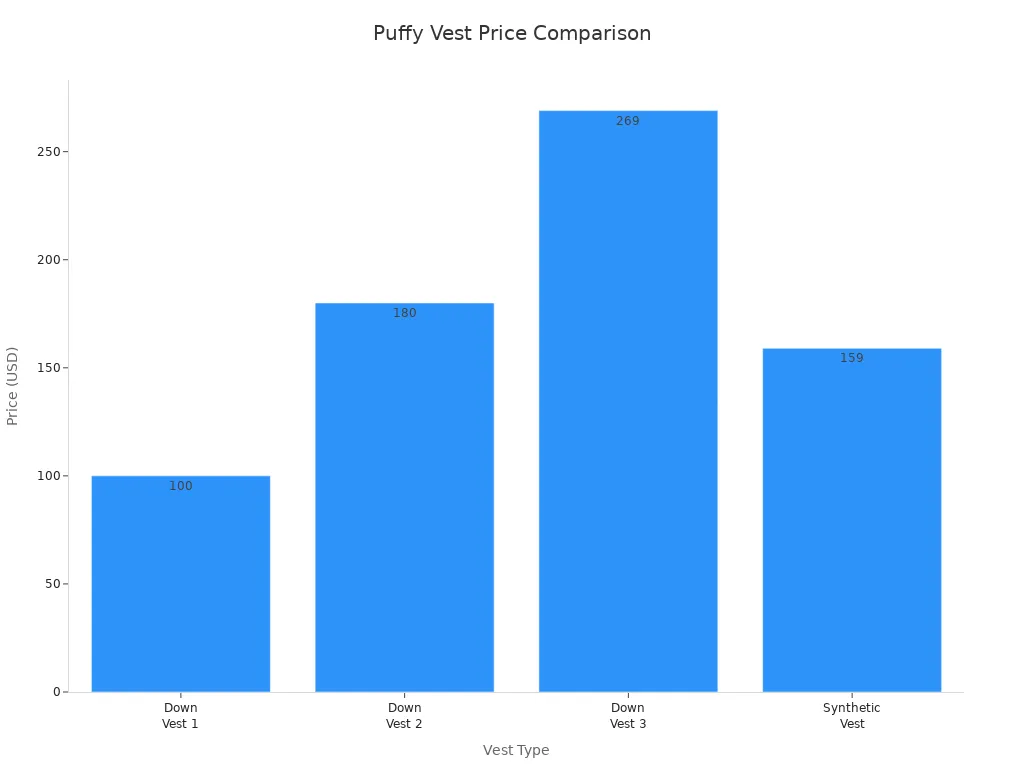
Most down vests cost more than synthetic vests, especially if you want top-tier warmth and lightness. You might find a basic down vest for around $100, but premium models can reach $250 or more.
Long-Term Value
While you pay more upfront for down, you often get better long-term value. Down vests last longer if you care for them properly. They keep their loft and warmth for years, even after many adventures. Down insulation stands out for its warmth-to-weight ratio and compressibility. You can expect a down vest to outlast most synthetic options, making it a smart investment for frequent outdoor use.
Feature | Down Vests | Synthetic Vests |
|---|---|---|
Warmth-to-Weight Ratio | Superior, lighter, and more compressible | Generally heavier and less compressible |
Durability | Outlasts synthetic options significantly | Less durable, more likely to degrade over time |
Moisture Resistance | Loses insulation when wet | Retains insulation properties when wet |
Drying Time | Slower drying time | Dries up to three times faster |
Environmental Impact | Biodegradable | Takes decades to decompose |
Tip: If you want a vest that will last for many seasons, down gives you better value over time, even if the initial price is higher.
Synthetic Vests
Budget-Friendly
Synthetic vests usually cost less than down vests. You can find good options for under $150, and sometimes even less during sales. Synthetic insulation uses man-made fibers, which are cheaper to produce and easier to source. This makes synthetic vests a great choice if you want to save money or need a vest for occasional use.
“Budget friendly and great for rainy snowy places, why would I buy anything else? Well internet buddy there are a few downsides of synthetic insulation. Synthetics are still heavier and bulkier than down for the same level of insulation.”
Synthetic vests also perform well in wet weather and dry quickly. You get reliable warmth without spending a lot.
Occasional Use
If you only need a vest for a few trips or for daily wear, synthetic makes sense. These vests resist moisture and require less special care. You can wash them easily and not worry about losing loft. However, synthetic insulation tends to break down faster than down. You may need to replace your vest sooner if you use it often.
Synthetic vests offer a lower upfront cost.
You get good performance for the price, especially in wet or humid conditions.
For long-term use, you may notice synthetic vests lose warmth faster than down.
Note: Choose synthetic if you want to save money, need a vest for wet weather, or plan to use it only occasionally.
Allergy & Comfort
Choosing a puffy vest means thinking about how it feels against your skin and whether it might trigger allergies. You want a vest that keeps you comfortable during your activities and does not cause unwanted reactions. Both down and synthetic vests offer different experiences when it comes to allergy risks and overall comfort.
Down Vests
Potential Allergens
You may love the warmth and lightness of down insulation, but it can cause problems for some people. Down comes from the soft feathers of ducks or geese. These natural materials sometimes contain tiny particles or dust that can trigger allergies. If you have sensitive skin or a history of allergies, you should know that down insulation is not always the safest choice.
Approximately 7-8% of people are allergic to feathers, which may include down insulation.
You might experience sneezing, itchy eyes, or skin irritation if you react to down.
Down vests can sometimes trap allergens inside the fabric, making symptoms worse.
If you have never worn a down vest before, try it for a short time first. You can check for any signs of discomfort or allergic reaction. Some brands clean and process down to remove most allergens, but no method guarantees complete safety for everyone.
Note: If you know you have feather allergies, you should consider other insulation options to avoid discomfort.
Synthetic Vests
Hypoallergenic
Synthetic insulation uses man-made fibers, such as polyester, that do not contain natural allergens. You can wear a synthetic vest with confidence, even if you have sensitive skin or a history of allergies. Synthetic vests do not trap dust or particles like down, so you avoid common triggers.
Synthetic insulation is non-allergenic, making it a suitable choice for individuals with allergies or sensitivities.
Synthetic insulation is a good choice for people with allergies.
You can wash synthetic vests easily, which helps keep them clean and free from irritants. If you want a vest that feels safe and comfortable, synthetic insulation offers peace of mind.
Active Use Comfort
You might spend hours hiking, running, or working outdoors. Synthetic vests often feel smoother against your skin and wick away moisture better than down. You stay dry and comfortable during active use. Synthetic insulation also dries quickly after washing or sweating, so you do not have to wait long before wearing your vest again.
Synthetic vests provide reliable comfort for sports and daily wear.
You can move freely without worrying about overheating or irritation.
Synthetic insulation supports active lifestyles and frequent use.
Tip: If you want a vest that feels comfortable during movement and does not cause allergies, synthetic insulation is a strong choice.
Feature | Down Vest | Synthetic Vest |
|---|---|---|
Allergy Risk | Possible for 7-8% of people | Very low |
Comfort During Activity | Warm, may trap moisture | Breathable, dries fast |
Maintenance | Needs careful cleaning | Easy to wash |
You should think about your allergy history and how you plan to use your vest. Down offers warmth, but synthetic gives you comfort and safety if allergies are a concern.
Ethics & Environment
When you choose a puffy vest, you might think about more than just warmth or price. Ethics and environmental impact matter, too. Both down and synthetic vests come with unique concerns and benefits.
Down Sourcing
Animal Welfare
You may worry about how brands source down. Some practices, like live plucking of ducks and geese or force feeding for foie gras, raise serious animal welfare issues. Lack of transparency in the supply chain can lead to cruelty. Many outdoor brands now address these concerns to protect animal rights.
Brand | |
|---|---|
Patagonia | Implemented the Responsible Down Standard (RDS) and strengthened supply chain monitoring. |
The North Face | Adopted the Responsible Down Standard (RDS) and shared it with other brands for better practices. |
Jones Snowboards | Uses 100% upcycled Allied down for its Re-Up puffy jacket, promoting recycling in down products. |
You should look for brands that commit to ethical sourcing. These companies work to ensure animals do not suffer during down collection.
Responsible Standards
Responsible Down Standard (RDS) certification helps you make informed choices. RDS tracks down from farm to finished product, banning live plucking and force feeding. Patagonia, for example, sources 100% of its down from RDS-certified suppliers. When you see the RDS label, you know the vest meets strict animal welfare guidelines.
RDS certification bans cruel practices.
Brands like Patagonia and The North Face lead the way in responsible down sourcing.
Upcycled down, as used by Jones Snowboards, reduces waste and supports recycling.
Synthetic Materials
Vegan Option
If you want a vegan-friendly vest, synthetic insulation offers a clear choice. Synthetic vests use no animal products. You can wear them with confidence, knowing no animals were harmed.
Recycled Fibers
Many synthetic vests now use recycled polyester. This reduces the need for new raw materials and helps keep plastic waste out of landfills. You support sustainability when you pick a vest made with recycled fibers.
Synthetic vests often feature recycled content.
Recycled fibers help lower the environmental footprint.
Environmental Impact
You should know that synthetic materials have their own environmental challenges. Life cycle analyses show that synthetic insulation, especially recycled polyester, impacts the environment during production and disposal. Synthetic vests resist water and last a long time, but they do not break down easily. When you throw away a synthetic vest, it can add to plastic pollution in landfills. Microplastics from synthetic jackets may enter waterways, harming aquatic life and even reaching the human food chain.
Down, on the other hand, is biodegradable. If you dispose of a down vest properly, it breaks down naturally and causes less harm to the environment. Still, you must balance animal welfare concerns with environmental impact when you choose between down and synthetic vests.
Tip: Consider both animal welfare and environmental effects. Look for RDS-certified down or synthetic vests with recycled fibers to make a more ethical and eco-friendly choice.
Puffy Vest Use Cases
Choosing the right puffy vest depends on your activities, climate, and personal values. You want to match your vest to your needs, whether you hike, travel, or just want something for daily wear. Let’s break down when you should pick down or synthetic insulation for your next adventure.
When to Choose Down
Cold, Dry Conditions
You get the most benefit from a down puffy vest in cold, dry weather. Down traps heat efficiently and keeps you warm without adding bulk. If you plan to spend time outdoors in freezing temperatures, you will appreciate the warmth-to-weight ratio that down provides. Down insulation works best when you do not expect rain or heavy moisture. The natural loft of down clusters creates a barrier against the cold, making it ideal for winter hikes, snowshoeing, or standing around at chilly outdoor events.
Down vests excel in dry, cold climates.
You stay warm without feeling weighed down.
Down insulation loses effectiveness if it gets wet, so dry conditions are key.
Tip: Always check the weather forecast before heading out. If you expect dry, cold air, a down puffy vest will serve you well.
Lightweight Travel
You should consider a down puffy vest if you want to travel light. Down compresses easily and fits into small spaces in your backpack or suitcase. Many travelers and backpackers choose down-filled products because they offer warmth without taking up much room. You can layer a down vest under a shell or jacket for extra insulation during winter trips.
Down vests pack down small, saving space for other gear.
You can layer them easily for versatile warmth.
Models like the Patagonia Down Sweater Vest are popular for their packability and insulation.
Note: If you value light gear and need to save space, down is the top choice for travel and multi-day hikes.
When to Choose Synthetic
Wet Weather
You should reach for a synthetic puffy vest if you expect rain, snow, or high humidity. Synthetic insulation keeps you warm even when wet. Unlike down, synthetic fibers do not clump or lose their loft in damp conditions. Field tests show that synthetic vests continue to insulate after exposure to moisture, making them reliable for wet climates or activities where you might sweat.
Synthetic insulation maintains warmth in wet or humid weather.
It dries faster than down, so you stay comfortable.
Synthetic vests work well for rainy hikes, kayaking, or any activity near water.
Tip: If you live in a region with unpredictable weather, a synthetic puffy vest gives you peace of mind.
Budget Needs
You might want a synthetic puffy vest if you need to stick to a budget. Synthetic insulation costs less to produce, so these vests are usually more affordable. You get good performance for the price, especially if you only need a vest for occasional use or daily errands.
Synthetic vests offer reliable warmth at a lower price.
They make a great choice for students, families, or anyone watching their spending.
You can find quality synthetic vests for under $150.
Note: If you want value without sacrificing performance, synthetic insulation is a smart pick.
Allergy Concerns
You should choose a synthetic puffy vest if you have allergies or sensitive skin. Synthetic insulation uses man-made fibers that do not contain natural allergens. Down can sometimes trigger reactions in people allergic to feathers. Synthetic vests are hypoallergenic and easy to wash, making them a safe and comfortable option.
Synthetic insulation is non-allergenic.
You can wash synthetic vests often to keep them clean.
They suit people with sensitive skin or respiratory allergies.
Tip: If you have never worn down before, try synthetic first to avoid discomfort.
Quick Reference Table
Scenario | Best Choice | Why It Works Well |
|---|---|---|
Cold, dry hiking | Down | Superior warmth-to-weight, packs small |
Lightweight travel | Down | Compresses easily, ideal for layering |
Wet or humid weather | Synthetic | Insulates when wet, dries quickly |
Budget-friendly option | Synthetic | Lower cost, good performance |
Allergy concerns | Synthetic | Hypoallergenic, easy to clean |
Daily wear, frequent use | Synthetic | Durable, handles repeated washing |
Remember: Your priorities matter. If you want the lightest, warmest vest for dry conditions, down is hard to beat. If you need reliable warmth in wet weather, have allergies, or want to save money, synthetic is your best bet.
You can also look for sustainable materials and ethical certifications. Brands now offer puffy vests made from recycled fibers or responsibly sourced down. If you care about animal welfare or environmental impact, check for labels like Responsible Down Standard (RDS) or Global Organic Textile Standard (GOTS).
You have many options. Think about your main activities, the climate, and your values. The right puffy vest will keep you comfortable and ready for anything.
You face a choice between synthetic and down puffy vests, each with unique strengths. The table below highlights the main pros and cons:
Insulation Type | Pros | Cons |
|---|---|---|
Synthetic | Affordable, dries fast, easy care, non-allergenic, recycled content | Heavier, bulkier, less warmth for weight, shorter lifespan |
Down | Superior warmth-to-weight, compressible, long-lasting, great in dry cold | Loses warmth when wet, needs careful care, higher cost, allergy risk |
Choose down for dry, cold trips where light weight matters.
Pick synthetic for wet weather, frequent washing, or if you have allergies.
Many outdoor experts recommend owning both to match changing conditions.
Both vest types deserve a spot in your closet. You stay ready for any adventure when you choose the right vest for the day.
FAQ
What is the main difference between synthetic and down insulation?
You get down insulation from duck or goose feathers. Synthetic insulation uses man-made fibers. Down feels lighter and warmer in dry conditions. Synthetic works better when wet and costs less.
Can you wash a down puffy vest in a regular washing machine?
You should use a front-loading machine with gentle detergent made for down. Tumble dry with clean tennis balls to restore loft. Avoid top-loading machines because they can damage the vest.
Which vest is better for rainy or humid weather?
You stay warmer in wet conditions with synthetic insulation. Synthetic fibers keep their loft and dry quickly. Down loses warmth when wet, so it suits dry climates best.
Are synthetic puffy vests environmentally friendly?
You find many synthetic vests made with recycled polyester. This reduces waste. Synthetic fibers do not biodegrade easily, so they can contribute to landfill pollution.
Do down vests cause allergies?
You may react to down if you have feather allergies. Symptoms include sneezing or skin irritation. Synthetic vests are hypoallergenic and safer for sensitive users.
How do you store a puffy vest to keep it in good shape?
You should hang your vest or store it loosely. Avoid compressing it for long periods. This keeps the insulation fluffy and extends the vest’s life.
Is it worth paying more for a down vest?
You get better warmth-to-weight and longer durability with down. If you use your vest often in cold, dry weather, the higher price pays off over time.