

How to start a food delivery business
Table of Contents
Display
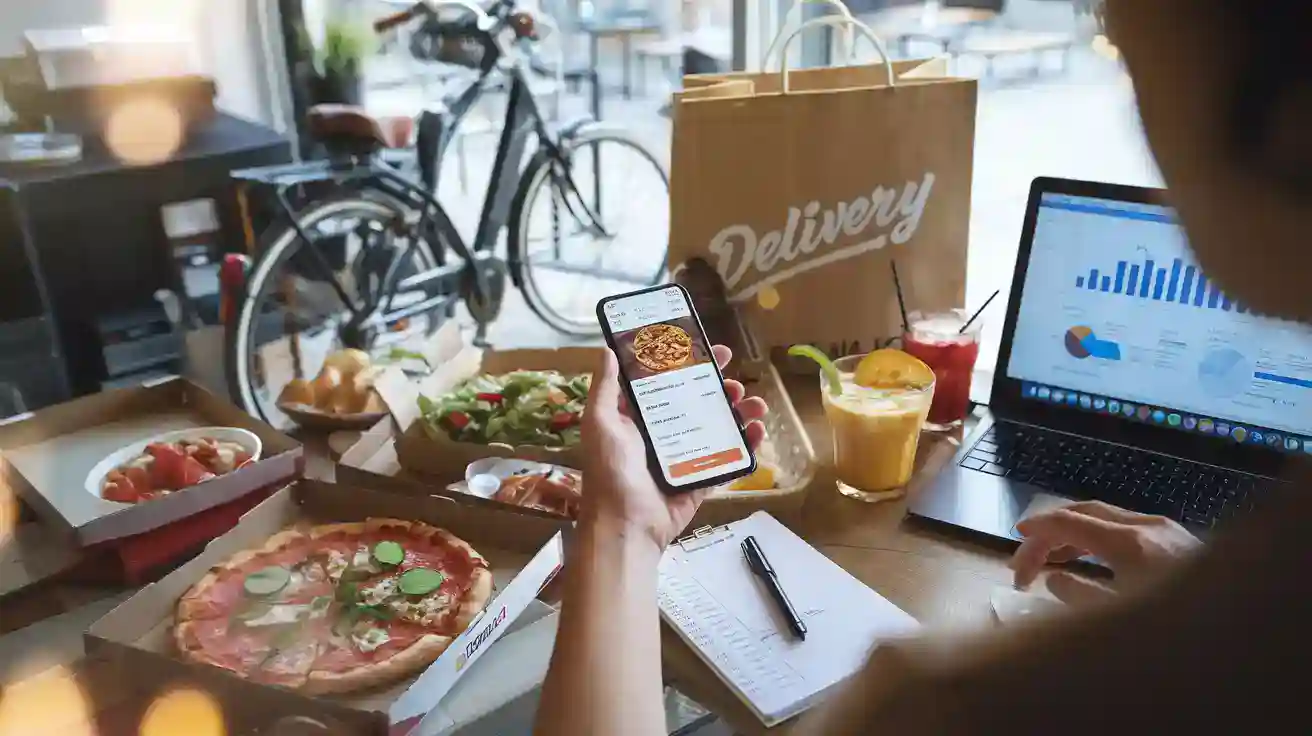
When I decided to start a food delivery business, I focused on market research, selecting a strong business model, and ensuring legal compliance. I saw the market’s potential firsthand, with global online food delivery revenue projected to reach $1,854.5 billion by 2029. Convenience drives consumer interest, and technology fuels rapid growth.
I always recommend creating a business plan that prioritizes technology and customer needs. Starting a food delivery business offers real opportunities for profitability and growth.
Key Takeaways
- Research your target customers and choose a niche that fits local demand and your strengths to stand out in the food delivery market.
- Select a business model that balances reach and control, such as using delivery platforms, homemade food delivery, or restaurant partnerships.
- Complete all legal steps early, including registering your business and obtaining necessary licenses to ensure compliance and protect your brand.
- Invest in technology like a mobile-friendly ordering platform, secure payment systems, and delivery tracking to improve customer experience and efficiency.
- Use data-driven marketing and retention strategies to attract and keep customers, focusing on clear goals, personalized offers, and loyalty programs.
Market Research
Target Customers
When I started my food delivery business, I knew that understanding my target market would shape every decision. I began by identifying who would benefit most from my food delivery service. I looked at age groups, income levels, and lifestyle habits. College students, busy professionals, and families often seek convenience and variety. I also paid attention to dietary preferences, such as vegan, gluten-free, or allergen-friendly options. By analyzing local demographics and online ordering trends, I could tailor my strategy to meet real customer needs.
Niche Selection
Choosing the right niche gave my food delivery service a competitive edge. I reviewed industry reports and noticed several profitable segments:
- Hyper-local delivery platforms help small businesses reach more customers.
- Plant-based meals and family-style options attract health-conscious consumers.
- Subscription services like DashPass and Uber One encourage loyalty.
- AI-driven personalization creates unique customer experiences.
- Direct-to-consumer channels reduce commission fees and build stronger relationships.
- Sustainable practices, such as eco-friendly packaging, appeal to environmentally aware customers.
- Ghost kitchens allow rapid expansion with lower overhead.
| Segment Category | Key Insights & Profitable Niches |
|---|---|
| Food Type | Restaurant Food (largest share), Groceries, Prepared Meals, Beverages |
| Delivery Models | On-demand (largest share), Scheduled, Subscription-based |
| Market Drivers & Trends | Online ordering, smartphone adoption, AI personalization, eco-friendly delivery |
I always recommend aligning your strategy with a niche that matches your strengths and local demand.
Competition
I studied my competitors closely before launching my food delivery business. I evaluated their user interfaces, menu displays, and ordering processes. I tracked order volumes by region and platform to spot gaps in the market. Monitoring customer reviews and delivery times helped me identify areas for improvement. I also analyzed average order value and menu performance to refine my own offerings. By focusing on customer experience and operational efficiency, I developed a strategy that set my food delivery service apart from established brands.
Business Model Options
Delivery Platforms
When I launched my food delivery business, I recognized the power of delivery platforms in reaching a broad customer base. These platforms connect restaurants or food providers directly with customers through an app or website. I noticed that most consumers prefer this model for its convenience and variety. In the US, 51% of consumers use third-party apps like DoorDash to browse restaurant options. DoorDash alone holds two-thirds of the US online meal delivery market share as of January 2024. I saw that 86% of US diners order via third-party apps at least twice a month, and 70% reported ordering delivery in the past month. These numbers highlight the dominance of delivery platforms in the food delivery service landscape.
- 31% of US consumers prefer third-party apps for ordering, with even higher percentages in Canada, Australia, and New Zealand.
- 47% of guests willingly pay $3-$6 in delivery fees.
- 42% of US consumers look for promotions or discounts when selecting a restaurant for delivery or pickup.
- 56% of consumers choose restaurants they frequently visit when ordering delivery or takeout.
Delivery platforms operate on commission and delivery fee models, serving millions of users. I found that these platforms offer a scalable solution for a food delivery service, but they also come with challenges such as high commission fees and limited control over the customer relationship. I had to weigh these factors when choosing my strategy.

| Business Model | Market Size (2023) | Projected Market Size (Future) | CAGR (%) | Notes |
|---|---|---|---|---|
| US Food Delivery Market | > $1 trillion USD | N/A | N/A | Platform-to-consumer services account for $630 billion USD of this total. |
| US Cloud Kitchen Market | $3.54 billion USD | $104.3 billion USD by 2030 | 62.1% | Growth driven by demand for delivery and cost advantages. |
| Global Cloud Kitchen Market | N/A | $79.1 billion USD by 2025 | 12.4% (2025-2035) | Expected to reach $254.7 billion USD by 2035. |
| Grocery Delivery (US) | N/A | $327.9 billion USD by 2025 | N/A | Major players include Instacart, Amazon Fresh, Walmart+. |
| Food Delivery App Industry | N/A | $213 billion USD by 2030 | N/A | Reflects overall growth in app-based food delivery. |
I always recommend monitoring key performance indicators for your delivery service. Metrics like delivery time, order accuracy, and customer satisfaction scores help optimize operations. Real-time monitoring and post-delivery analysis allow me to identify recurring issues and improve my food delivery service.
Homemade Food Delivery
I discovered a growing demand for homemade food delivery when I explored niche opportunities. This model focuses on delivering freshly prepared meals from home kitchens or small-scale producers directly to customers. I noticed that 5% of consumers subscribe to meal kit delivery services, which shows steady demand for homemade meal options. In my experience, 77% of consumers have ordered food delivery at some point, and 48% use food delivery to replace cooking their own meals. This shift in behavior highlights the appeal of convenience and personalized meal experiences.
- Young adults order food delivery about twice a week, making them a key demographic for homemade food delivery.
- Over 56% of customers use food delivery services once or twice a month, reflecting regular demand.
- The global food delivery market is valued at $221.65 billion, with a projected CAGR of 10.3% from 2023 to 2030.
Homemade food delivery offers several advantages. I can create unique menus, cater to dietary restrictions, and build strong customer relationships. This model allows for lower startup costs and flexible operations. However, I must comply with local health regulations and food safety standards. I also face challenges in scaling the business and maintaining consistent quality.
Tip: I recommend leveraging social media and local community groups to promote your homemade food delivery service. Word-of-mouth and customer reviews play a significant role in building trust and attracting new customers.
To stand out, I focus on my unique selling proposition. For example, I might offer allergen-friendly meals, family-style portions, or eco-friendly packaging. I tailor my strategy to meet the needs of my target audience and differentiate my food delivery service from larger competitors.
Restaurant Partnerships
Restaurant partnerships form another core business model in the food delivery industry. I have seen many restaurants increase their revenue streams by offering delivery service through both first-party and third-party channels. These partnerships provide operational efficiencies through integrated technology and automation. For example, point-of-sale integrations and AI-driven demand forecasting improve order accuracy and streamline kitchen operations.
- Restaurants benefit from increased profit margins when using first-party delivery models.
- Integrated technology and automation lead to operational efficiencies.
- Co-branding and marketing collaborations increase brand visibility and customer reach.
However, I also recognize the challenges. Restaurants often lose control over customer relationships when relying on third-party delivery platforms. High commission fees and operational disruptions can impact profitability. Managing multiple delivery channels adds complexity to daily operations.
To address these challenges, I recommend a hybrid strategy. I combine first-party ordering with third-party delivery to balance reach and profitability. I also use loyalty programs and subscription models to encourage direct ordering and build customer loyalty. Clearly defining roles and responsibilities with partners helps avoid confusion and conflict.
Note: I always track performance using key metrics such as foot traffic, online orders, and customer retention. This data-driven approach allows me to measure the return on investment for each partnership and refine my strategy over time.
Defining a strong unique selling proposition remains essential. Whether I focus on speed, menu variety, or exclusive deals, my strategy must align with my brand values and customer expectations. By leveraging technology, optimizing delivery service, and building win-win partnerships, I position my food delivery business for long-term success.
Legal and Planning Steps
Register Food Delivery Business
When I started my food delivery business, I knew that proper registration would protect my brand and keep me compliant. I followed a clear process to set up my company:
- I chose my business structure. Options included Private Limited Company, LLP, or Sole Proprietorship.
- I registered for GST because my revenue exceeded the threshold.
- I obtained a Health Trade License to ensure safe and hygienic food preparation.
- I applied for the mandatory food license (FSSAI License) for food establishments.
- I secured additional registrations, such as Signage License, Trademark Registration, and Shop and Establishment Certification.
Completing these steps took about 25-30 working days. This process gave me legal protection and helped promote my business. I always recommend including these steps in your business plan from the start.
Licenses and Permits
Securing the right licenses and permits is essential for any food delivery business. I researched requirements in my area and found that regulations can vary widely. Here is a table summarizing the most common licenses and permits:
| License/Permit Type | Description | Issuing Authority | Typical Requirements/Notes |
|---|---|---|---|
| Food Service License | Required for selling food; involves inspections for health regulations. | City or County Health Departments | May require in-person visits; FDA and USDA regulations also apply. |
| Health Permit | Ensures safety of customers and employees; requires inspections and compliance with codes. | Local Health Departments | Often requires online application and inspections. |
| Food License | Mandatory for all food businesses; covers food safety approval and hygiene standards. | Local or State Food Safety Authority | Must display at business premises; periodic renewal required. |
| Resale Permit | Allows purchase of goods for resale without double taxation. | State Department of Revenue or Agriculture | Needed if buying goods from wholesalers for resale. |
| Sales Tax License | Enables collection and payment of sales tax. | State Department of Revenue | Registration often online; varies by state. |
| Certificate of Occupancy | Confirms building is safe and compliant with codes. | Local Building or Zoning Inspection Office | Required before opening business. |
| Food Handler Permit | Certification for staff handling food to ensure safe practices. | Local Health Departments | Usually valid 2-3 years; required for employees serving or preparing food. |
| General Business License | Basic license to operate a business. | Local City or County Government | Costs vary widely; often requires annual renewal. |
I made sure to obtain a food license for every location where I prepared or delivered food. This step ensured I met all food safety approval standards and avoided costly fines.
Insurance and Compliance
Managing risk is a top priority in the food delivery sector. I worked with insurance brokers to map my risks and secure the right coverage. This approach helped me meet regulatory requirements and control costs. Here is a chart showing typical insurance costs for food delivery businesses:

I carried commercial auto insurance for my delivery vehicles, workers’ compensation for my staff, and general liability insurance to protect against third-party claims. I also considered a business owner’s policy for comprehensive coverage. These policies supported my compliance and gave me peace of mind.
Tip: I always include insurance costs and licensing fees in my business plan. This helps me estimate startup costs and plan for ongoing expenses.
Technology and Operations

Online Ordering Platform
When I built my food delivery website, I focused on creating a seamless experience for customers. I learned that 67% of users prefer to order from a mobile-friendly site, and 85% expect the mobile version to match or exceed the desktop experience. I invested in a responsive design for my food delivery app and website, which increased customer satisfaction and conversions. I also optimized the add-to-cart process, knowing that the food and beverage sector has a 14% conversion rate—much higher than other industries. I used usability testing to identify pain points and improve navigation. This approach helped me reduce cart abandonment and boost repeat orders. I always recommend prioritizing user experience when launching a homemade food delivery platform.
Tip: A well-designed online food ordering system can increase conversions by up to 400%. Investing in UX pays off quickly.
Payment Systems
I integrated multiple payment options into my food delivery apps to meet customer expectations. Offering credit cards, digital wallets, and cash on delivery made the checkout process smoother. I noticed that providing diverse payment methods increased sales and encouraged repeat business. Fast transaction processing improved my cash flow, which allowed me to reinvest in my delivery service. I also used payment data to analyze customer behavior and tailor my marketing. Secure payment systems built trust and reduced cart abandonment. I found that a seamless payment experience is essential for any food delivery app or food delivery website.
- Multiple payment options boost convenience and reduce friction.
- Secure transactions increase customer loyalty.
- Real-time updates and loyalty programs drive repeat purchases.
Logistics and Delivery
I relied on advanced technology to streamline my delivery service. GPS tracking and AI-powered route optimization reduced delivery times by 15%. Real-time data helped me allocate drivers efficiently and maintain an average delivery time of 20 minutes. I used machine learning to predict delivery times, which improved customer satisfaction and reduced cancellations. My homemade food delivery business benefited from these tools, as I could offer faster and more reliable service.
| Operational Metric | Technology Application | Impact on Food Delivery Operations |
|---|---|---|
| Routing Efficiency | GPS and real-time traffic updates | Reduces average delivery time by 15% |
| Crew Utilization | Monitoring courier workload | Improves on-time delivery rate by 10% |
| Order Accuracy Rate | Real-time order tracking | Achieves accuracy above 95-98% |
| Fleet Efficiency | Route optimization algorithms | Cuts unnecessary mileage by up to 30% |
| Customer Satisfaction | Feedback systems and analytics | Enhances repeat orders and service quality |
I always monitor these metrics to optimize my delivery service. Technology gives me the edge I need to compete in the fast-paced world of homemade food delivery.
Marketing and Profitability
Profitable Online Food Delivery
I have learned that building a profitable online food delivery business requires a clear focus on digital marketing and data-driven decision-making. I track key performance indicators like impressions, clicks, click-through rates, and conversion rates to measure campaign effectiveness. Tools such as Google Analytics and Facebook Pixels help me analyze real-time data and optimize my marketing efforts. I always define my organizational goals before launching any campaign. This approach ensures that my digital marketing aligns with customer retention and engagement objectives. By monitoring the entire funnel—from ad impressions to repeat orders—I can identify what works and adjust my strategy for maximum profitability.
Customer Acquisition
I know that acquiring new customers in the food delivery industry can be cost-effective when I use targeted digital marketing. My average customer acquisition cost ranges from $25 to $80, with a typical value around $53 per customer. This figure is lower than in many other industries, which shows the value of optimizing marketing channels. I focus on reaching my niche audience through social media ads, search engine marketing, and influencer partnerships. I use engagement metrics like menu views and conversion rates to refine my approach. By leveraging data, I reduce acquisition costs and improve my return on investment.
Tip: I recommend setting clear goals for each campaign and using analytics to track progress. This helps me allocate my budget efficiently and attract high-value customers.
Retention Strategies
Retaining customers is just as important as acquiring them. I study retention rates across different restaurant types to benchmark my performance:
| Restaurant Type | Typical Retention Rate Range | Insights on Customer Loyalty and Retention Strategies |
|---|---|---|
| Overall Restaurants | 60% – 70% | Indicates good customer loyalty and satisfaction levels necessary for a loyal base. |
| Quick-Service Restaurants | 70% – 80% | Higher retention due to frequent purchases driven by convenience and affordability. |
| Casual Dining Restaurants | Around 60% | Moderate retention reflecting less frequent visits and more variety-seeking. |
| Fine Dining Restaurants | 50% – 60% | Lower retention as visits are often for special occasions, less frequent. |
I use several strategies to build loyalty. I offer personalized experiences through my app, implement loyalty rewards programs, and maintain consistent food quality. I also focus on friendly customer service and use AI to tailor marketing messages. These efforts help me increase my customer retention rate and customer lifetime value, which are critical for long-term success in the food delivery business.
I believe launching a food delivery business starts with research, choosing the right model, and focusing on operational excellence. I track metrics like delivery accuracy and customer satisfaction to guide improvements. I always create a business plan that covers compliance, technology, and cost control. Next, I recommend researching local regulations and building strong partnerships. The market continues to grow, driven by innovation and changing consumer habits. With the right strategy, I see real potential for long-term success.
FAQ
What is the minimum investment needed to start a food delivery business?
I started with $5,000 for basic setup, licenses, and marketing. Costs vary by location and business model. I recommend budgeting for technology, insurance, and initial marketing. Careful planning helps control expenses.
Do I need a custom app or can I use existing platforms?
I launched my business using third-party platforms to save on development costs. Custom apps offer more control and branding. I suggest starting with existing platforms, then investing in your own app as you grow.
How do I ensure food safety and quality during delivery?
I use insulated bags and real-time tracking to maintain food temperature. I train my staff on hygiene standards. I also monitor customer feedback to address quality issues quickly.
What marketing strategies work best for new food delivery businesses?
I focus on social media ads, local partnerships, and referral programs. I track results using analytics tools. I also offer promotions to attract first-time customers and encourage repeat orders.