

How to Plan and Design Custom Work Shirts for Your Staff
Table of Contents
Display
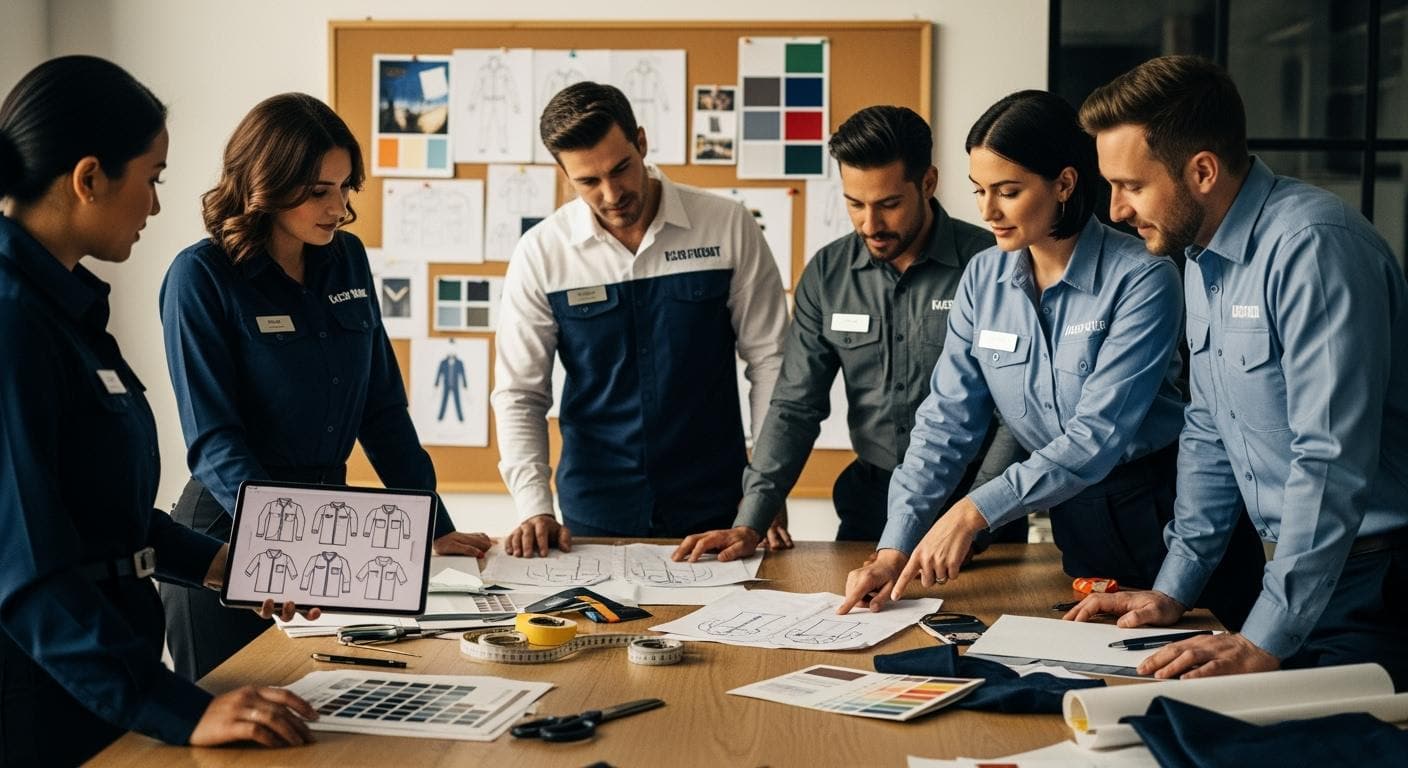
You can plan and design custom work shirts for your staff by focusing on your company’s goals and staff needs. Custom work shirts build team unity and strengthen branding.
87% of employees wearing branded t-shirt uniforms reported a stronger sense of belonging within their company.
85% of people remember the name of a company that provided them with custom t-shirt clothing.
When you choose high-quality t-shirt materials and designs, you improve staff satisfaction and promote a positive company image. Involve your team early in the process and set clear objectives. A well-designed t-shirt makes your business look professional and recognizable. If you wonder how to design a t-shirt for your company, always consider comfort, fit, and branding.
Key Takeaways
Custom work shirts enhance team unity and strengthen your brand identity.
Involve your staff in the design process to boost pride and satisfaction.
Choose high-quality materials for durability and comfort to improve employee morale.
Select shirt styles that match your industry and work environment for practicality.
Use online design tools to create and preview custom shirts easily.
Gather accurate sizing information to ensure a comfortable fit for all employees.
Plan your order quantity carefully to avoid shortages and ensure everyone is equipped.
Regularly collect feedback from staff to improve future orders and maintain satisfaction.
Identify Needs & Shirt Types
Assess Business & Staff Needs
Understanding your team’s work environment and roles helps you select the right custom work shirts. You should start by evaluating what your company and staff need from their uniforms. Consider these factors:
Uniform quality and durability improve employee satisfaction and reduce turnover.
Consistent branding in uniforms boosts company recognition and professionalism.
Employee comfort and practicality increase engagement and productivity.
Safety features protect staff based on their work environment.
High-quality fabrics last longer and save costs over time.
Involving employees in the design process ensures pride in their uniforms.
Functional uniforms support the specific tasks your team performs.
Industry Standards
Different industries have unique requirements for staff uniforms. You need to match your shirt choices to your business sector. The table below shows common shirt styles for several industries:
Industry | Common Shirt Styles |
|---|---|
Career | Oxford button-down shirts, denim shirts, polo shirts |
Restaurant | Chef coats, butcher wraps, plain button-up shirts, smock wraps |
Food Processing | Coats, smocks, pants, long- or short-sleeve button-up shirts, butcher coats |
Medical | Scrubs (unisex, men’s, women’s), warm-up jackets, short coats, lab coats, surgical barrier gowns |
Industrial | Short and long sleeve work shirts, long pants |
Automotive | Button-up shirts, polo style shirts, jackets, coveralls |
Work Environment
Your work environment shapes your uniform choices. If your staff works outdoors, you may need durable fabrics and long sleeves. Office settings often use company polo shirts or company button-up shirts for a professional look. In food service or healthcare, you must select shirts that meet hygiene and safety standards.
Shirt Styles Overview
Offering a variety of shirt styles helps you meet different staff preferences. You can choose from several options:
Polos, Button-Downs, T-Shirts
Company t-shirts work well for casual settings and events. Company polo shirts offer a smart-casual look suitable for customer-facing roles. Company button-up shirts provide a formal appearance for office or career environments.
Sleeve Options
Short sleeves suit warm climates and active roles. Long sleeves offer protection and a polished look. You can mix sleeve lengths to match your team’s needs.
Quantity & Budget
Planning your order quantity ensures you have enough shirts for everyone. You should analyze your staff sizes and prepare for outliers. The chart below shows the percentage of each shirt size typically ordered:
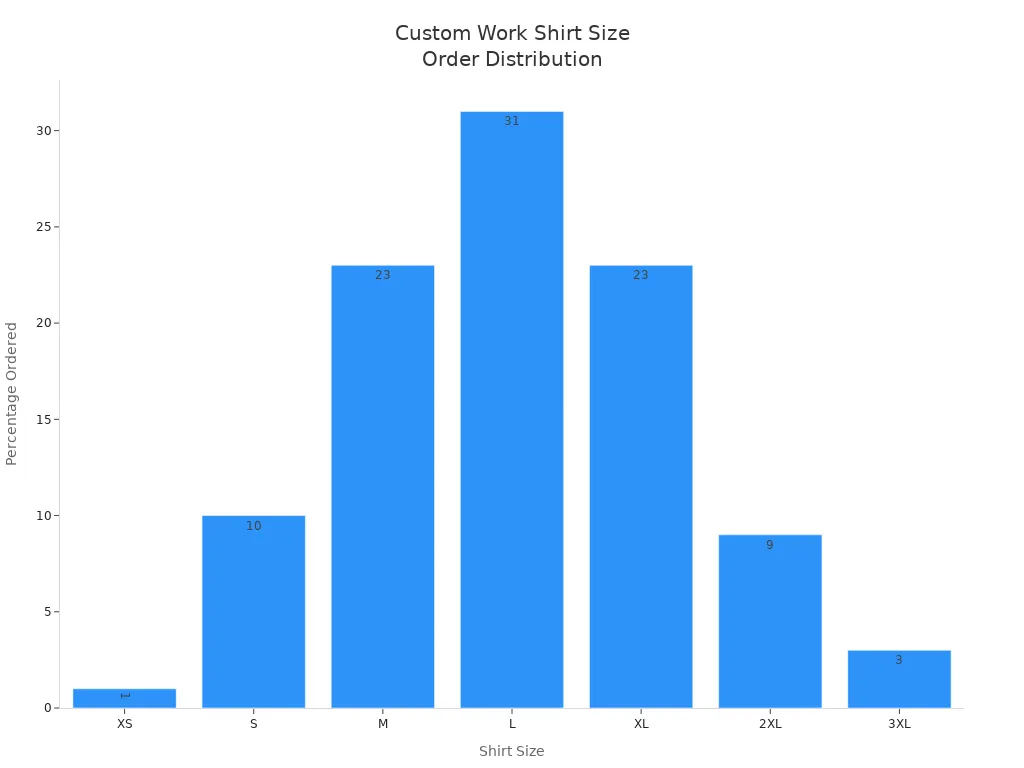
A basic 1–2–3–3–1 ratio helps you distribute sizes efficiently. Identify the most popular size, such as medium, and order at least 10% more than its percentage. Include smaller quantities of less common sizes to cover all staff.
Tip: Set your budget early. High-quality custom company shirts may cost more upfront, but they last longer and improve staff satisfaction. Partner with a provider who understands your business and values teamwork.
By assessing your company’s needs, considering industry standards, and offering a range of styles, you create custom work shirts that support your business goals and keep your team comfortable.
Design Custom Work Shirts
Brand Colors & Aesthetics
Company Colors
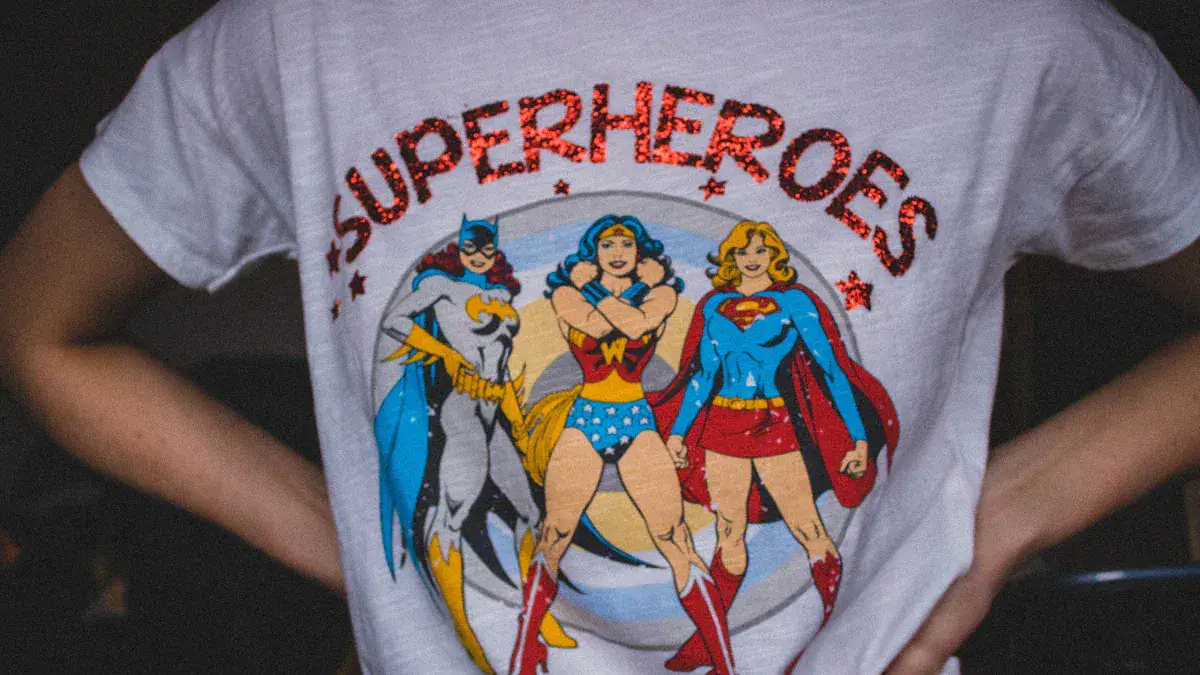
You need to select colors that reflect your company’s personality and values. The colors you choose for custom work shirts help you stand out and create a strong visual identity. When you design company shirts, start by picking a base color that matches your brand’s aesthetic. Add a secondary color that complements the base, and use a neutral color for backgrounds to make your logo and message pop.
Tip: Choose a stock color to cut costs and avoid high minimum order quantities. Verify that all sizes are available in your selected colors so every staff member gets a shirt that fits.
Unisex models often offer a wider range of color options. Select colors that suit your business environment. For example, bright colors work well for retail or events, while muted tones fit professional office settings. Make sure your chosen colors complement your logo and overall branding. The best colors for the job will depend on your industry and the impression you want to make.
Cohesive Look
A cohesive look across all custom company shirts builds trust and recognition. Consistent colors help customers remember your company. In fact, 85% of consumers say color is the main reason they buy a product, and 80% believe color increases brand recognition. People form subconscious judgments about your brand in just 90 seconds, often based on color. When you create an appealing design, use a unified color palette to reinforce your company’s identity.
Statistic | Description |
|---|---|
85% | Consumers cite color as the main reason for purchasing a product. |
80% | People believe color increases brand recognition. |
90 seconds | Time taken for consumers to make a subconscious judgment based on color. |
Logo Placement
Visibility
Logo placement plays a key role in how people perceive your brand. You want your logo to be visible and easy to recognize. The most effective placements for custom work shirts include the center front, left chest, back yoke, lower hem, center chest, and full back. Each area offers different benefits for visibility and style.
Placement Area | Description | Best For |
|---|---|---|
Center Front | Ideal for maximum visibility, especially for promotional use. | Promotional T-Shirts |
Left Chest | Common for uniforms, providing a professional look without being intrusive. | Uniforms and Dress Shirts |
Back Yoke | Subtle branding that remains visible from behind, great for team uniforms. | Jackets and Sweatshirts |
Lower Hem or Hip | Minimalist look, often used in lifestyle brands. | Tote Bags and Fashion Apparel |
Center Chest | Works well for both minimalistic and complex designs, remains visible. | Polo Shirts and Hoodies |
Full Back | Large graphics for storytelling, ideal for events. | Sports Teams and Events |
Prominent logo placement increases brand recognition. Consistent visibility of your logo helps customers associate your company with quality and professionalism.
Size & Proportion
The size and proportion of your logo affect how people view your brand. Larger logos make a bold statement and enhance visibility. Smaller logos look professional and subtle. For center chest logos, aim for 6 to 10 inches wide. Full front prints can reach up to 12 inches for maximum impact. Sleeve logos should be 1–4 inches wide for best visibility.
Larger logos create a bold statement and enhance visibility.
Smaller logos are perceived as professional and subtle.
Logo placement is crucial for ensuring visibility and brand association.
Consistent visibility of the logo reinforces brand familiarity.
The logo serves as a visual representation that aids in immediate brand association.
When you design custom work shirts, balance logo size with shirt style and company image. Use t-shirt design tips to ensure your logo stands out without overwhelming the shirt.
Messaging
Taglines & Slogans
Your message on custom work shirts should reflect your company’s values and goals. A clear message helps your team feel united and proud. Taglines and slogans can inspire staff and attract customers. When you choose a message, keep it short and memorable. Use words that resonate with your audience and support your brand’s mission.
Custom t-shirts create a shared identity among team members, fostering unity and camaraderie.
They promote a sense of belonging and pride, making employees feel valued and part of a community.
Wearing custom shirts can enhance team spirit and contribute to a positive work environment.
Simplicity
Simple messages work best on t-shirts. Avoid clutter and focus on what matters most. Company-branded shirts serve as a visual representation of unity, enhancing employee morale. They create an inclusive environment where employees feel acknowledged and appreciated. A survey shows that 72% of employees feel more connected to their company when wearing branded workwear.
Note: When you design company shirts, use a message that is easy to read and understand. Simplicity ensures your message reaches both staff and customers.
If you wonder how to design a t-shirt for your business, start with a strong color palette, visible logo placement, and a clear message. These elements help you create an appealing design that supports your branding and connects your team.
Choose Materials & Printing
Shirt Materials
Durability
You want your custom work shirts to last through daily wear and frequent washing. Durable materials protect your staff and keep your company looking sharp. Many brands offer shirts designed for high-activity industries. The table below shows some of the most reliable options:
Brand | Features | Link |
|---|---|---|
Durable, long-lasting, easy care, soil release finish | ||
High quality, sun protection, designed for construction | ||
Oilbloc fabric, wrinkle resistant, ease of movement | ||
High visibility, reflective tape, various styles |
Choose shirts with reinforced seams and abrasion-resistant fabrics. These features help your t-shirt uniforms withstand tough conditions and keep your logo looking fresh.
Comfort
Comfort matters for staff satisfaction and productivity. The right material keeps your team cool and confident. The table below compares popular t-shirt fabrics:
Material | Breathability | Moisture Management | Comfort Level | Durability |
|---|---|---|---|---|
Cotton | High | Absorbs moisture | Soft | Moderate |
Polyester | Above average | Wicks moisture | Lightweight | High |
Linen | Superior | Absorbs moisture | Lightweight | Moderate |
Nylon | Good | Wicks moisture | Elastic | High |
Rayon | High | Absorbs moisture | Soft | Moderate |
Polyester blends offer durability and help your logo stay sharp after many washes. Cotton feels soft and works well for casual t-shirt designs. Linen and rayon provide lightweight comfort for warm climates. Nylon adds stretch for active roles.
Printing Methods
Screen Printing
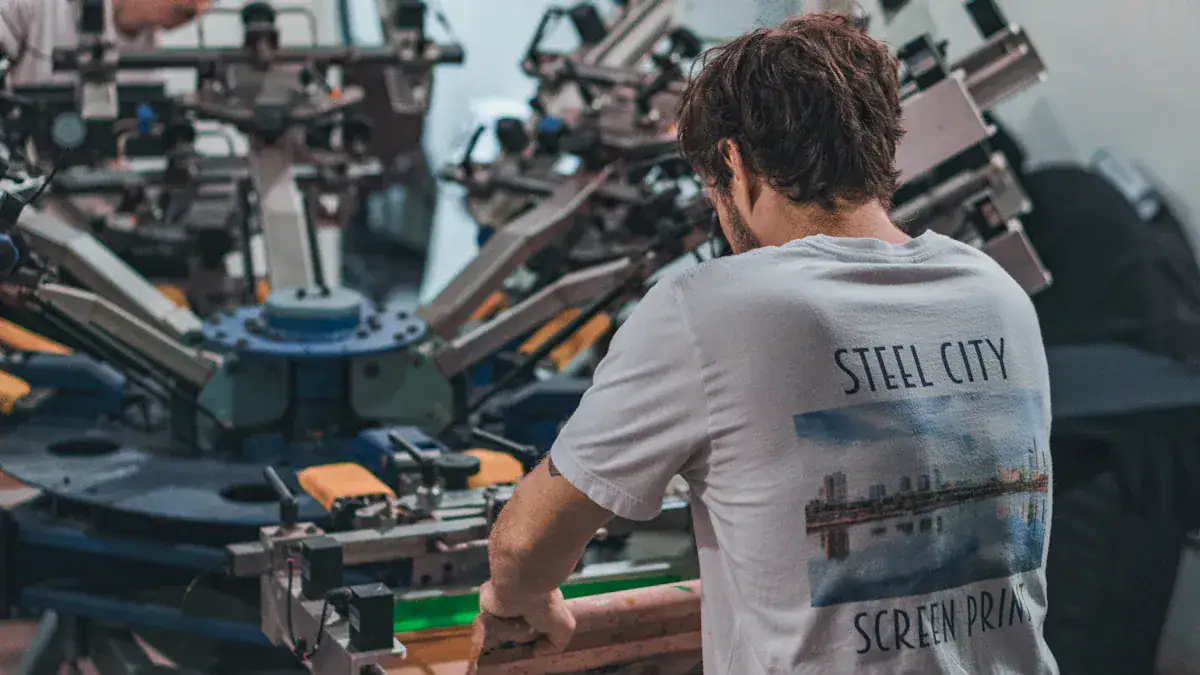
Screen printing creates vibrant colors and solid designs. You get long-lasting prints that work well for bulk orders. This method is cost-effective when you need many t-shirts for your company. Screen printing gives your logo a bold look and helps your message stand out.
Embroidery
Embroidery adds a professional touch to your custom work shirts. You get durability and a high-quality finish, especially on heavy-duty fabrics. Embroidery works well for company uniforms that need to last. Large embroidered logos may feel stiff, but they show your message with style.
The table below compares popular printing methods for t-shirt designs:
Advantages | Disadvantages | |
|---|---|---|
Heat Transfer | Fast, affordable, full-color, works on many fabrics | May fade or peel, not for heavy-duty shirts |
Sublimation | Vibrant colors, durable, eco-friendly | Only for polyester, not for dark shirts |
DTG Printing | Complex designs, soft feel, fast turnaround | May fade after washes, pretreatment issues |
Screen Printing | Vibrant colors, long-lasting, best for bulk | Not cost-effective for small batches |
Vinyl Cutting | Good for small designs, simple shapes | Not for detailed graphics, may crack |
Embroidery | Durable, professional, color flexibility | More expensive, large designs may be heavy |
Embroidery lasts longer, especially on tough t-shirt fabrics.
Screen printing costs less for large company orders.
Embroidery costs more because of detailed stitching.
Quality Considerations
You want your custom work shirts to reflect your company’s standards. Focus on these quality aspects:
Quality Aspect | Description |
|---|---|
Fabrics | Breathable, moisture-wicking, season-appropriate materials |
Durability | Reinforced seams, abrasion-resistant fabrics |
Fit and Comfort | Gender-inclusive sizing, unrestricted movement |
Safety Wear | Hi-Vis compliance for specific industries |
UPF 50+ sun protection protects outdoor staff.
Moisture-wicking t-shirt fabrics keep your team cool.
Stain-resistant finishes make maintenance easy.
A blend of polyester and elastane helps your logo stay crisp and your t-shirt keep its shape. This blend works better than cotton for embroidered logos. Choose the best colors for the job to match your company branding and make your message clear. When you print your logo, select a design and t-shirt material that supports your company’s image and keeps your staff comfortable.
Use Online Design Tools
Online design tools make it easy for you to create custom work shirts for your company. These platforms offer user-friendly interfaces that guide you through each step. You can see real-time previews of your shirt as you work, which helps you avoid mistakes and ensures your design matches your vision. Many tools connect directly to e-commerce systems, so you can move from design to order without extra steps. This seamless process saves time and reduces stress for your team.
Upload Logos & Graphics
You can upload your company logo and any custom graphics directly into the design tool. This feature lets you personalize your shirts and make your brand stand out. Most platforms support high-resolution images, so your logo looks sharp and professional. You can also access a library of clip art and design elements to enhance your shirt. The table below highlights important features to look for when choosing an online design tool for your company:
Feature | Description |
|---|---|
Clip art management | Offers a variety of designs and allows cropping and resizing for creativity. |
Color management | Provides customizable color options for clip art, text, and images. |
Upload custom images | Enables you to upload unique images for personalization. |
Drawing tool | Lets you create designs from scratch using basic shapes. |
General functions | Includes adding text, flipping images, and aligning design elements. |
Tip: Use high-quality images for your logo to ensure the final print looks crisp and clear.
Adjust Layouts
You can adjust the layout of your design with simple drag-and-drop tools. Move your logo, change the size, and experiment with different placements until you find the best look for your company shirts. You can also modify text, switch fonts, and select from a wide range of colors to match your brand identity. These adjustments help you create an appealing design that reflects your company’s style.
You see a real-time visual representation of your shirt as you make changes.
Adjustments like logo uploads, color selections, and text modifications appear instantly.
This process improves design accuracy and boosts your confidence in the final product.
Preview Designs
Previewing your design before you print your logo is essential. Live previews show exactly how your shirt will look when finished. You can spot errors, check color combinations, and make sure your company branding stands out. This step helps you avoid costly mistakes and ensures your team receives shirts they are proud to wear.
Accuracy: You confirm the design looks as intended before production.
Real-Time Visualization: You get immediate feedback on your customizations.
Reduced Errors: You prevent mistakes by previewing the product before ordering.
Online design tools give you control over every detail. You can experiment with colors, layouts, and graphics until you achieve the perfect result. These tools help you create an appealing design that supports your company’s goals and strengthens your brand image.
Sizing & Staff Preferences
Choosing the right size and fit for your custom work shirts ensures your team feels comfortable and confident. You need to collect accurate sizing information and listen to staff preferences. This approach helps your company present a professional image and keeps employees satisfied with their uniforms.
Collect Sizes
Accurate sizing starts with clear communication and reliable tools. You can use several methods to gather staff sizes for your company shirts. The table below shows effective ways to collect this information:
Method | Description |
|---|---|
Size Charts | Provide a simple chart so employees can self-measure and select the best size. |
Self-Measurement Education | Share video demonstrations to teach staff how to measure themselves accurately. |
Size Recommendation Apps | Use digital apps that guide users to their ideal fit based on their measurements. |
Tip: Ask employees to wear a thin base layer, such as a tank top or undershirt, when measuring. This practice avoids errors from bulky clothing.
Sizing Charts
You should offer a clear and easy-to-read sizing chart. This tool helps staff choose the correct size for their work shirts. Make sure the chart includes instructions for measuring chest, sleeve length, and body length. For crew-neck tees, measure the chest around the fullest part of the torso. For sleeves, measure from the shoulder seam to the hem. Body length can vary by style, so highlight these differences in your chart.
Fit Samples
Fit samples allow employees to try on shirts before you place your company order. You can request sample shirts in different sizes and styles. Staff can test comfort and fit, which reduces the risk of ordering incorrect sizes. This step supports a smooth design process and helps your team feel involved.
Staff Feedback
Listening to staff feedback improves satisfaction and ensures your company uniforms meet real needs. You should ask employees about their comfort and style preferences. This input guides your design choices and helps you select shirts that work for everyone.
Comfort
A well-fitted shirt enhances comfort and allows for easy movement. You want your team to feel good during long workdays. Properly tailored shirts project competence and boost morale. Ill-fitting shirts can lead to negative perceptions and discomfort.
Involve staff in the selection process to find options that are both professional and comfortable.
Consider feedback on fit, comfort, and functionality to improve performance and customer satisfaction.
Style Preferences
Style matters for both appearance and brand representation. You should ask your team about preferred shirt styles, fabrics, and customization options. The right workwear helps your company look professional and feel comfortable. Employees who like the design and fit of their shirts represent your brand with pride.
Choose shirts that match your company’s image and meet staff expectations.
Consider style, fabric, size, and customization during the selection process.
Note: Staff involvement in sizing and style decisions leads to better results for your company. You create uniforms that support your brand and keep your team happy.
Order & Delivery
Choose a Supplier
Selecting the right supplier for your custom work shirts sets the foundation for a smooth ordering process. You want a partner who understands your company’s needs and delivers consistent quality. Use the following criteria to compare vendors:
Criteria | Description |
|---|---|
Quality Standards | Set clear benchmarks for fabric type, construction methods, and certifications to ensure high quality. |
Order Size | Understand how order size affects pricing and production options; inquire about minimum order quantities. |
Customization | Explore various customization options like branding and printing techniques to differentiate your products. |
Budget | Establish a budget that balances quality and cost, influencing material selection and customization choices. |
Compare Vendors
You should research several suppliers before making a decision. Compare their product offerings, pricing, and customization options. Ask about their experience with company uniforms and their ability to print your logo accurately. Request information about minimum order quantities and turnaround times.
Reviews & Samples
Read customer reviews to learn about other companies’ experiences. Look for feedback on quality, delivery speed, and customer service. Request samples of shirts with your logo to check print quality and fabric feel. Samples help you avoid common challenges such as poor print quality or choosing the wrong fabric.
Place Order
Once you select a supplier, you need to place your order with attention to detail. Confirm every aspect of your order, including shirt style, color, logo placement, and quantity. Double-check sizing information to prevent issues with fit.
Confirm Details
Review your order summary before finalizing. Make sure your company logo appears in the correct location and size. Verify customization options and printing methods. Clear communication with your supplier reduces the risk of mistakes.
Delivery Timelines
Timely delivery is crucial for customer satisfaction, especially if you need shirts for an event or a company launch. Order accuracy, including correct fit and design, impacts the overall experience. Receiving your order on time and as specified encourages repeat business. Transparency regarding fit and satisfaction guarantees, such as clear return policies and free alterations, builds confidence in your company’s products.
Tip: Underestimating turnaround time can cause missed deadlines. Always ask for a realistic delivery estimate and plan ahead.
Customer Experience
A positive customer experience depends on more than just the product. You want your supplier to offer helpful services that make ordering easy.
Free Shipping
Many suppliers offer free shipping for bulk orders. This benefit saves your company money and simplifies the process. Ask about shipping policies before you place your order.
Live Help
Live help, such as chat or phone support, assists you with questions about logo placement, sizing, or delivery. Responsive customer service helps you resolve issues quickly and ensures your company receives the best possible outcome.
Common challenges during ordering and delivery include choosing the wrong fabric, complex designs that affect print quality, sizing issues, and lack of research on printing methods. Address these challenges by communicating clearly with your supplier and involving your team in the process.
Implement & Maintain
Distribute Shirts
You set the stage for team unity and brand visibility when you distribute custom work shirts efficiently. Start by planning how many shirts each employee needs. If your staff wears shirts daily, order extras for new hires and backups. This approach prevents shortages and keeps everyone looking sharp.
Make sure employees love the shirts. Pride in their workwear boosts camaraderie.
Distribute shirts in a way that maximizes marketing potential. When staff wear branded shirts outside the workplace, your company gains exposure.
Award shirts for outstanding performance. This practice improves morale and encourages productivity.
Use social media to showcase your team in their new shirts. You expand your marketing reach and highlight your company culture.
Consider working conditions and seasonal needs when choosing shirt types. Provide options for comfort to avoid dissatisfaction. You create a positive experience by matching shirts to the environment and tasks.
Tip: Organize a shirt distribution event. You celebrate your team and reinforce your brand identity.
Care Instructions
Proper care extends the lifespan of your work shirts and maintains their quality. Communicate clear care instructions to your staff. Use simple steps to help employees keep shirts in top condition.
Read manufacturer care instructions. Follow the guidelines provided by the garment distributor.
Inspect shirts regularly. Check for damage or wear before each use.
Wash shirts properly. Use mild detergents and avoid fabric softeners or hydrogen peroxide-based products. Wash work shirts separately from household laundry to prevent cross-contamination.
Store shirts away from direct sunlight, chemicals, and contaminants.
Repair or replace damaged shirts promptly.
Care Step | Description |
|---|---|
Washing | Use mild detergent; avoid harsh chemicals |
Inspection | Check for wear before every use |
Storage | Keep away from sunlight and chemicals |
Replacement | Replace damaged shirts quickly |
Note: Share care instructions in writing and review them during team meetings. You help staff protect their uniforms and keep your company image professional.
Gather Feedback
You improve future orders and staff satisfaction by gathering feedback after distributing shirts. Ask employees about comfort, fit, and style. Use surveys or informal conversations to collect honest opinions.
Encourage staff to share what they like and dislike about the shirts.
Listen to suggestions for improvements in design, material, or sizing.
Track feedback to identify patterns and address common concerns.
You build trust and show respect for your team’s input. When you act on feedback, you create uniforms that meet real needs and reflect your company values.
Tip: Use feedback to guide your next order. You ensure every shirt supports your brand and keeps your team happy.
Plan Reorders
You need a clear strategy for reordering custom work shirts. Planning ahead helps you avoid shortages and keeps your team looking professional. You should start by tracking your current inventory. Count the shirts you have in each size and style. Record how many shirts you distribute each month. This information helps you predict when you will need to reorder.
You should also consider staff changes. New hires, promotions, and seasonal workers affect your shirt needs. Review your hiring plans and estimate how many new employees will join your team. Add extra shirts for unexpected growth. You can use a simple table to organize your reorder plan:
Item | Current Inventory | Monthly Usage | New Hires | Recommended Reorder |
|---|---|---|---|---|
Small | 15 | 2 | 3 | 10 |
Medium | 30 | 5 | 5 | 15 |
Large | 25 | 4 | 2 | 10 |
X-Large | 10 | 1 | 1 | 5 |
You should set a reorder point for each size. When your inventory drops below this point, place a new order. This method prevents shortages and ensures every staff member has a shirt that fits.
Tip: Order extra shirts in popular sizes. Medium and large sizes often run out first. Keeping a buffer stock helps you respond quickly to changes.
You should also review feedback from your team before reordering. Ask employees about fit, comfort, and style. Use their suggestions to improve your next order. If you plan to update your logo or colors, coordinate these changes with your reorder schedule. Consistency in branding keeps your company image strong.
You can set reminders to review your inventory every quarter. Regular checks help you spot trends and adjust your order quantities. You should also communicate with your supplier about lead times. Ask how long it takes to produce and deliver new shirts. Planning ahead avoids delays and keeps your team prepared.
You can use digital tools to track inventory and automate reorder alerts. Many suppliers offer online portals where you can view past orders and place new ones. These systems save time and reduce errors.
Note: Planning reorders is not just about numbers. You support your team and protect your brand. A reliable reorder process keeps your staff happy and your company looking sharp.
You should treat reordering as an ongoing process. Stay proactive, listen to your team, and adjust your plan as your business grows. This approach ensures your custom work shirts always meet your company’s needs.
You can create custom work shirts for your business by following a clear process. Start with staff input, then use online tools to design a t-shirt that fits your branding. Choose a message that matches your company’s goals. Review sizing and comfort to keep your team happy. Track success with metrics like profit margin, customer feedback, and quality control.
Metric | Description |
|---|---|
Profit Margin | Shows how much profit your business earns from t-shirt sales. |
Customer Feedback | Shares opinions about design, message, and shipping. |
Quality Control | Checks if each t-shirt meets your standards before delivery. |
Take action now. Explore how to design a t-shirt for your business and build unity with a strong message.
FAQ
What is the best material for custom work shirts?
You should choose polyester blends for durability and easy care. Cotton feels soft and works well for casual shirts. Polyester resists wrinkles and keeps colors bright. Linen suits warm climates. Nylon adds stretch for active roles.
How do I collect accurate staff sizes?
You can use a sizing chart and ask staff to measure themselves. Fit samples help employees test comfort. Size recommendation apps guide users to the best fit. Always confirm measurements before placing your order.
Where should I place my company logo on work shirts?
You should place your logo on the left chest for a professional look. Center chest or full back increases visibility. Sleeve logos add subtle branding. Choose placement based on your company’s style and branding goals.
What printing method lasts the longest?
Embroidery offers the most durability for custom work shirts. Screen printing works well for large orders and vibrant designs. Heat transfer and DTG printing suit small batches but may fade faster. Choose based on your shirt material and design needs.
How can I involve staff in the design process?
You can ask for feedback on shirt styles, colors, and fit. Share design previews and let staff vote on options. Collect suggestions through surveys or meetings. Staff involvement increases satisfaction and pride in their uniforms.
What care instructions should I give employees?
You should advise staff to wash shirts with mild detergent and avoid harsh chemicals. Store shirts away from sunlight and contaminants. Inspect shirts for damage before each use. Replace worn shirts quickly to maintain a professional image.
How do I plan for reorders?
Track inventory and monthly usage. Set reorder points for each size. Review hiring plans and add shirts for new staff. Use digital tools to automate alerts. Regular checks help you avoid shortages and keep your team prepared.