

The 10 Best Puffy Jackets for Outdoor Enthusiasts
Table of Contents
Display
Looking for the best puffy jacket in 2025? You have more options than ever, thanks to the booming outdoor market and exciting new tech. Check out these top 10 picks for every adventure—whether you want the best down jackets for warmth, the best budget down jacket for value, or a compressible, lightweight option for travel. Brands now focus on quality, packability, and compressible designs, so you can find a down jacket that feels light yet offers serious warmth. Jackets with sustainable materials, high value, and impressive durability lead the way. The best puffy jacket for you matches your style, adventure, and budget.
The table below shows how the outdoor market keeps growing, with synthetic down and sustainable, compressible jackets leading the trends.
Aspect | Details |
|---|---|
Market Growth | Outdoor recreation economy grew by 18.9% in 2021, fueling demand for down jackets globally. |
Material Segment | Synthetic down valued at $99.3B in 2023; projected to reach $166.4B by 2032. |
Synthetic Down Popularity | Leading segment due to price, ethical reasons, and performance in wet conditions. |
Market Trends | Shift toward sustainable, ethically sourced materials; use of RDS-certified down and PFC-free treatments. |
Key Takeaways
Choose a puffy jacket that fits your activity, climate, and budget for the best comfort and performance.
Look for high fill power down for warmth with less weight, especially if you want a lightweight, packable jacket.
Consider water resistance and synthetic insulation if you expect wet or humid conditions to stay dry and warm.
Pick jackets made with sustainable materials and ethical practices to support the planet without sacrificing quality.
Try jackets on with your layers to ensure a good fit that allows easy movement and effective warmth.
Comparison Table
Key Specs
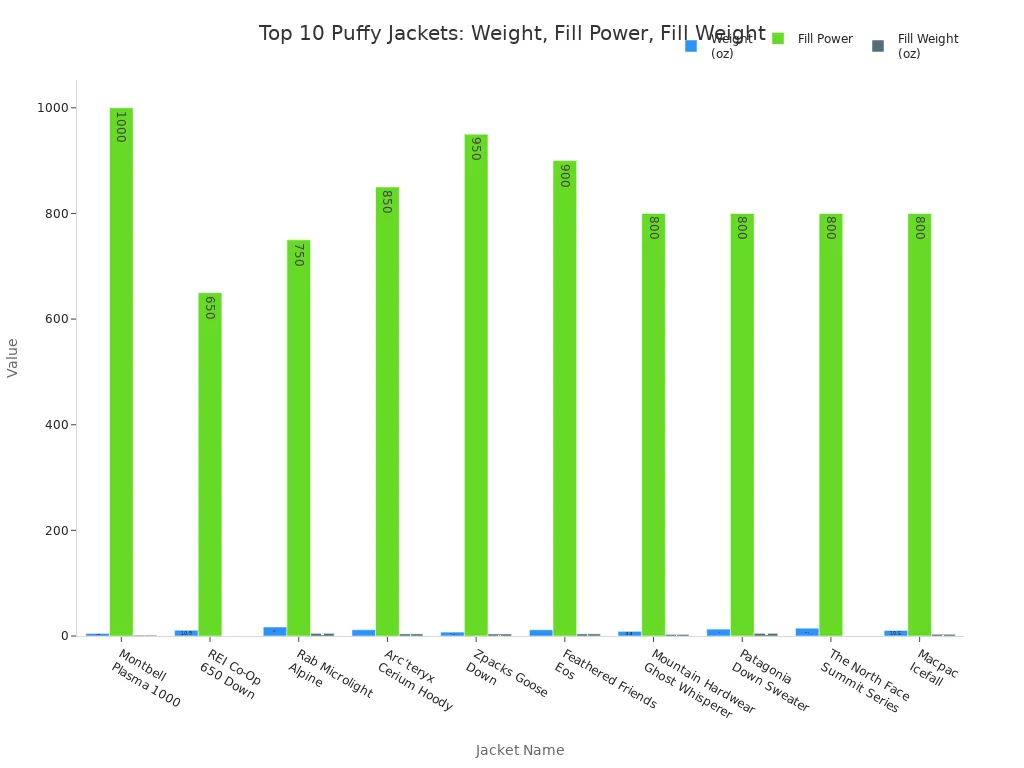
When you shop for a down jacket, you want to see how each one stacks up. The table below gives you a side-by-side look at the top 10 down jacket picks for 2025. You can compare weight, fill power, fill weight, and price. These specs help you decide which down jacket fits your needs best. Some jackets focus on warmth and comfort, while others keep things light for fast adventures. You will also notice differences in shell fabric and fit. Some brands design their down jacket for men, women, or both, so you get the right fit and layering options.
Jacket Name | Weight (oz) | Fill Power | Fill Weight (oz) | Best Use | Price Info | Men/Women |
|---|---|---|---|---|---|---|
Montbell Plasma 1000 | 4.8 – 4.9 | 1000 | 1.6 | Ultralight, Backpacking | Amazon | Both |
REI Co-Op 650 Down Jacket | 10.9 | 650 | Not specified | Budget, Everyday | REI | Both |
Rab Microlight Alpine Jacket | 17 | 750 | 5 | Alpine, Versatile | Amazon, REI | Both |
Arc’teryx Cerium Hoody | 11.9 | 850 | 4 | All-Around, Travel | REI | Both |
Zpacks Goose Down Jacket | 7.4 | 950+ | 3.8 | Ultralight, Hiking | Zpacks | Both |
Feathered Friends Eos | 11.8 | 900 | 4 | Cold Weather, Hiking | Feathered Friends | Both |
Mountain Hardwear Ghost Whisperer | 8.8 | 800 | 3 | Ultralight, Climbing | REI | Both |
Patagonia Down Sweater | 13 | 800 | 5 | Everyday, Travel | Patagonia | Both |
The North Face Summit Breithorn Hoodie | 14.7 | 800 | Unknown | Alpine, Wet Weather | REI | Both |
Macpac Icefall | 10.5 | 800 | 3.3 | Versatile, Travel | Macpac | Both |
You can see that each down jacket offers something unique. Higher fill power means more warmth for less weight. Some jackets use hydrophobic down and DWR coatings, so you stay dry in wet weather. Fit and shell fabric also affect comfort and durability. Brands like Patagonia and Arc’teryx focus on quality and sustainable materials, while REI and Montbell give you great value.
Quick Picks
Not sure which down jacket to choose? Here are some quick picks to help you out:
Best Overall: Patagonia Down Sweater – Great balance of warmth, weight, and quality.
Best Value: REI Co-Op 650 Down Jacket – Affordable and reliable for everyday use.
Best Ultralight: Montbell Plasma 1000 – Super light and packs down small.
Best for Wet Weather: The North Face Summit Breithorn Hoodie – Stays warm even when damp.
Best for Extreme Cold: Feathered Friends Eos – High fill power and quality for harsh conditions.
Best for Versatility: Rab Microlight Alpine Jacket – Works for hiking, travel, and city wear.
You can find a down jacket for every adventure. Some focus on quality and warmth, while others keep things light and packable. Your perfect down jacket depends on your activity, climate, and style. Use this table and these down jacket picks to find your match!
Best Puffy Jacket Picks

Top Overall
If you want the best down jacket overall, the Patagonia Down Sweater stands out in 2025. You get a perfect mix of warmth, weight, and quality. This jacket uses 800-fill-power down, which means you stay warm without feeling bulky. The shell uses 100% recycled polyester, so you help the planet while staying cozy. The fit works for layering, and the jacket packs down small for travel or hiking. Patagonia’s attention to quality and durability makes this the best puffy jacket for most people. You can wear it for city walks, camping, or as your go-to packable down jacket for shoulder season trips.
Tip: The Patagonia Down Sweater comes in both men’s and women’s versions, so you get a great fit no matter your style.
Best Value
Looking for the best value down jacket? The REI Co-Op 650 Down Jacket gives you warmth and quality at a price that’s hard to beat. You get 650-fill-power down, which keeps you warm for everyday wear and light adventures. The shell feels soft but holds up well to daily use. This jacket offers good packability and compressible design, so you can stash it in your backpack or suitcase. If you want the best budget down jacket that still delivers on quality, this is your pick.
Ultralight
When every ounce counts, you need the best highly compressible ultralight jacket. The Montbell Plasma 1000 is a favorite for backpackers and fast hikers. It weighs under 5 ounces, making it one of the lightest down jackets you can buy. The 1000-fill-power down gives you the best warmth-to-weight ratio, so you stay warm without extra bulk. The shell uses thin but strong nylon, which helps with packability and compressible storage. You can see how ultralight jackets compare in this chart:
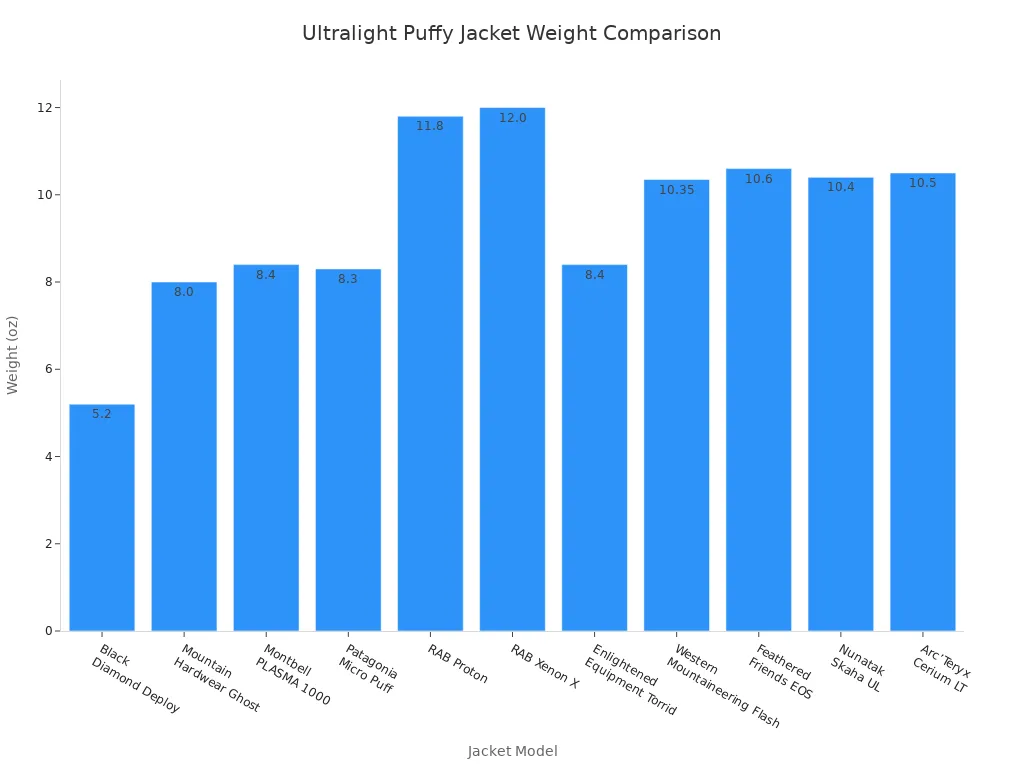
Ultralight down jackets like the Montbell Plasma 1000, Black Diamond Deploy Down Hoody, and Mountain Hardwear Ghost Whisperer all weigh less than 10 ounces. They compress very small, so you can fit them in any pack. If you want the best down jacket for technical use or the best down jacket for athletes, ultralight models give you the edge for speed and comfort.
Wet Weather
You need the best waterproof down jacket when the weather turns wet. The Rab Valiance stands out for moisture resistance. It uses 800-fill-power hydrophobic down and a Pertex Shield shell with a 10,000 mm hydrostatic head rating. This means rain and snow stay out, and you stay dry. The jacket has fully taped seams, waterproof zippers, and synthetic insulation in the cuffs and hood for extra protection. You can pack it down to the size of a water bottle, so it’s easy to bring along. If you want the best down jacket for moisture resistance and the best performance down jacket for stormy days, the Rab Valiance is a top choice.
Feature | Details |
|---|---|
Insulation Type | 800 fill power Nikwax® Hydrophobic down |
Waterproofing | Pertex® Shield fabric, 10,000 mm hydrostatic head, fully seam taped |
DWR Treatment | Fluorocarbon-free Durable Water Repellent |
Windproof | Yes |
Zippers | YKK® AquaGuard waterproof zippers |
Packability | Packs to size of large Nalgene bottle |
Extreme Cold
If you face subzero temperatures, you need the best heavyweight down jacket. The Beyond Clothing Allta Polar L8 and Kuiu Burner Parka both shine in extreme cold. These jackets use high-quality insulation and tough shells to block wind and trap heat. Field tests in Alaska show comfort at -25°F and below. The PrimaLoft Gold Eco insulation and water-repellent down keep you warm and dry. These jackets offer the best warmth-to-weight ratio for harsh winter trips. You get durability, packability, and serious warmth for the coldest adventures.
Jacket Name | Test Location & Conditions | Temperature Range Tested | Key Insulation/Features | Performance Summary |
|---|---|---|---|---|
Beyond Clothing Allta Polar L8 | Fairbanks, Alaska, subzero temps | PrimaLoft Gold Eco, nylon ripstop, fur ruff hood | Best for brutal cold; quick drying, windproof, comfortable at -25°F | |
Kuiu Burner Parka | Fairbanks, Alaska, subzero temps | -20°F to -30°F | Goose down, waterproof membrane | Warmest for weight; good wind protection, packs well |
Sustainable
You want the best down jacket for sustainability? Patagonia and Kathmandu lead the way. Patagonia uses 100% recycled materials and Fair Trade Certified production. Kathmandu uses biodegradable nylon and RDS-certified down. The North Face also uses recycled polyester and RDS down. These brands focus on eco-friendly materials, ethical sourcing, and responsible manufacturing. You get quality, warmth, and peace of mind knowing your jacket helps the planet.
Brand | Certifications | Eco-friendly Materials and Practices |
|---|---|---|
Patagonia | Fair Trade Certified | 100% recycled materials |
Kathmandu | Responsible Down Standard (RDS) | Biodegradable nylon, ethically sourced down |
The North Face | Responsible Down Standard (RDS) | 100% recycled polyester, RDS certified down |
Note: Choosing a sustainable down jacket means you support better practices and still get top performance.
Women’s
The best women’s puffy jackets balance performance, comfort, and style. You want a jacket that fits well, feels soft, and keeps you warm. Top picks like the Patagonia Down Sweater, REI Co-op 650 Down Jacket, and Mountain Hardwear Stretchdown offer high fill-power down, good breathability, and compressible designs. Lightweight jackets work best for most women, giving you warmth without bulk. Look for features like adjustable hoods, knit cuffs, and practical pockets. These jackets handle temperatures from 35°F to 50°F, making them perfect for daily wear or shoulder season hikes.
Lightweight down jackets are the most popular for women because they balance durability, packability, and warmth.
Technical jackets use high fill power and slim fits for mountain use.
Everyday jackets have thicker shells and regular fits for comfort and layering.
Eco-friendly materials and water-resistant treatments add value and quality.
Men’s
The best men’s puffy jackets focus on warmth, durability, and comfort. You get high fill-power goose down, heat-reflective linings, and weather-resistant shells. Brands like Arc’teryx, The North Face, and Fjällräven use innovative fabrics and smart design. Features include articulated sleeves, stretch panels, and multiple secure pockets. Some jackets use PFAS-free water-repellent coatings for better weather protection. Reinforced areas add durability for tough adventures. If you want the best down jacket for technical use or the best down jacket for athletes, these models deliver the best performance down jacket experience.
High fill-power down (up to 1000) gives you the best warmth-to-weight ratio.
Stretch fabrics and articulated patterning improve comfort and mobility.
Secure pockets and durable shells add value for outdoor use.
Sustainable materials and ethical sourcing matter for many men.
Versatile
You want a down jacket that does it all? The Rab Microlight Alpine Jacket is the most versatile pick. You can wear it for hiking, travel, city life, or even at home. The detachable hood lets you adjust for weather or style. Water resistance and practical pockets make it useful in rain or snow. The jacket breathes well, so you stay comfortable during high-energy activities. It layers easily, giving you warmth without overheating. This jacket balances warmth, style, and practicality, making it the best down jacket for everyday wear and the best down jacket for shoulder season adventures.
Detachable hood for weather or style.
Works for outdoor, travel, or city use.
Water resistance and useful pockets.
Good breathability and layering.
Reliable warmth and compressible design.
Retro Style
If you love classic looks, the best retro style puffy jacket is the North Face Nuptse. This jacket brings back the boxy, oversized fit and bold colors of the ’90s. You get heavyweight 700-fill down for warmth and a tough shell for durability. The Nuptse packs into its own pocket, so you can bring it anywhere. The thin, packable hood hides in the collar. This jacket focuses on style and warmth for urban and casual wear, but still gives you the quality and value you expect from a top brand.
Feature | Description |
|---|---|
Fit | Boxy, oversized, retro style |
Insulation | Heavyweight 700 fill-power down |
Weight | About 27 oz |
Color Options | Classic and neon colors |
Pockets | Zippered hand pockets, packs into pocket |
Hood | Thin, packs into collar |
Style Significance | Iconic retro look, lasting popularity |
The North Face Nuptse remains a favorite for those who want the best heavyweight down jacket with a classic vibe.
Best Down Jackets Guide

Evaluation Criteria
When you look for the best down jacket, you want to know what really matters. Here’s how we picked the top jackets for 2025:
Warmth: You need a down jacket that keeps you cozy. We checked fill power, down volume, and compared warmth side by side.
Water resistance: You want to stay dry. We tested DWR treatments and hydrophobic down to see how well each jacket handles wet weather.
Durability: You expect your down jacket to last. We looked at abrasion resistance and stress tests to judge long-term quality.
Weight and fit: You want comfort and easy movement. We considered how each down jacket feels, how it fits, and how well it layers.
Packability: You need a jacket that packs small. We checked how compressible each down jacket is and how easily it fits in your bag.
Price and warranty: You want value. We compared prices and checked for solid warranties.
Sustainability: You care about the planet. We looked for recycled materials, Responsible Down Standard certification, and PFAS-free treatments.
Corporate responsibility: You want brands that do the right thing. We checked for transparency and ethical practices.
In 2025, eco-friendly materials and responsible production matter more than ever. You can find a down jacket that offers warmth, packability, and sustainability without sacrificing quality.
Testing Process
You want real-world results, not just lab numbers. We tested each down jacket in all kinds of outdoor conditions—cold, wind, rain, and humidity. You might wear your down jacket on a day hike, a thru-hike, or even a chilly morning run. We compared jackets side by side to see which ones really deliver warmth, fit, and packability.
Our team wore each down jacket during summit hikes, trail runs, and even turkey hunts. We checked how each jacket handled wind chill and rain. For durability, we dragged sleeves through blackberry brambles and across rough asphalt. We dunked cuffs in water to see how they held up. We combined these field tests with honest feedback about comfort, features, and compressible storage.
You get a clear picture of which down jacket stands out for warmth, packability, and quality. We made sure our reviews stay independent and transparent, so you can trust our picks for the best down jacket.
Buying Advice
Insulation Types
When you shop for a puffy jacket, you’ll see two main insulation types: down and synthetic. Down insulation comes from waterfowl feathers and gives you the best warmth-to-weight ratio. It feels light, packs down small, and lasts a long time if you care for it. Synthetic insulation uses fine polyester fibers. It’s heavier and less compressible, but it keeps you warm even when wet and costs less. Some new advanced synthetics, like Thermoball and Polartec Alpha, try to match down’s warmth and packability while boosting breathability.
Insulation Type | Warmth-to-Weight | Packability | Wet Performance | Durability & Cost |
|---|---|---|---|---|
Down | Superior | Best | Poor (unless treated) | Lasts long, costs more |
Synthetic | Lower | Less compressible | Good | Wears faster, costs less |
Advanced Synthetic | Improved | Lighter, breathable | Great | Mid-range |
Down vs Synthetic
Choosing between a down jacket and a synthetic one depends on your needs. Down jackets shine in cold, dry weather. They’re light, warm, and easy to pack. Synthetic jackets work better in wet or humid conditions. They dry fast, keep you warm when damp, and are easier to clean. If you want a jacket for rainy hikes or snow sports, synthetic insulation is a smart pick. For dry, cold trips where every ounce counts, a down jacket is hard to beat.
Tip: Down jackets offer the best packability and warmth for their weight, but synthetic jackets give you peace of mind in wet weather.
Fit & Sizing
Fit matters for comfort and warmth. A slim fit traps heat and layers well under shells, making it great for active use. Looser fits suit belay jackets or camp wear, giving you more room and comfort when you’re not moving. Always try your jacket with layers you plan to wear underneath. Make sure you can move your arms freely and zip up without feeling squeezed. A good fit helps your down jacket keep you warm and lets you layer up or down as needed.
Weather Resistance
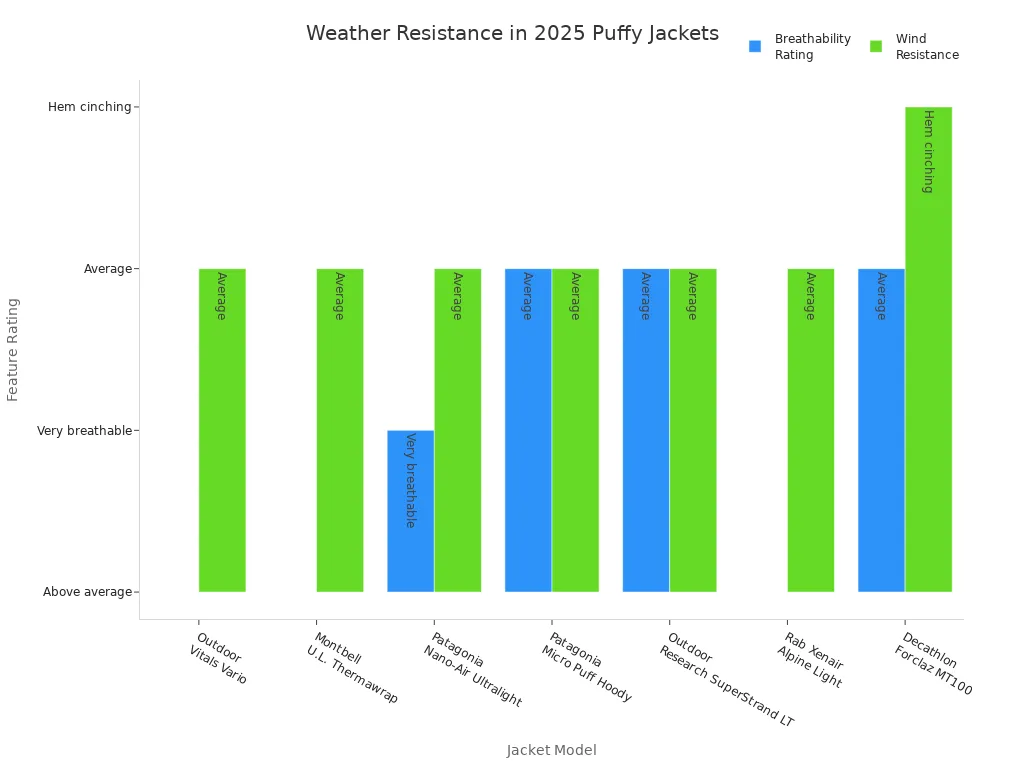
Weather resistance keeps you comfortable outdoors. Look for jackets with water-resistant shells, DWR coatings, or hydrophobic down. These features help your down jacket shed light rain and snow. For wet climates, synthetic insulation and waterproof shells work best. Some jackets use advanced fabrics for better breathability and wind protection. Check for features like storm flaps, adjustable hoods, and hem cinches to seal out the elements.
Sustainability
Many brands now focus on sustainability. Look for jackets made with recycled materials, RDS-certified down, or biodegradable fabrics. Some companies collect old jackets for recycling or use plant-based insulation. Choosing a sustainable down jacket supports ethical practices and helps reduce your impact on the planet.
Matching Use
Match your down jacket to your activity. For hiking, you want lightweight, compressible jackets with high packability. Climbers and skiers need features like helmet-compatible hoods, tough shells, and good breathability. If you spend time in wet or variable weather, synthetic insulation is a safer bet. For cold, dry trips, a high fill-power down jacket gives you the best warmth and packability. Always consider your climate, activity level, and how often you’ll carry your jacket in a pack. This down jacket buying advice helps you get the best value and performance for your adventures.
You’ve seen how the best puffy jackets balance style, practicality, and performance. Before you buy, check the comparison table and reviews to match features like insulation, shell material, and fit to your needs.
Choose a style that feels right for you.
The best jacket is the one that keeps you comfortable and confident outdoors. Get out there and enjoy your next adventure! 🏔️
FAQ
How do you wash a puffy jacket?
You can wash your puffy jacket in a front-loading machine with cold water and gentle detergent. Tumble dry on low with clean tennis balls to fluff the insulation. Always check the care label first!
Can you wear a puffy jacket in the rain?
Puffy jackets resist light rain, but heavy rain can soak the insulation. For wet days, wear a waterproof shell over your jacket. Some jackets use water-resistant down or synthetic fill for better wet-weather performance.
What’s the difference between fill power and fill weight?
Fill power measures how fluffy and insulating the down is. Fill weight tells you how much down the jacket contains. Higher fill power means more warmth for less weight. Both numbers matter when you compare jackets.
Should you size up for layering?
If you plan to wear thick layers underneath, try sizing up. For most people, your regular size works best. Always try the jacket on with your favorite base and mid-layers to check comfort and movement.
How long does a puffy jacket last?
With good care, your puffy jacket can last many years. Store it uncompressed, keep it clean, and repair small tears quickly. High-quality jackets often outlast cheaper options, so you get more value over time.
 English
 Русский
 Deutsch (Sie)
 العربية
 Español
 Français