

Veterinary Clinic Uniform OEM China | Adult Clinic Staff Apparel
Table of Contents
Display
Shanghai Top Fortune Industry Co., Ltd., linked to Top Fortune’s workwear manufacturing site, develops OEM/ODM workwear and corporate uniforms. Founded around 2002, the company operates a 1,506 m² factory in Songjiang, Shanghai, and serves export markets including Europe, the Middle East, Oceania, Southeast Asia, and the Americas. Learn more on the About Us page.
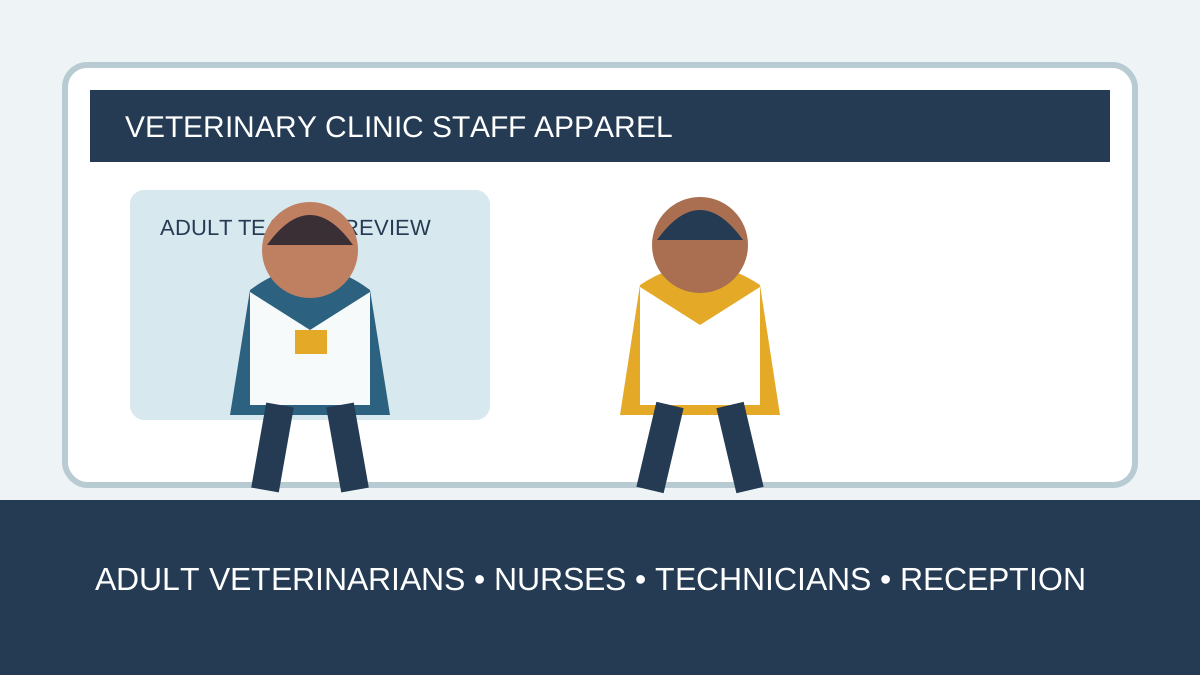
This program fits veterinary practice groups, animal hospitals, referral and emergency clinics, mobile veterinary-service operators where apparel is intended, veterinary nurses and technicians, clinical support, reception and client-service teams, practice managers, distributors, and uniform importers. Coordinate adult scrub tops, trousers, polos, shirts, clinic or lab coats where appropriate, jackets, cardigans, vests, and seasonal layers. The typical MOQ is approximately 1,000 pieces per style; confirm by RFQ at rill@topfortunemail.com or WhatsApp +86 13524210501. This page is for adult B2B veterinary-clinic staff apparel only—not pet products, school uniforms, students, children’s apparel, animal clothing, equipment, medicines, or animal-care products.
Key takeaways for veterinary uniform buyers
Specify roles and zones: treatment-support, reception, laboratory or imaging, ward or kennel, office, and facilities/support.
Coordinate scrubs, polos, shirts, trousers, coats, jackets, cardigans, vests, and seasonal layers without presenting ordinary clothing as PPE.
Plan MOQ, size ratio, color, branding, care labels, packaging, destination, and required date in one RFQ.
Buyer approval is required for fabric, fit, movement, coverage, laundering, labels, branding, and any named veterinary, hygiene, infection-control, workplace, PPE, or destination-market requirement.
A uniform supports identification and consistent presentation; it does not replace infection-control procedures, zoonotic-risk controls, sharps controls, bite or scratch protection, chemical handling, radiation controls, safety footwear, eye protection, gloves, respirators, gowns, coveralls, or other separately specified PPE.
Veterinary-clinic apparel scope
Adult veterinarians, veterinary nurses, veterinary technicians, clinical assistants, imaging or laboratory staff where apparel is intended, reception and client-service teams, ward or kennel staff where a uniform brief applies, practice managers, supervisors, and facilities or support staff can each require a different garment map. A V-neck or mock-wrap scrub top with cargo or straight-leg trousers may suit treatment-support work. Polos and shirts can support reception or client-service roles. Clinic coats or lab coats may be appropriate in a defined area, while jackets, cardigans, vests, and seasonal layers can coordinate outdoor movement or variable indoor temperatures.
Use the medical scrub uniform OEM reference only to compare human-clinical scrub construction; it does not establish veterinary compliance.
Compare beauty and wellness presentation through the spa salon uniform OEM page, front-counter options through the pharmacy retail uniform OEM page, and laboratory-zone considerations through the laboratory cleanroom uniform OEM page. A veterinary clinic brief remains distinct from human hospital, pharmacy, spa, salon, laboratory, and generic fashion contexts.
Role-based design, fit, and construction
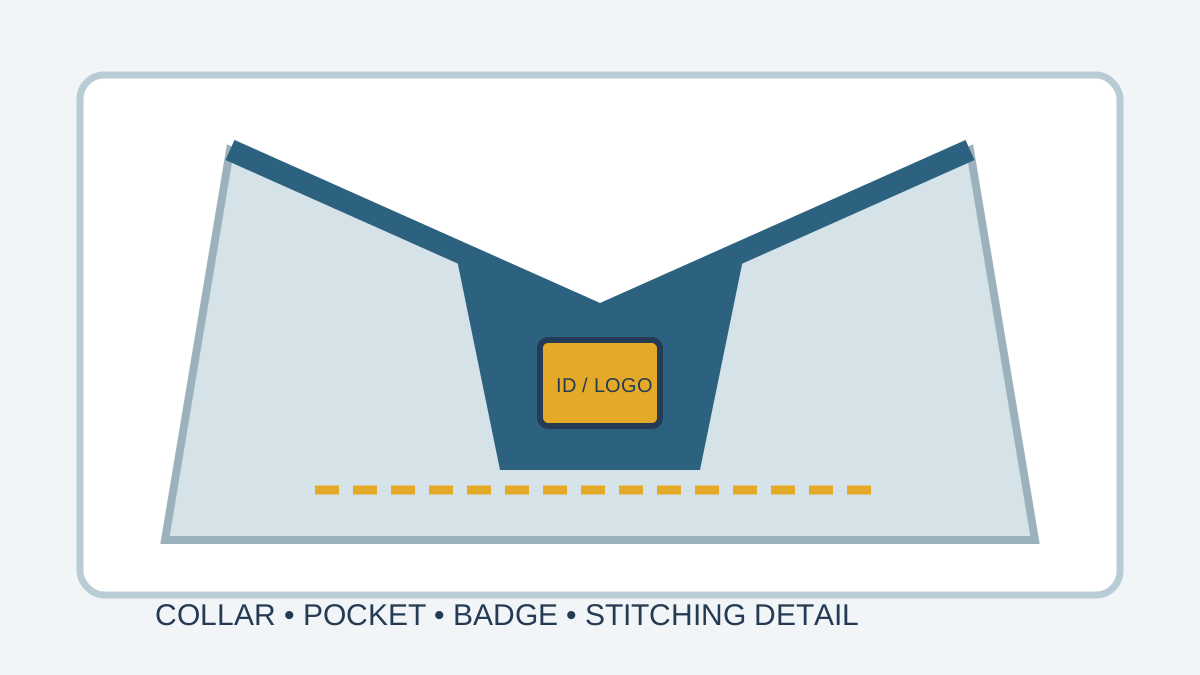
Map standing, walking, bending, lifting, handling, treatment-room movement, reception work, and approved device use as the buyer specifies. Put ID or badge visibility where the role needs it, and map pockets for pens, phones, keys, cards, or small approved tools.
Review collar, cuff, hem, seam, waist, zip, button, lining, and reinforcement choices against the intended activity. Grade sizes from a real staff survey, then define role layers so a reception polo and a technician scrub do not share an unsuitable fit. Confirm logo, name, and department branding method and placement, care labels, commercial-laundry instructions, repair routes, replacement stock, spares, and reorder references. For polo construction and branding context, see the custom polo shirt OEM manufacturer resource.
Fabrics and veterinary-clinic requirements
Polyester or poly-cotton can offer practical durability and care options; cotton-rich constructions may change handfeel and drape; stretch woven fabrics can support specified movement; twill or structured woven fabrics can create a more formal line; knit or polo fabrics suit selected client-facing roles; lightweight coat fabrics and softshells support defined layering; and seasonal options should match climate, indoor temperature, and laundering.
Compare opacity, abrasion context, comfort, color stability, and care instructions against the actual zone rather than assuming one fabric suits every role. Ordinary apparel is not automatically antimicrobial, fluid-resistant, stain-proof, barrier-protective, sterile, infection-control compliant, chemical-resistant, bite/scratch resistant, sharps resistant, radiation protective, PPE, or veterinary-regulatory compliant. For any named requirement, specify clinic area, animal or biological exposure, laundering, hazard, destination-market rule, standard, test method, and evidence. Separately specified PPE and veterinary safety procedures remain the buyer’s responsibility.
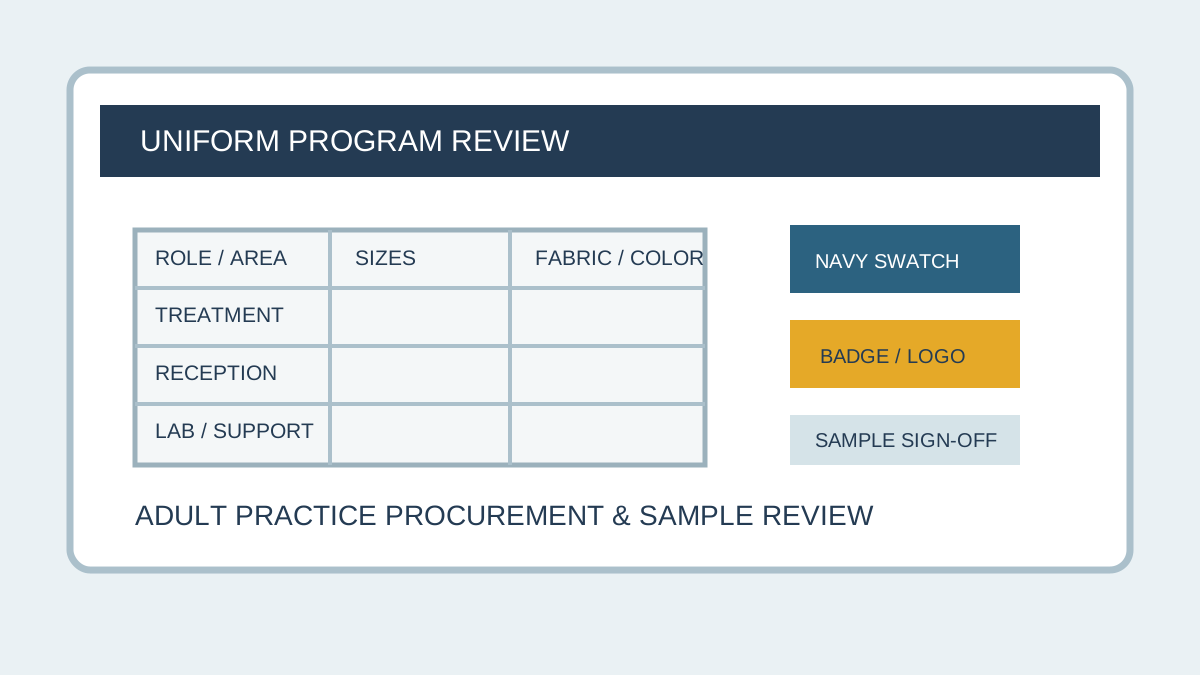
RFQ and specification table
RFQ field | Buyer input to quote |
|---|---|
Role / garment | Role, zone, and scrub, polo, shirt, trouser, coat, jacket, vest, cardigan, or layer |
Quantity by style | Units split by role and color; typical MOQ approximately 1,000 pieces/style |
Use area | Clinic, reception, treatment-support, laboratory, ward, kennel, or office |
Size range and ratio | Measured size run, fit, and quantity ratio |
Material target | Composition, target gsm, stretch, opacity, handfeel, and swatch |
Color and branding | Pantone or swatch, logo/name/department method and placement |
Function map | Pockets, ID/badge position, closure, cuff, hem, lapel, reinforcement |
Care and compliance | Laundering, care labels, named hygiene, infection-control, chemical, biological, animal-handling, PPE, or other standard |
Commercial terms | Packaging, delivery market, required date, and sample/PPS approval authority |
OEM process from inquiry to shipment
Review the role matrix, tech pack, reference sample, quantities, sizes, destination, and named standard.
Review fabric, trim, color, label, logo, and packaging options against the brief.
Develop a prototype or size set for fit and role review.
Record comments and obtain written sample approval.
Confirm a pre-production sample (PPS), artwork, grading, care labels, and packing instructions in writing.
Run bulk-production checks against approved references and the inspection plan.
Pack and prepare shipment documents for the agreed delivery market.
The buyer supplies measurements, artwork, size data, care expectations, destination information, and evidence requirements. No bulk production should begin before written approval of the applicable sample and PPS.
Catalog garment versus custom veterinary-clinic OEM
Point | Catalog route | Custom OEM/ODM route |
|---|---|---|
Fit, fabric, color | Existing fit and available options | Buyer-controlled fit, composition, gsm, color, and swatch review |
Role coordination | Limited matching across departments | Planned role, zone, and seasonal capsule |
Pocket, badge, closure | Pre-set construction | Specified pocket/ID map, closures, cuffs, hems, and reinforcement |
Branding and sizes | Standard decoration and run | Logo/name/department placement and size grading approval |
Named requirements | Buyer independently reviews claims | Buyer names standard, method, evidence, and PPE review |
MOQ and control | May suit a small available trial | Typical approximately 1,000 pieces/style with greater control |
A catalog route may fit a simple brief where the available garment and size run are acceptable. Custom OEM/ODM is useful when a practice group needs coordinated roles, controlled branding, measured sizing, special pockets, defined layers, or repeatable references.
Veterinary-clinic uniform procurement checklist
Build a role/area matrix covering client-facing, clinical, ward, kennel, laboratory, office, and support use.
Record indoor/outdoor exposure, climate, layering, movement, coverage, ID/access, and approved device storage.
Collect a size survey, ratio, Pantone or swatches, fabric target, and care-label requirements.
Name any hygiene, infection-control, chemical, biological, animal-handling, PPE, or other standard; request test method and evidence.
Approve branding artwork, samples, PPS, grading, inspection, packing, shipping documents, spares, replacements, repair, and reorder controls.
Frequently asked questions
1. What MOQ and RFQ inputs apply?
The typical MOQ is approximately 1,000 pieces per style, subject to RFQ confirmation. Send role and area quantities, size ratio, fabric and color, artwork, pocket and badge map, care, destination, required date, and any named standard or PPE requirement.
2. Which fabrics suit veterinarians, nurses, technicians, reception, laboratory, ward, kennel, and support teams?
Polyester or poly-cotton, cotton-rich, stretch woven, twill, knit/polo, coat, softshell, and seasonal layers can be compared by handfeel, movement, climate, opacity, abrasion context, and care. The zone and buyer’s laundering brief determine the selection.
3. Can you map scrubs, polos, shirts, trousers, coats, jackets, vests, cardigans, and outer layers?
Yes, the OEM brief can coordinate those adult staff garments by role and area. Scrubs may suit treatment-support, polos or shirts reception, coats a defined clinic or laboratory zone, and jackets, vests, cardigans, or outer layers the agreed climate and movement brief.
4. Do uniforms provide antimicrobial, fluid-resistant, infection-control, chemical, biological, bite/scratch, sharps, radiation, PPE, or veterinary-regulatory protection?
No automatic claim is made. Ordinary uniforms are not PPE and do not establish those properties. Name the hazard, destination rule, standard, test method, evidence, and separately required PPE for buyer review.
5. Can a practice, hospital, department, logo, name, or badge be branded?
Yes. Specify logo, name, department, badge or ID placement, decoration method, artwork, color, and approval sample. Placement should be checked against role visibility and garment construction.
6. Are samples, PPS, and size grading included in the workflow?
The workflow reviews a prototype or size set, records comments, and requires written sample and PPS approval before bulk. The buyer supplies measured size data and approves grading, artwork, labels, and packing instructions.
7. Does the company make school uniforms or pet products?
No. This page and program are for adult B2B veterinary-clinic and corporate workwear only, not school uniforms, students, children’s apparel, pet products, animal clothing, or animal-care products.
Request an adult veterinary-clinic uniform quote
Send role and area quantities, size breakdown, artwork, fabric or color requirements, destination, target date, and any named standard or PPE requirement for review. The typical MOQ is approximately 1,000 pieces per style. Email rill@topfortunemail.com or WhatsApp +86 13524210501.
Haier Zhigu CTA: Shanghai Top Fortune Industry Co., Ltd. welcomes buyers at Floor 3, Building 20, Haier Zhigu, No. 66 Guangfulin East Road, Songjiang District, Shanghai 201600. Visit the homepage, send the role/area matrix and approval requirements, and request a quote for an adult veterinary clinic uniform OEM China program.