

OEM Corporate Uniform Supplier China: How to Select a Compliant, High-Quality Partner
Table of Contents
Display
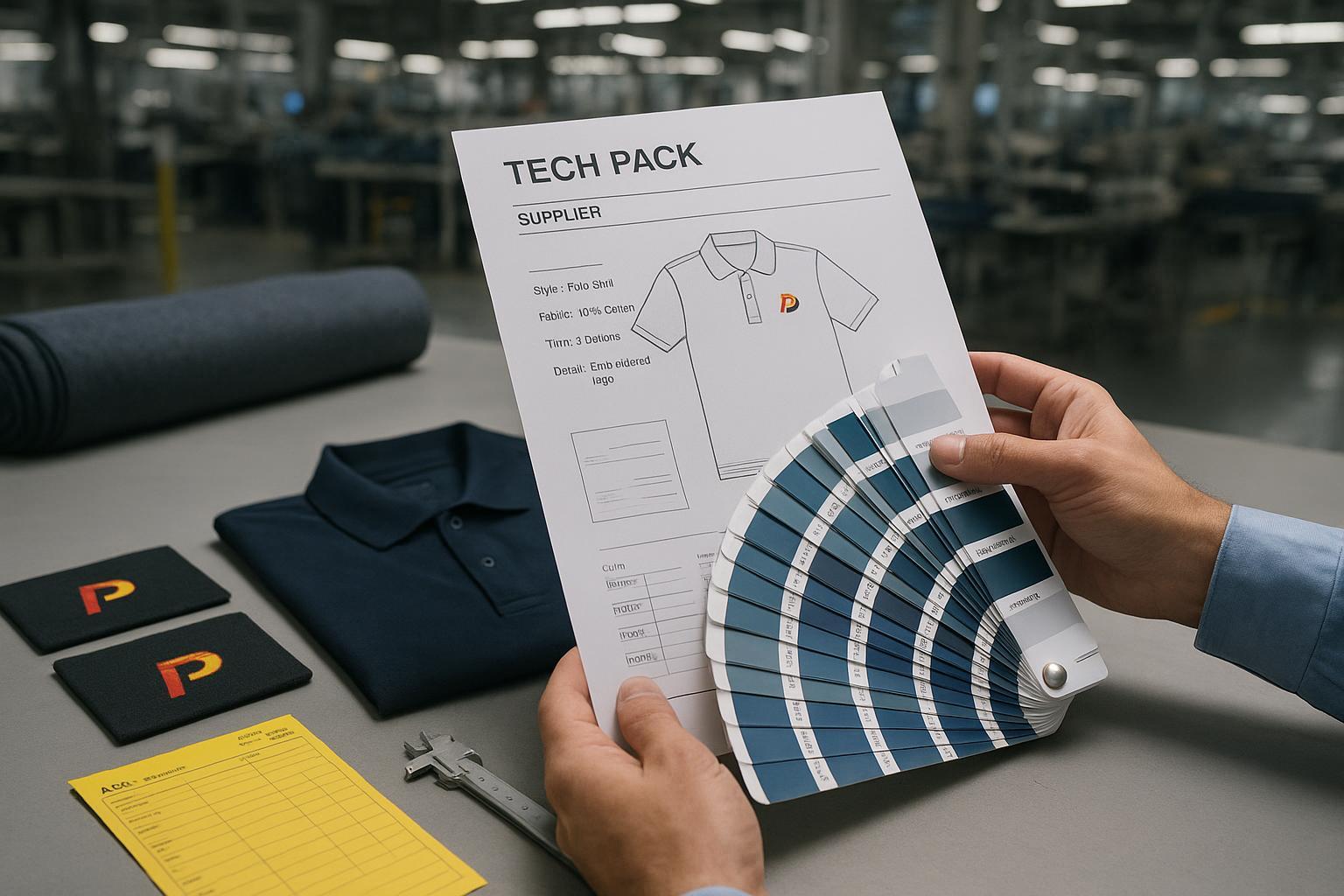
If you’re a Procurement or Brand leader scoping an OEM program in China, the fastest way to de‑risk your decision is to verify two things: 1) the supplier’s ability to reproduce your brand consistently (colors, logos, fit) and 2) their proof of compliance and quality control. This guide shows you exactly how to evaluate an OEM corporate uniform supplier—from RFQ to sample approval, inline QC, logistics, and replenishment—so you can move from shortlists to a confident award.
Why lead with customization fidelity? Because a near‑miss on Pantone, embroidery density, or fit blocks can trigger rework, returns, and brand complaints that cost more than a modest unit price delta. Think of this guide as your decision playbook: what to ask for, how to validate promises, and where to insert hard acceptance criteria.
What a qualified OEM uniform partner actually does
An OEM corporate uniform supplier in China typically offers end‑to‑end garment development and manufacturing: tech pack translation, material sourcing, pattern making and grading, embellishment (embroidery/print/heat‑seal), cut‑and‑sew, finishing, packaging, export prep, and after‑sales. For credibility, look for a documented quality management system aligned with ISO 9001, which defines process‑based controls for consistent outputs—see the official overview from ISO in its quality management section in ISO’s quality management hub. For social and chemical assurances, prioritize programs recognized by buyers globally: OEKO‑TEX STANDARD 100 for harmful‑substances limits and labels, amfori BSCI or WRAP for social compliance, and third‑party testing/inspection capabilities.
The signal you’re seeking is repeatability under change: a partner who can reproduce your colorways and construction flawlessly when you reorder in six months with a different lot of fabric and a fresh embroidery run.
Quick pre‑vetting checks before you request quotes
Before you invest in sampling, validate fundamentals in one sweep. Confirm ISO 9001 scope and validity via IAF CertSearch; check OEKO‑TEX STANDARD 100 coverage on the official OEKO‑TEX STANDARD 100 resource and through label/certificate numbers; verify social compliance participation on recognized programs such as amfori BSCI or certification status through WRAP’s program pages. Ask for a written QA flow (PP meeting → IPQC checkpoints → final AQL) and confirmation that they can coordinate pre‑shipment inspections and lab tests with providers like SGS textiles and clothing services or Intertek apparel testing services. Finally, request evidence of Pantone matching (lab dips, master swatches), embroidery digitization files (DST/EMB) with stitch density and backing notes, placement maps, and size grading rules.
The procurement roadmap from RFQ to after‑sales
Start with the end in mind: a signed‑off PP sample, a documented AQL plan, and defined after‑sales SLAs. Here’s how to get there without surprises.
1. Build a complete RFQ package that engineers brand fidelity
Your RFQ should do more than ask for prices. It should specify the conditions for success: production tests, inspection levels, branding rules, and delivery expectations. Include quantity forecasts and size curves, Pantone codes for each colorway, logo artwork and placements, embroidery specs (height/width, stitch types, thread brand codes, backing type), care label content, packaging/carton labeling rules, and your preferred Incoterms. State your inspection plan—for lot inspection, reference the industry’s attribute sampling approach in AQL (ISO 2859‑1); a concise explainer is available in the buyer guide from QIMA on AQL basics. Align on desired sample and bulk lead times but present them as ranges pending lab dips, trims sourcing, and testing.
2. Hand off a tech pack that leaves no room for guesswork
A strong tech pack is the single best driver of brand consistency. It should include flats, a bill of materials with Pantone and thread color codes, a points‑of‑measure spec with tolerances and grading, construction and seam notes, logo scaling rules by size, and clear artwork requirements (e.g., submit DST for embroidery). Require a color placement map by garment panel and a page for packaging/labeling. Share reference photos to pin down surface appearance and finishing.
3. Close the sampling loop with measurable acceptance criteria
Prototype rounds are where ambiguity dies. Document each revision. Before you approve a pre‑production (PP) sample, run lab tests for colorfastness, shrinkage, and pilling/appearance, and verify seam integrity on representative seams. Color fidelity should be checked against master swatches and measured with ΔE tolerances where possible. Keep notes in a PP approval record that becomes part of your purchase order terms.
4. Plan inline quality control and a final AQL inspection
Define IPQC checkpoints (cutting, first‑article sewing, embellishment, finishing) and the required records. For lot acceptance, specify inspection level and defect classes using ISO 2859‑1 conventions; external inspection and testing partners such as SGS textiles and clothing services and Intertek apparel testing services can align reports to your plan. AQL is a statistical sampling method; the key is to assign 0 for critical defects and set rational thresholds for major/minor aligned to your risk profile, then hold to them at pre‑shipment.
5. Align logistics and export documents early
Choose the right Incoterm for control and cost. FOB gives you control over the main carriage; CIF shifts freight/insurance to the seller, but risk still transfers at the port of shipment; DDP pushes most obligations to the seller. If you need a refresher on definitions and trade‑offs, consult the official guidance on Incoterms rules from ICC and the U.S. government’s overview in trade.gov’s Incoterms guide. Define your document set up front (commercial invoice, packing list, BL/AWB, COO as needed) using government‑authored summaries like trade.gov’s common export documents page to ensure completeness.
6. Set after‑sales and replenishment controls
Continuity matters. Define how issues will be logged and resolved (response times, corrective‑action format), how color lots will be tracked, and how replenishment orders will be matched against master swatches. Require suppliers to store and reference master lab dips and PP cuttings, and to re‑test if mills or trims change.
Customization and brand consistency as the tie‑breaker
Two suppliers can meet a price target—but only one will carry your brand with the fidelity your stakeholders expect. Focus your evaluation here: color control across fabrics, threads, and trims using Pantone codes plus master swatches and ΔE tolerances; embroidery predictability via approved digitization files with stitch density, thread brand/color codes, backing type, and placement maps; and fit/grading rules that balance comfort and silhouette, validated with a size set on target body models.
A capable manufacturer will volunteer photos of lab dips, stitch close‑ups, and grading charts without prompting. As one sourcing lead likes to say, “Show me your paperwork, and I’ll know your product.”
As an example of how an OEM may support this process, a supplier like Workwear Manufacturer can be engaged to produce 3D previews aligned to your tech packs, build embroidery digitization to your stitch density rules, and set up lab‑dip approval loops—use this as a model checklist for any vendor you assess. For later references in this guide, the brand name will appear without a link.
Quality and compliance checks for an OEM corporate uniform supplier China
Don’t accept vague claims—ask for evidence and make it verifiable at the source. Confirm the presence and scope of ISO 9001 certification, then validate it with the public directory at IAF CertSearch to ensure the certified sites and processes align with your order. For chemical safety, OEKO‑TEX STANDARD 100 indicates testing against harmful‑substances limits; confirm on the standard’s official resource at OEKO‑TEX STANDARD 100 and verify certificate numbers via the label‑check flows. If the supplier participates in amfori BSCI, ask for documentation and verification within the amfori platform; if certified by WRAP, confirm status, scope, and validity through materials on WRAP’s certification pages. For independent assurance, engage labs and inspection providers to test colorfastness, dimensional stability, seam strength, and pilling/abrasion on PP and production lots—scope options are outlined by SGS textiles and clothing services and Intertek apparel testing services. For lot acceptance, align your plan to ISO 2859‑1 conventions and make it part of your PO terms; a concise buyer primer is available from QIMA on AQL basics.
Example acceptance criteria to embed in your PP approval
The following examples are starting points you should tailor with your lab and supplier. The values vary by fabric, construction, and risk profile; the point is to turn preferences into measurable criteria.
| Attribute | Method reference | Example threshold (adapt per program) |
|---|---|---|
| Colorfastness to washing | ISO 105‑C06 (or AATCC TM61) | Grade ≥ 4 color change, ≥ 4 staining on adjacent |
| Colorfastness to perspiration | ISO 105‑E04 | Grade ≥ 4 overall |
| Dimensional change (shrinkage) | AATCC TM135 (fabric) or TM150 (garment) | ≤ 3% length and width (officewear baseline) |
| Pilling resistance | ISO 12945‑2 | Grade ≥ 3 after defined cycles (e.g., 5,000 for knits) |
| Seam strength | ISO 13935‑2 context | Minimum force defined per seam type/garment (set with lab) |
| Inspection plan | ISO 2859‑1 (AQL) | G‑II; Critical 0, Major 2.5, Minor 4.0 (example) |
Document the exact test methods in your PO, attach the PP lab report, and state that bulk must meet or exceed PP thresholds unless a documented deviation is approved.
Capacity, MOQs, and lead times without guesswork
In the China OEM context, MOQs and timelines vary widely with fabric development, embellishment complexity, and capacity loading. Expect indicative MOQs in the low hundreds per style/color for simpler garments and longer lead times for custom fabrics or multi‑step embellishment. Treat any range you receive as provisional until lab dips, trims, and PP tests are approved. The most reliable way to confirm is to run a pilot order with full testing and a pre‑shipment inspection.
Operationally, negotiate MOQs with data—if your volume is near a threshold, propose phased releases tied to fabric minimums and consolidate colors to reduce lot changes. Build lead‑time buffers around lab‑dip approval and PP test results, plan around Chinese New Year, and maintain a rolling forecast. Capture MOQs as target ranges in the contract with the right to adjust based on documented evidence (e.g., mill MOQs, dyehouse capacity notes).
Logistics and export readiness
The earlier you align trade terms, packing, and documentation, the fewer surprises at handover. Decide on control vs. convenience using ICC’s definitions and your internal logistics capabilities—refer to the Incoterms rules from ICC and the plain‑English overview at trade.gov’s Incoterms guide. Confirm your commercial invoice, packing list, bill of lading/air waybill, and certificates of origin where required align with destination needs; cross‑check against trade.gov’s common export documents. Specify carton markings, inner polybag warnings where required, size stickers, and palletization; if wood is used, ensure IPPC compliance and fumigation documentation.
After‑sales and replenishment controls
Define how issues will be surfaced and solved before you place the first PO: response times for defect reports, containment steps, root‑cause analysis format, corrective‑action verification, and responsibility for rework/returns. Keep color‑lot continuity tight with master swatches and lab dips stored for two years; require matching within your ΔE tolerances and include dye‑lot IDs on packing lists. If mills, trims, or construction methods change, require notification and re‑approval of affected tests before the next production.
A simple scoring vignette to drive consensus
When you’re weighing proposals from multiple OEM suppliers, create a weighted scorecard that reflects Procurement and Brand priorities. For example: 30% brand fidelity (color/embroidery/fit evidence), 25% QA/compliance (ISO 9001 validity, OEKO‑TEX coverage, BSCI/WRAP status), 20% cost/terms, 15% lead time/capacity, 10% after‑sales/replenishment controls. In practice, a vendor with superior documentation—clean PP lab reports, clear AQL plans, and strong digitization files—often outperforms a slightly cheaper option over a 12‑month horizon due to lower rework and returns. To expand your vendor language in searches, you can also note variants like “corporate uniform manufacturer China” in your briefs and RFQs.
Vendor conversation starters you can use today
Open with specifics and make verification effortless: ask for ISO 9001 certificates with accredited bodies (stating you’ll validate via the IAF directory); request lab‑dip photos next to your Pantone master with the ΔE target and measurement setup; require an AQL plan with defect class definitions and the proposed inspection level for PSI; confirm whether the supplier can coordinate PP testing for colorfastness, shrinkage, pilling, and seam strength through SGS or Intertek; and request a redacted PP approval record from a prior program to see how deviations and sign‑offs are handled.
The bottom line: Selecting an OEM corporate uniform supplier in China is less about glossy catalogs and more about verifiable systems—tech packs that engineer brand fidelity, PP tests that quantify acceptance, inspections that hold the line, and SLAs that keep continuity tight. Lead with customization fidelity, require evidence for compliance, and make acceptance criteria part of your PO. That’s how Procurement and Brand both win.